
The 10 Critical Stages of Building a House in Brisbane
Published 9 min read
On this page
- 1. Site Assessment and Planning
- 2. Design and Approvals
- 3. Site Preparation and Demolition
- 4. Excavation and Foundation Works
- 5. Framing and Structural Work
- 6. Roof Installation and Weather Tightness
- 7. Mechanical, Electrical, and Plumbing (MEP) Installation
- 8. Insulation and Interior Wall Lining
- 9. Fit-Out and Finishing Trades
- 10. Final Inspections, Handover, and Defect Resolution
- Frequently Asked Questions
- Partnering for Success
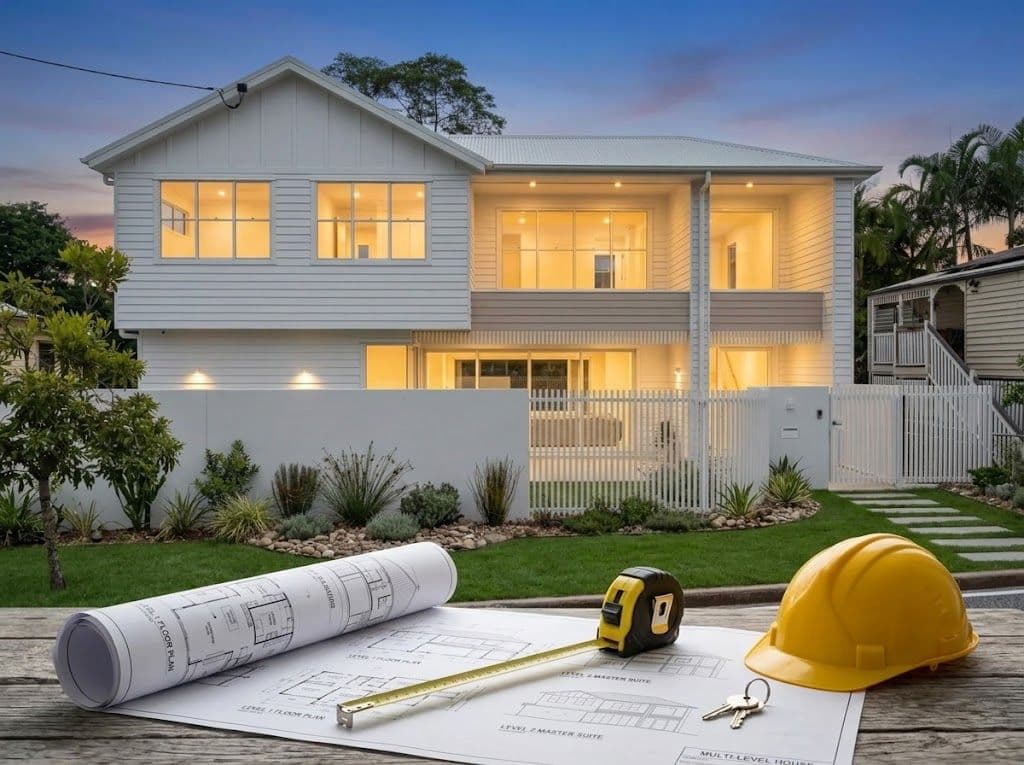
Embarking on a new custom home build is a significant investment. Understanding the construction sequence provides a clear roadmap, allowing you to collaborate effectively with your builder and make informed decisions along the way. This guide breaks the entire journey into ten manageable stages, tailored specifically to Brisbane's sloping blocks, narrow lots, and knockdown-rebuild sites, with practical, actionable tips at every step so you can partner effectively with your construction team.
1. Site Assessment and Planning
For any build in Queensland, comprehensive site analysis is vital. A soil test might reveal highly reactive clay, indicating to the engineer that a more robust waffle pod slab is required. Identifying a council sewer line running through a block during the survey stage allows the design to be adjusted early, avoiding costly relocations later.
Actionable Tips:
- Commission a full survey: don't rely on old real estate plans. A new, detailed contour and feature survey is your single source of truth, including neighbouring property details, large trees, and utility connection points.
- Get a geotechnical report: a soil test is non-negotiable in Brisbane. Ask the engineer to explain the "site classification" and what it means for your foundation costs.
- Check for easements: ask your surveyor to clearly mark any council or utility easements on the plan. Building over an easement without permission can lead to a demolition order.
- Analyse solar and breezes: walk the site at different times of day, noting where the sun hits and which direction prevailing breezes come from. This helps orient living areas and windows for comfort and minimal energy use. See our approach to building on sloping blocks for how this plays out on a genuinely difficult site.
2. Design and Approvals
Following site assessment, the design and approvals stage is where your vision begins to take physical form. Architects and designers translate your lifestyle needs, aesthetic preferences, and budget into a comprehensive set of plans, from initial concept sketches to detailed construction-ready documents, while navigating council regulations.
This process includes developing the floor plan, elevations, and 3D models, and specifying materials and finishes. A design-and-construct model integrates construction expertise early, ensuring the design is buildable and cost-effective, not just beautiful. A designer might draw a stunning cantilevered balcony, but an experienced builder can immediately advise that the required structural steel could add tens of thousands to the budget, letting you decide with full information.
Actionable tips:
- Create a detailed brief: must-haves, nice-to-haves, and absolute deal-breakers, bedrooms, home office, outdoor kitchen, before you meet a designer.
- Specify finishes upfront: don't leave items as "TBC." Vague specifications lead to budget allowances that are often exceeded later.
- Plan for council timelines: a standard building approval (BA) can take 4–6 weeks, a development application (DA) 3–6 months. Ask your builder or certifier for a realistic timeframe.
- Review in 3D: a 2D floor plan can mislead. Request 3D renders or walkthroughs before signing off on final plans.
- Check window and door schedules: confirm sizes, opening types, and glass specifications line by line.
3. Site Preparation and Demolition
Once designs are approved, the physical transformation begins, ranging from simple clearing to the complex coordination of a full demolition for knockdown-rebuild projects. This includes clearing vegetation, establishing secure site access for heavy machinery, and organising service disconnections if an existing structure is present. For knockdown-rebuilds, this stage is defined by methodical, safe demolition with a strong focus on responsible waste management.
Actionable Tips:
- Confirm service disconnections: verify directly with Energex and Urban Utilities that accounts are closed and disconnection is complete, and get it in writing.
- Test for asbestos: for any house built before 1990, testing before demolition is a legal requirement. A licensed removalist must handle any hazardous materials, this is not a DIY job.
- Talk to your neighbours: a friendly heads-up on the noisy-work timeline, plus your site manager's contact number, prevents future disputes.
- Salvage and recycle: walk the old house first, hardwood floorboards, VJ panels, unique light fittings can be sold or reused, offsetting some cost on your knock-down and rebuild.
- Install sediment control: on a sloping block, proper sediment control before work starts prevents soil washing into the street during a heavy Brisbane downpour.
4. Excavation and Foundation Works
With approvals secured, the project moves from paper to practice: clearing the building footprint, excavating to the required depths, and installing the engineered foundation system. The foundation type, slab-on-ground, raised timber stumps, concrete piles, or a hybrid system, is determined by the engineering design, informed by soil tests and site topography. For Brisbane's variable ground conditions, getting this stage right is fundamental to preventing structural failure, cracking, and long-term settlement.
Key Insight: hold a contingency of 5–10% of the foundation cost. Hitting unexpected rock during excavation is common and may require additional rock-breaking machinery.
Actionable Tips:
- Review the engineer's drawings: understand why a certain slab or footing type is specified.
- Confirm under-slab plumbing locations: visit the site before the pour and physically see where pipes are stubbed up, your last chance to confirm the powder room toilet is in the right spot.
- Check termite protection: verify the physical termite barrier is installed correctly around pipe penetrations and the slab perimeter, per Australian Standards.
- Request photographic records: ask for photos of steel reinforcement and under-slab plumbing before the concrete is poured, invaluable proof the work was done to spec.
5. Framing and Structural Work
Once the slab is cured, the structural skeleton, timber or steel, is erected, defining the rooms supporting the roof, and providing structure for all subsequent finishes. Every element must be perfectly plumb, level, and square, transforming a two-dimensional plan into a three-dimensional reality.
Actionable Tips:
- Walk through and "feel" the space: once the frame is up, this is your best and cheapest opportunity to request a minor change, like moving a non-structural doorway 30cm to the left.
- Verify timber quality: ensure termite-treated timber is used for structural framing, often identifiable by its colour grading.
- Protect the structure: as soon as trusses are on, sarking and roof covering should go on. A timber frame left exposed to Brisbane rain for weeks can swell and cause long-term moisture issues.
- Plan for in-wall items: confirm blocking for mounting heavy TVs or shelves, and niches in the shower, before walls are enclosed.
6. Roof Installation and Weather Tightness
With the frame complete, the roofing system transforms the open frame into a weatherproof shell, cladding, sarking, flashing, gutters, and downpipes working as an integrated system to protect the home from rain and extreme weather.
Actionable tips:
- Choose materials for local conditions: a light-coloured Colorbond roof reflects solar heat, reducing cooling costs. In bushfire-prone areas, ensure materials and installation comply with the required BAL rating.
- Check gutter fall: gutters need a slight, continuous fall toward downpipes to prevent pooling and corrosion.
- Verify tie-downs: in high-wind areas, confirm the correct number of screws or clips per sheet as specified by the engineer.
- Schedule a post-rain inspection: after the first heavy rain, inspect the ceiling cavity with a torch for drips or stains around vents, skylights, and valleys.
7. Mechanical, Electrical, and Plumbing (MEP) Installation
Once framed and weatherproofed, focus shifts to the internal systems. This "rough-in" stage involves licensed electricians, plumbers, and HVAC technicians laying wiring, pipes, and ducts within the open wall and ceiling cavities, all before the walls close up.
Actionable tips:
- Walk through with the electrician: mime plugging in a vacuum or turning on a bedside lamp to finalise switch and outlet heights and locations.
- Take photos of everything: before insulation and plasterboard go on, photograph every wall from multiple angles, a permanent map for future renovations or hanging a picture.
- Future-proof your wiring: conduit for a future solar battery, an extra data point in the study, a power point near the toilet for a smart toilet seat.
- Confirm HVAC unit locations: check the outdoor unit isn't noisy outside a bedroom window, and the indoor unit is placed for optimal airflow.
8. Insulation and Interior Wall Lining
In Brisbane’s subtropical climate, correctly specified insulation reduces reliance on air conditioning. Following insulation, plasterboard is installed, and the quality of plastering directly impacts the final paint finish.
Actionable tips:
- Inspect insulation before lining: check for gaps or compressed sections, "thermal bridges" that reduce effectiveness, before plasterboard goes up.
- Upgrade for sound, not just heat: acoustic insulation between living areas and bedrooms is a cost-effective way to improve privacy.
- Check plasterboard finish with a light: inspect walls in late afternoon glancing light, ruthless at revealing bumps or hollows. Mark them with painter's tape for the plasterer.
- Plan for feature walls: a dark or feature paint colour needs a "Level 5" finish, the smoothest plastering standard, so tell your builder in advance.
9. Fit-Out and Finishing Trades
The fit-out stage transforms the house from a shell into a home, covering flooring, paintwork, cabinetry, tiling, and door hardware. This is arguably the most aesthetically significant stage, requiring meticulous coordination between joiners, painters, tilers, and flooring installers.
Actionable tips:
- Protect finished surfaces: cover new floors and protect benchtops and bathtubs from scratches as each trade finishes.
- Check tile layout before starting: discuss where cuts fall and how corners are finished, a good tiler plans this to minimise visible cuts.
- Sequence trades logically: generally ceiling paint, then wall paint, flooring, cabinetry, benchtops, tiling splashbacks, then plumbing and electrical fit-off.
- Plan for the final clean: organise comprehensive post-construction cleaning before handover.
10. Final Inspections, Handover, and Defect Resolution
As construction concludes, a licensed building certifier conducts a final, comprehensive inspection to confirm the home is compliant and safe for occupation, issuing a Final Inspection Certificate. The builder and client conduct a detailed walk-through to identify any minor imperfections, and handover includes a thorough clean, a demonstration of all home systems, and delivery of warranties and documentation.
Actionable tips:
- Create your own defect list: use blue painter's tape to mark imperfections during your walk-through, a paint drip, a stiff door handle, a chipped tile, and photograph each one.
- Test everything: open every window, turn on every tap, flush every toilet, flick every switch, run the dishwasher and oven on a short cycle.
- Request a comprehensive handover pack: appliance warranties, the termite protection certificate, waterproofing certificates for wet areas, and key paint colours for future touch-ups.
- Understand the defect liability period: under a standard QBCC contract, your builder is responsible for rectifying non-structural defects for 12 months after handover.
Frequently Asked Questions
How long does each stage of building a custom house take? It varies by stage and site complexity. For the overall timeline and how these stages fit together, see our guide to how long it takes to build a house in Brisbane.
Can construction stages overlap? Some coordination naturally overlaps, trades scheduled concurrently where possible, for instance, but the core structural sequence generally has to happen in order for safety and quality reasons.
What's the biggest risk during the early stages? Incomplete site information. A soil test that's skipped, or an easement that isn't marked, can force expensive redesigns once excavation or footings are already underway, which is why Stage 1 is worth getting right before anything else moves forward.
Partnering for Success
The journey through the stages of house building is an intricate process. The key to a successful build is recognising how these phases interlink, choices made during the design phase have a direct impact on the budget and timeline of every subsequent step. By investing time in upfront planning, maintaining open communication, and allowing a sensible contingency buffer, you shift from simply observing the construction to actively steering it.
For a shorter overview of this same journey, see our guide to the stages of building a house in Brisbane. Ready to move from planning to action? Contact Flascon Construction Group for a property assessment and discover how our integrated approach brings certainty and quality to your custom home project.
Keep reading
More Brisbane building guides
Building Guides6 min read
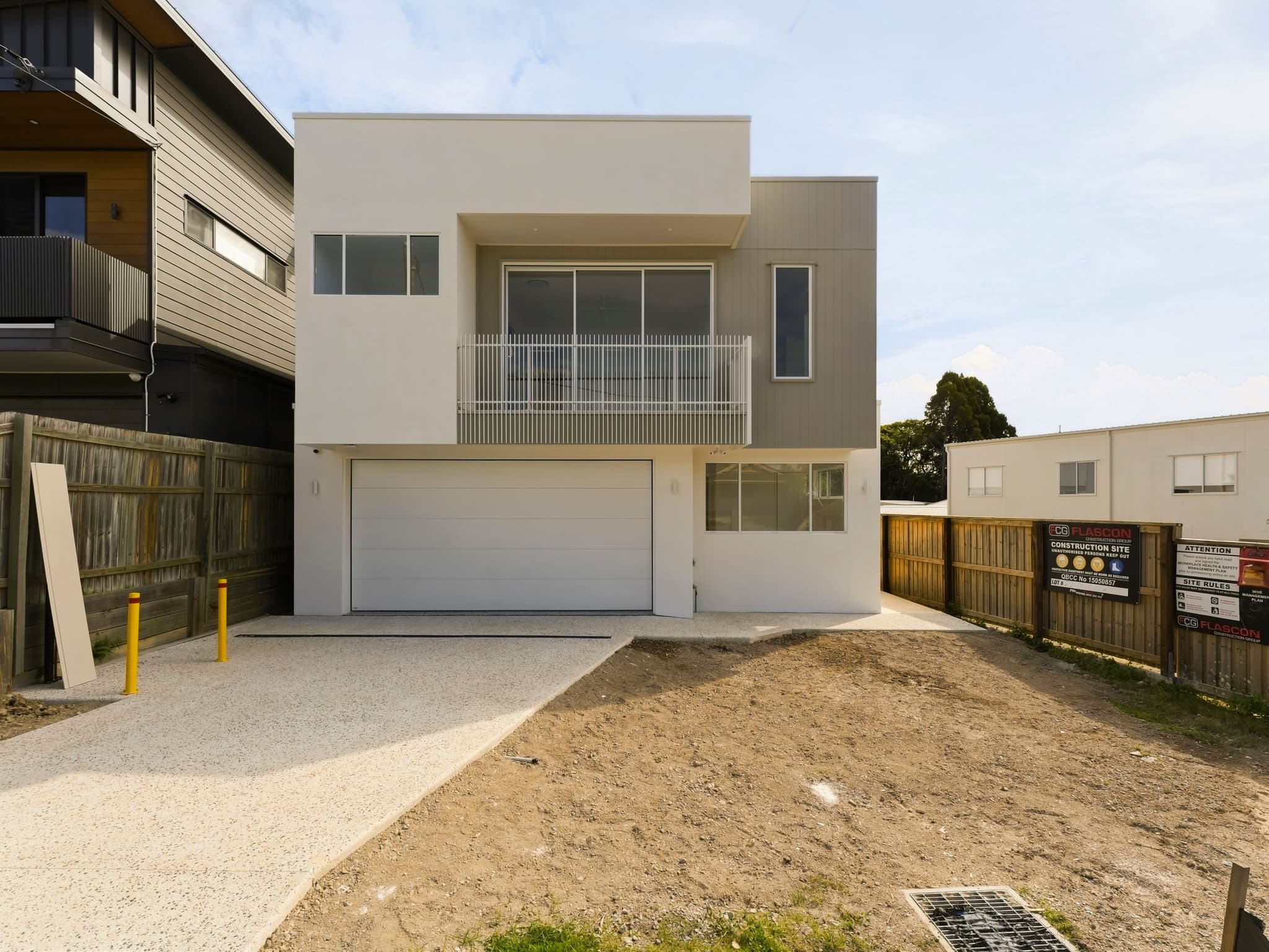
What a Soil Test Tells Your Builder in Brisbane
What a soil test involves, what the AS 2870 site classification means, and why Brisbane's clay, rock and fill make it worth doing early.
Building Guides6 min read
Pre-Handover Inspection Checklist for New Homes in Qld
What to check at the pre-handover inspection of a new home in Queensland, what your builder hands you at practical completion, and what counts as a defect.
Building Guides7 min read
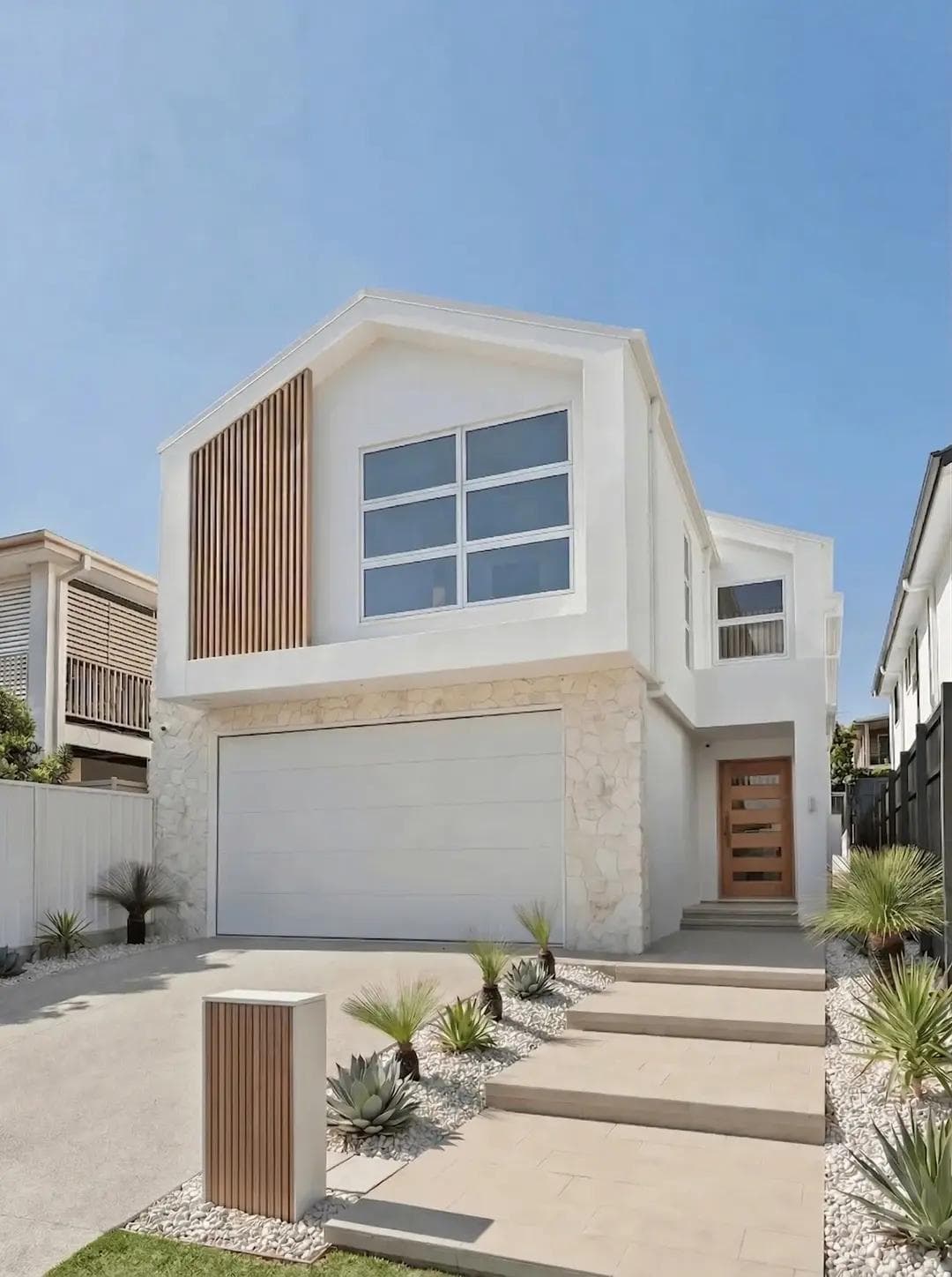
Knockdown Rebuild in Brisbane: The Step-by-Step Process
How a knockdown rebuild works in Brisbane, step by step: feasibility, demolition approval, asbestos, services, soil testing, building approval and construction.