DATE :
LAST UPDATED:
CATEGORY :
Custom home Design
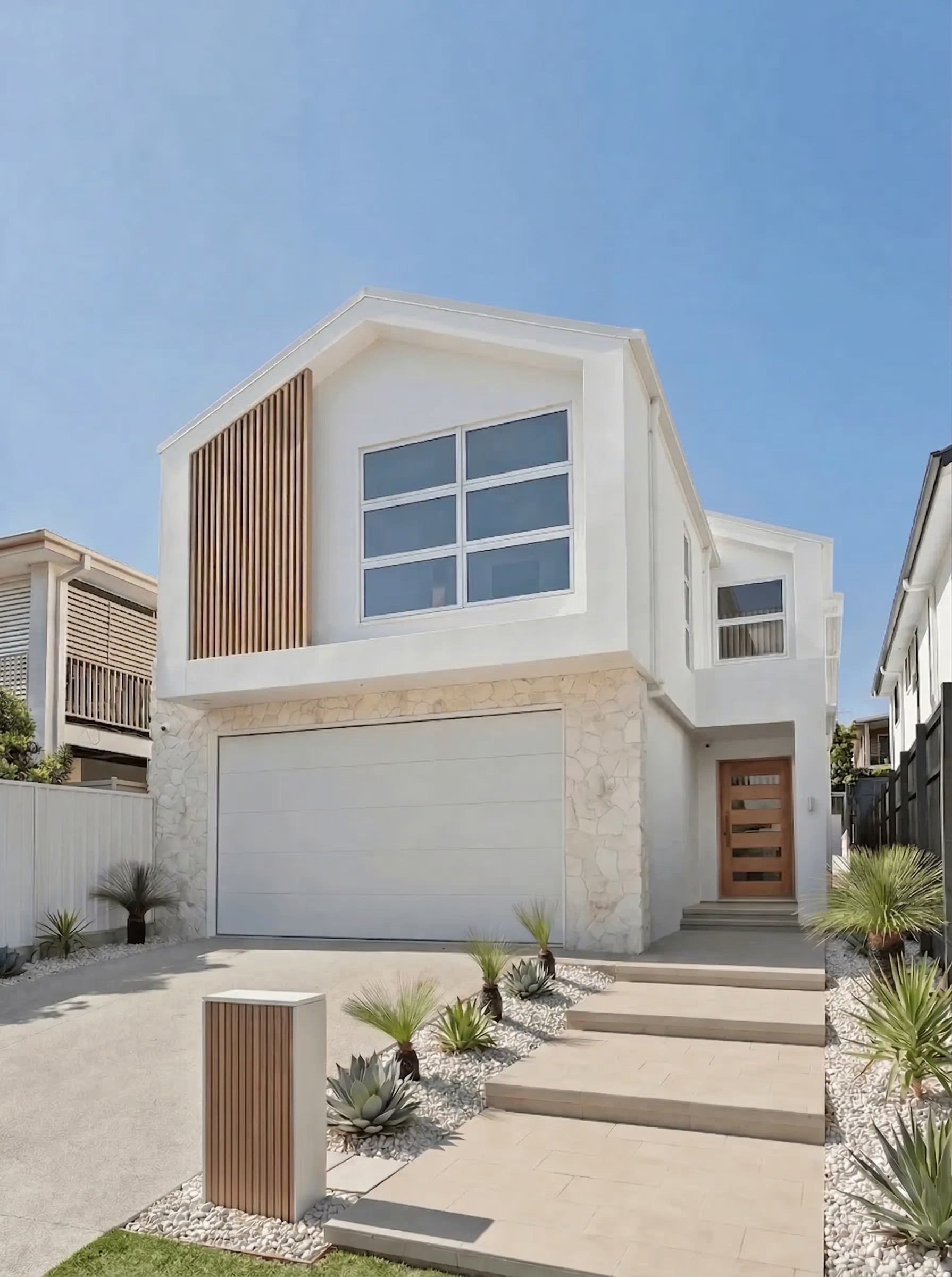
Designing a custom home requires more than just picking an aesthetic from a catalogue. It’s about finding the precise intersection where our subtropical climate, rich building heritage, and your modern lifestyle meet. Whether it’s a contemporary interpretation of a classic Queenslander or a modern custom masterpiece, the most successful house designs in Brisbane share three non-negotiable traits: superior airflow, intelligent light management, and a seamless transition between indoor and outdoor zones.
At Flascon, we believe a home shouldn't just look good; it needs to perform on your specific block of land. This guide is a practical roadmap for navigating the realities of building in our city, from heritage character overlays to sloping blocks.
Understanding Brisbane's Design Identity
Building in Brisbane comes with a distinct set of challenges. When evaluating house designs in Brisbane, you quickly realise that a 'one-size-fits-all' plan rarely accounts for the specific orientation or topography of an established suburb. To create a home that truly belongs, the design must respect the environment and the unique character of our local streetscapes.
What We'll Cover
To help you move forward with confidence, we are focusing on the real-world practicalities of building in Brisbane. Here is what you can expect:
Popular Styles: We look at the defining features of iconic local designs and explore how modern styles are being adapted for our city.
Designing for the Climate: Practical techniques to create a home that is naturally comfortable and energy-efficient, working with our subtropical climate, not against it.
Solutions for Tricky Sites: Proven strategies for building on sloping blocks, narrow inner-city lots, and how to navigate the popular knockdown-rebuild path.
Council Rules & Budgeting: Demystifying the Brisbane City Council regulations and discussing what actually drives building costs, so you can plan with your eyes wide open.
Ultimately, a great home is an ongoing conversation between the land, the climate, and your lifestyle. By the time you finish this guide, you will have a solid foundation for your project and the clarity needed to turn a blank canvas, or an aging property, into a highly liveable modern home.
Custom Design Styles in Brisbane Suburbs
The classic Queenslander remains the blueprint for subtropical living. Its elevated timber frame and expansive verandas were designed for passive cooling long before air conditioning. The most successful modern builds take these heritage principles, high ceilings, cross-ventilation, and elevated living, and integrate them into contemporary floor plans that suit 21st-century families.
Beyond the Queenslander: Brisbane's Rich Heritage
Beyond timber and tin, Brisbane’s character is defined by the Californian Bungalow and the post-war cottage, representing a sturdy, craftsmanship-heavy era. Navigating the character overlays associated with these homes requires an experienced design and build team who understands how to respect local heritage while delivering a high-spec modern home.
The Rise of Contemporary Custom Design
Fast forward to today, and the focus for new builds has shifted. The modern dream is all about light, space, and a seamless flow between inside and out. Two design approaches, in particular, have really taken hold across the city.
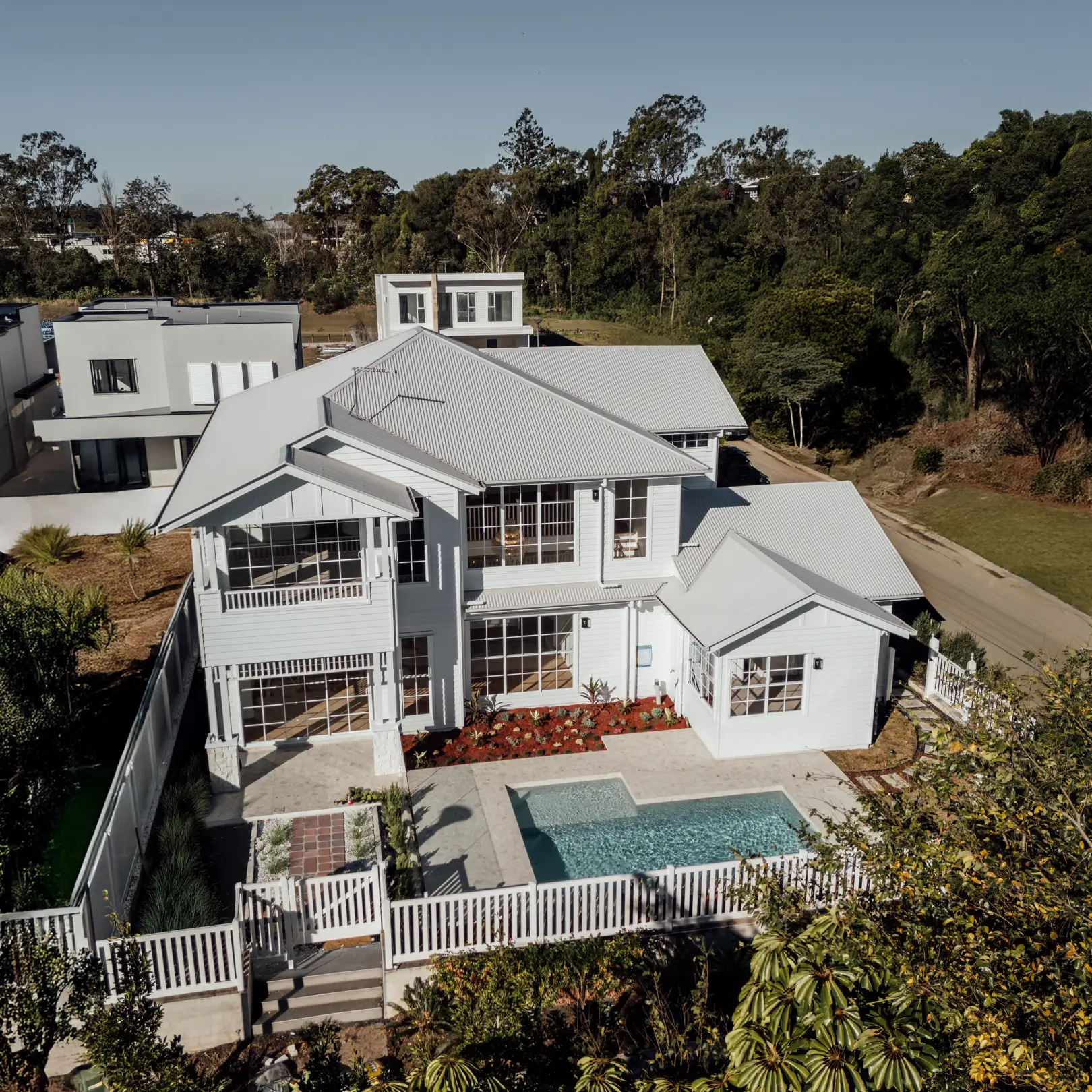
First, the Hamptons style has become incredibly popular. It strikes a perfect balance between relaxed coastal elegance and timeless sophistication, feeling perfectly at home in our leafy, sun-drenched suburbs. You can spot a Brisbane Hamptons home by its:
Weatherboard Cladding: A modern, durable take on traditional timber homes.
Gabled Rooflines: These create a strong street presence and allow for beautiful high, airy ceilings inside.
Neutral Colour Palette: Think classic whites, soft greys, and cool blues that bounce light around and create a calm, tranquil vibe.
Generous Windows and Doors: Designed to flood the home with natural light and frame garden or pool views.
This style is a fantastic fit for families wanting a home that feels both luxurious and genuinely liveable. A premium approach to Hamptons design focuses on high-end materials, using quality weatherboards and custom gables to ensure the home feels substantial and permanent.
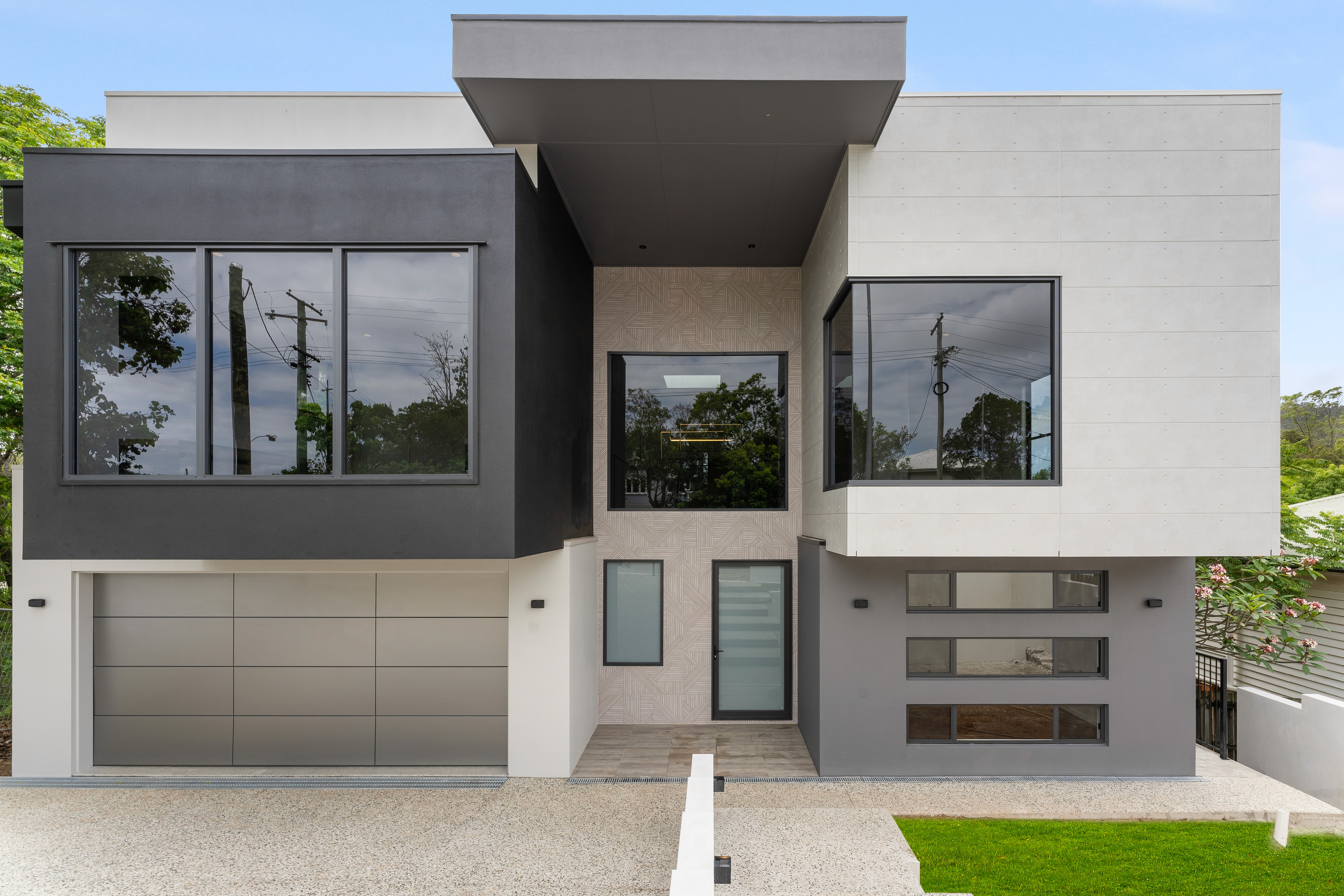
The second major trend is custom modern homes. This is all about clean lines, authentic materials like off-form concrete and timber screening, and a floor plan designed from the ground up to suit the owner's lifestyle. Unlike volume builds, these homes are designed to solve the specific challenges of your block, whether that means a central courtyard for privacy on a narrow lot or a tiered layout to conquer a steep slope.
Designing for Brisbane's Subtropical Climate
Passive design is the foundation of a luxury local home. By prioritising smart orientation and natural airflow in your plans, we create residences that remain comfortable year-round without constant reliance on mechanical cooling. Key elements include:
Strategic Orientation: Positioning main living zones with a northern aspect allows the low winter sun to penetrate and warm the home, while deep 600mm eaves block the harsh, high-angle summer sun.
Airflow and The 'Stack Effect': Utilising louvre windows and high-set openings encourages the stack effect, where hot air rises and escapes, drawing cooler breezes through the lower levels. This natural air conditioner is essential for the humid climate.
Harnessing Sunlight and Shade
The very first thing to get right when exploring house designs in Brisbane is your home's orientation. This is all about positioning the house on your block to manage how the sun hits it throughout the day and across the seasons. Here is why a north-facing aspect for your main living areas is the gold standard:
Summer Advantage: With properly sized eaves or awnings, you can completely block the high summer sun from hitting your north-facing windows, which goes a long way to keeping the inside cool.
Winter Advantage: That low winter sun, however, can sneak right in under those same eaves, warming your living spaces naturally.
On the flip side, you want to avoid large, unprotected windows on the western side of your house. This is where the harsh afternoon sun hammers your home in summer. A simple rule of thumb: invite the northern winter sun in and lock the western summer sun out.
Mastering Natural Airflow
Once you have tamed the sun, the next job is to catch the breezes. Good cross-ventilation pushes out warm, stale air and pulls in the fresh, cool stuff. You need to think about creating clear pathways for air to travel right through the home, which usually means lining up windows and doors on opposite sides of a room. Louvre windows are a designer’s secret weapon, giving you amazing control over the amount and direction of airflow while keeping the home secure.
Embracing Indoor-Outdoor Living
The local lifestyle is all about blurring the lines between inside and out. A large, covered outdoor area on the northern side gives you a shaded spot for entertaining all year round while also shielding the main house from direct sun and rain. An actionable tip is to ensure your indoor and outdoor floor levels are perfectly flush to create a smooth, uninterrupted transition.
Unlocking Potential on Challenging Sites
Brisbane's incredible views and charming inner-city suburbs often come with a catch: a challenging block of land. Instead of seeing a tricky block as a problem, the right design and build team sees it as an opportunity to turn constraints into standout features.
Working with Sloping Sites
Volume builders often avoid sloping blocks or insist on expensive and environmentally damaging 'cut and fill' methods. The best custom builders take the opposite approach. A far more elegant solution is to design a home that actually works with the natural slope of the land. This is where specialised house designs really shine.
Split-Level Designs: This is a classic for a reason. By creating staggered floor levels that step down the hill, you can define different living zones and build real character into the home's interior.
Pole Homes: For really steep sites, elevating the house on steel or timber posts is a game-changer. This approach reduces excavation, preserves the natural landscape, and often opens up incredible views.
By embracing the slope instead of fighting it, you don't just save on earthworks; you often end up with a far more compelling custom home. If you're looking at a steep block, it's a smart move to partner with experienced sloping block specialists who know these methods inside and out.
Maximising Narrow and Small Lots
As Brisbane gets denser, small and narrow lots are becoming the norm. The biggest challenge here is obvious: how do you create a home that feels bright, open, and spacious when you're working with a constrained footprint?
The goal on a narrow lot is to borrow space visually. By using vertical height, clever window placement, and seamless indoor-outdoor connections, a home can feel significantly larger than its physical dimensions suggest. Here are a few proven techniques:
Go Vertical: When you can't build out, build up. A well-designed two or even three-storey home can give you all the living space you need while still leaving room for a backyard. Features like high ceilings and voids create a sense of volume that feels incredibly luxurious.
Strategic Glazing: Forget standard windows. Think about highlight windows placed high on a wall to let light in without compromising privacy from the neighbours next door. Skylights are also brilliant for drawing natural light deep into the home.
Central Courtyards: An internal courtyard can become a private green heart for your home, bringing light, air, and a beautiful outlook right into the centre of the floor plan.
Navigating Knockdown Rebuilds and Character Sites
For many people, the dream location comes with a less-than-dreamy house. When an existing property no longer serves your needs, a knockdown-rebuild gives you a completely clean slate, a chance to create a modern, energy-efficient home perfectly suited to your life, without the compromises and hidden costs often associated with a renovation.
This path requires careful planning if you are dealing with Brisbane's protected 'character' homes. Our city's heritage is tied to its pre-1947 housing stock, and council protections now cover many older homes, ensuring new works respect the original streetscape. You can discover more insights about Brisbane's heritage and density on The Fifth Estate. If your site has a character overlay, working with a builder who understands how to navigate these council restrictions is crucial to getting your ideal modern home approved.
Getting Through Council and Getting Your Budget Right
Turning a great idea into a standing reality means clearing two big hurdles: navigating council approvals and figuring out the real cost of it all. Think of the Brisbane City Council’s planning scheme as the local rulebook, designed to make sure new house designs in Brisbane fit in well with their neighbourhood.
For most new homes, your project will head down one of two main paths. The simplest route is called Code Assessment. If your design ticks all the council's boxes, like building height, boundary setbacks, and site coverage, you can often get a green light fairly quickly from a private certifier. If your design pushes the boundaries, you’ll likely find yourself in Impact Assessment, a more detailed process that involves a public notification period.
Sticking to the Key Brisbane Planning Rules
Success in building depends on navigating the Brisbane City Council Planning Scheme from day one. Whether your project is a straightforward new build or a complex knockdown-rebuild, your design must respect local codes. If you're just starting to think about building, it helps to understand the full process of building a new home in Brisbane to see the bigger picture and ensure a smoother approval ride.
The Flascon Advantage: Design and Construct
The most common question we hear is: Should I hire an architect or use a builder? For premium residential projects in Queensland, the answer often lies in bringing both together from day one. The 'Design and Construct' model is one of the most efficient paths to creating your ideal home.
At Flascon, we partner with a trusted network of talented architects to provide a seamless transition from initial concept to final handover. Rather than working in silos, builders and architects collaborate closely throughout the design phase. While your architect focuses on aesthetic sophistication and spatial flow, we work alongside them as a cohesive team, providing complementary, real-time feedback on structural feasibility and the latest market construction costs.
This integrated approach ensures your dream design is perfectly aligned with your budget from the very beginning. You enjoy the streamlined communication of partnering with a single core team that manages the entire process, from the initial custom home design right through to handing you the keys. This model is fantastic for locking in details early on and giving more certainty.
Your choice of professional really sets the tone for your entire project. It's not just about a qualification, but about finding a cohesive team whose design philosophy, communication style, and experience align with your goals for your new home.
When you start shortlisting potential partners, using a detailed ultimate contractor hiring checklist is a brilliant way to make sure you've covered all the important questions.
Common Questions We Hear About Brisbane House Designs
How Much Does It Cost To Build In Brisbane?
This is the big one, and the honest answer is: it varies significantly. The final cost depends heavily on the level of finishes you choose, the complexity of your block of land, and current market conditions regarding materials and labour. Because these factors fluctuate, we focus on providing highly accurate, project-specific quoting once we understand your unique vision, rather than throwing out generic square-metre rates that can quickly become outdated. Keep in mind that major external factors like swimming pools, professional landscaping, and retaining walls also play a significant role in your overall budget.
What Is The Most Popular House Style In Brisbane?
The classic ‘Queenslander’ will always have a special place in Brisbane's heart, particularly for historical streetscapes. For new homes, however, custom modern styles that champion open-plan living and seamless indoor-outdoor connections are definitely leading the charge. We've also seen a huge surge in the popularity of the Hamptons style, its bright, breezy aesthetic feels right at home with our relaxed, sunny lifestyle.
Do I Need Council Approval for a Knockdown-Rebuild or Major Project?
More often than not, yes. Any significant structural work, including a knockdown-rebuild, will need the green light from the council. The regulations are especially tight if your property falls within a character-protected zone. As a rule of thumb, if you are changing the building's footprint, adding height, or altering its external appearance, you will almost certainly need to lodge a building application. The smartest first step is always to chat with a building professional or check directly with the Brisbane City Council before you start any work.
Building a custom home in Brisbane is about more than a floor plan; it’s about creating a legacy on your piece of land. Whether you are planning a complex knockdown-rebuild in Camp Hill or a luxury split-level home in Bardon, Flascon Construction Group has the local expertise to deliver.
GET A FREE QUOTE
Ready to Explore your Property Vision?
Request a tailored quote today and discover how Flascon can deliver a bespoke build that fits your vision.
Article