DATE :
LAST UPDATED:
CATEGORY :
Custom home Design
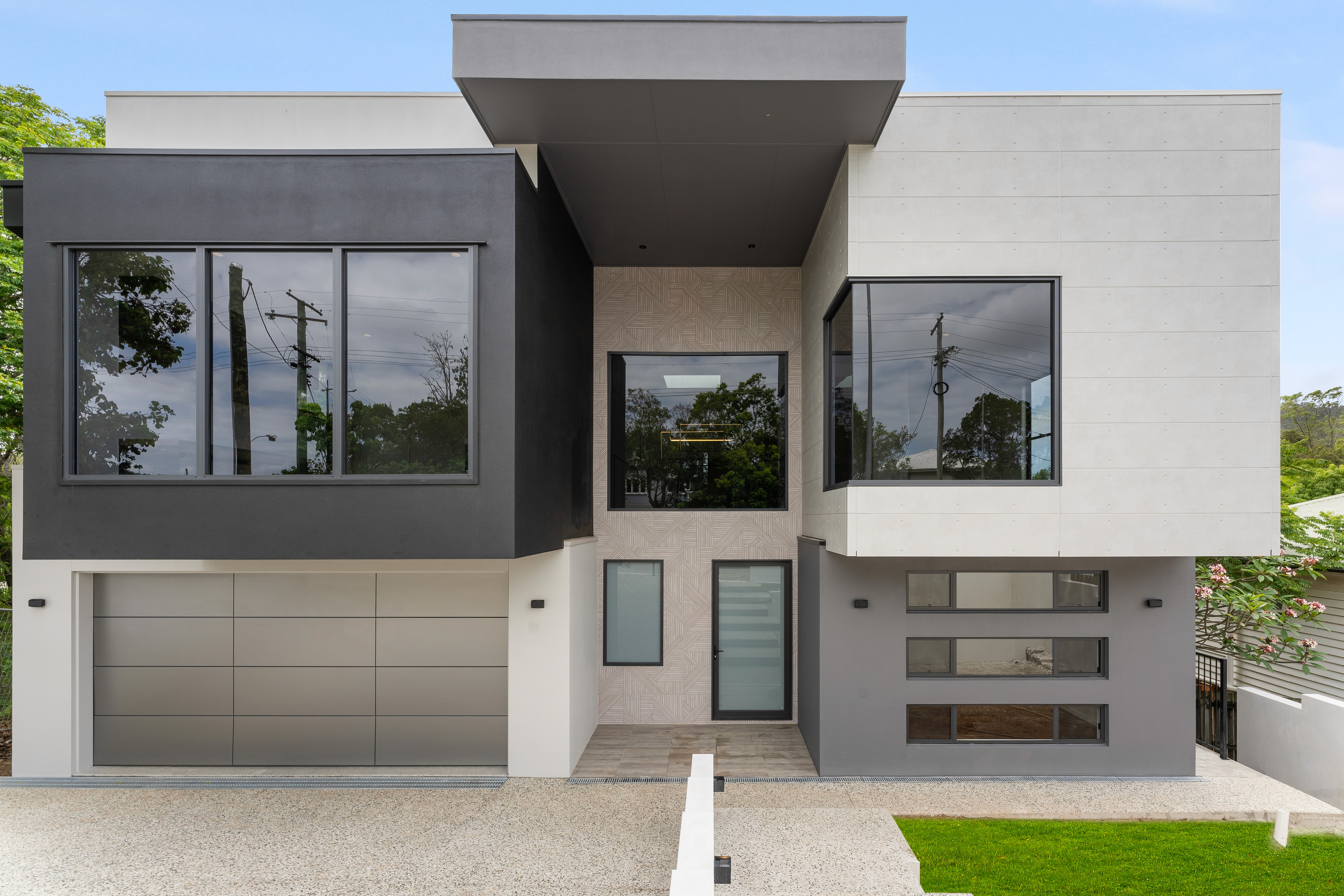
Many Brisbane homeowners start with the same vision: a block of land and a picture of a crisp, modern home sitting perfectly on it.
The practical questions usually follow closely behind. Will a flat roof handle local storms? Can an open-plan layout work on a narrow lot? What happens when the site slopes more than a standard floorplan assumes?
Modern home design works brilliantly in Brisbane and South East Queensland, but only when it responds directly to the site, the climate, and the local approval pathways. A layout that looks clean on paper can become hot, dark, or difficult to approve if it ignores these realities.
Whether you are looking to knockdown and rebuild or build on a sloping block, modern home design must do two jobs at once: express a clean aesthetic and solve practical site constraints.
What Defines Modern Home Design?
Modern design is frequently reduced to a visual checklist: flat roofs, large windows, and minimal detailing. While these are common features, the core principle of modern home design is organising space so the home feels highly functional and connected to its environment.
Form Follows Function
The strongest modern designs start with usability. Consider where morning light enters, how the kitchen functions during a gathering, and whether the primary suite is adequately separated from the main living zones.
An open-plan layout functions best when it has distinct boundaries defined by structural elements rather than internal walls. These boundaries are created through custom joinery, changes in ceiling height, strategic glazing lines, or transitions in flooring materials.
Key Features of Modern Layouts
Clean Lines: Straight rooflines and simple wall planes reduce visual clutter.
Large Openings: Expansive doors and windows connect internal rooms directly with courtyards, decks, or views.
Material Honesty: Timber, concrete, and steel are exposed and utilised for their natural textures rather than covered up.
Indoor-Outdoor flow: External living spaces are designed as primary rooms, not afterthoughts.
Modern does not mean stark. Some of the most highly functional Brisbane homes use a modern structural framework paired with warm finishes like timber battens and textured masonry. For example, in a two-storey home, the staircase often sits in a highly visible area. When weighing materials, this resource on designing glass and timber staircases highlights how transparency and warmth can work together structurally.
Common Modern Home Typologies
Most modern home designs fall into a few practical typologies, each solving a different site condition.
1. Pavilion Style
A pavilion plan separates the home into distinct wings, often linked by a covered breezeway or corridor.
Best for: Clear zoning between parents and children, capturing specific views, and creating strong transitional outdoor spaces.
2. Courtyard House
This design wraps the home around a protected central open space, bringing light and air deep into the floorplan.
Best for: Tighter urban sites, zero-boundary lots, and blocks where overlooking from neighbours is a privacy concern.
3.Split-Level Design
On sloping land, floor plates step with the natural contour of the block instead of relying on massive retaining walls to create a flat slab.
Best for: Reducing heavy excavation, retaining natural views, and creating dynamic internal volumes with double-height spaces.
For a deeper look at managing flow, this blog on modern open-plan home design in Brisbane is a highly useful companion.
4. Linear Layout
Rooms are arranged along a long axis, often pushing circulation to one side of the home.
Best for: Narrow lots where width is limited. It keeps the structure straightforward and prevents wasted space in dead hallways.
Adapting Modern Plans to Brisbane Sites
A modern design must perform in Brisbane’s specific subtropical climate.
Climate and Thermal Performance
Modern homes in Queensland must satisfy the current 7-star NatHERS energy rating requirement. Orientation, glazing, shading, and insulation now carry immense weight under these standards.
Large openings suit modern homes, but they require structural control. West-facing glass without proper shading creates heavy heat loads and glare. North-facing living areas, protected outdoor zones, and openings positioned for cross-ventilation perform exceptionally well in SEQ conditions.
Build shading into the structure: Eaves, screens, battens, and covered terraces must be integrated into the initial drawings.
Utilise breezes: Window placement, room depth, and door alignment dictate airflow.
Optimise outdoor rooms: Covered courtyards, patios, and breezeways buffer heat and reduce weather exposure on internal glass.
For a closer look at how these decisions are managed at the concept stage, review this blog on custom house designs in Brisbane for site-specific modern homes.
Solving Sloping Blocks
Slope produces striking homes, but only when the floor levels follow the land. Forcing a flat slab on a steep site shifts the budget heavily into excavation, retaining walls, and complex drainage.
The Queensland Building and Construction Commission guidelines highlight how footing design and site preparation matter in reactive soils. A split-level or suspended floor arrangement often provides a cleaner structural response, keeping the house sitting naturally on the block.
Managing Narrow Lots
Many SEQ projects involve difficult, constrained parcels. On a narrow lot, openness must be controlled. A single, oversized room running the length of the house can feel exposed and difficult to furnish.
Better results are achieved through a sequence of connected spaces, using central courtyards, side lightwells, or upper-level voids to pull daylight into the centre of the plan. Door selections also matter heavily on tight boundaries; this expert guide on hinged doors is a useful reference when comparing practical access options for constrained layouts.
Understanding the Budgeting Process
Budgeting should be utilised as a structural design tool. It dictates where to invest for high performance and where simplicity serves the house better.
Modern homes often look minimal, but achieving clean lines requires precise construction. Primary cost drivers include:
Glazing: Large openings require heavier structural steel, specific shading designs, and high-performance glass.
Roof Complexity: Multiple roof transitions and hidden gutters increase labour and waterproofing requirements.
Site Works: Excavation, retaining, drainage, and access constraints heavily influence the preliminary budget.
Smart modern home design is about investing in the structural elements that ensure the house performs efficiently every day.
Navigating Timelines and Council Approvals
Delays rarely start at the council level; they start when a design has not been properly tested against the site's physical constraints. Approvals are straightforward when the initial drawings account for block width, overland flow paths, overshadowing, and the Brisbane City Plan.
The standard pathway includes:
Site Review: Checking slope, orientation, setbacks, and local overlays.
Concept Planning: Resolving the building form and major site levels.
Design Development: Coordinating structural engineering, materials, and compliance details.
Certification: Moving through private certification or town planning, depending on the block's constraints.
Construction Documentation: Finalising drawings for accurate pricing and execution.
On sloping blocks and narrow lots, the front-end planning takes time. Resolving levels, retaining, and buildability early is highly efficient compared to redesigning after an engineer or certifier raises compliance objections. For a clear overview of this timeline, see this guide to the critical stages of building a custom house in Brisbane.
Frequently Asked Questions
Are modern home designs more expensive to build?
They can be, depending on the structural requirements. Large spans require heavier engineering, and expansive glass requires robust framing and careful waterproofing. A restrained modern plan is often highly cost-effective compared to a highly articulated house with multiple corners and complex rooflines.
Can a modern home work on a narrow Brisbane lot?
Yes. Good modern design on a narrow lot depends on spatial discipline. Rooms must function efficiently, hallways are kept to a minimum, and windows are positioned to capture light without creating privacy issues with neighbours.
Is a flat roof required for a modern look?
No. Low-profile roofs suit the aesthetic, but roof design must manage Southeast Queensland's rainfall intensity. Simple skillion or concealed-pitch roofs often provide the modern aesthetic while offering highly reliable drainage and waterproofing.
Why is early engineering so important on sloping sites?
Engineering dictates footings, slabs, retaining walls, and stormwater management. If these are not resolved early, the project faces redesigns, delays, or significant earthwork variations once construction begins.
Should I start with a standard plan or go fully custom?
A modern home design only works when the layout fits the land, the climate, and the way you live. Orientation, structure, shading, and buildability are the details that turn a sharp-looking concept into a highly functional reality.
If you are evaluating modern home designs for your property, Flascon Construction Group provides integrated custom building services across Brisbane and SEQ. A practical early site assessment will clarify exactly what is structurally feasible on your block.
GET A FREE QUOTE
Ready to Explore your Property Vision?
Request a tailored quote today and discover how Flascon can deliver a bespoke build that fits your vision.
Article