
Renovate or Rebuild? How to Decide for Your Brisbane Home
Published Updated 6 min read
On this page
- Renovate vs Knock Down Rebuild: Quick Comparison
- When Does a Renovation Make Sense?
- When Should You Choose a Knockdown Rebuild?
- Why Does Rebuilding Offer More Predictability Than Renovating?
- What Is the Traditional Building Character Overlay?
- How Does Your Block Affect the Decision?
- Frequently Asked Questions
- Start with a Clear Site Assessment
If you own a property in a prime Brisbane location but the existing house no longer meets your needs, the decision normally comes down to three things: the physical condition of the existing structure, your block's orientation, and what local council will actually allow. Renovating preserves character and works well when the bones of the house are sound; a knockdown rebuild gives you a complete structural clean slate when they aren't, or when the block itself demands a different approach.
Renovate vs Knock Down Rebuild: Quick Comparison
| Factor | Renovate | Knock Down Rebuild |
|---|---|---|
| Best for | Homes with good bones, character features worth preserving | Severe structural issues, poor orientation, major layout change |
| Structural certainty | Lower, issues often surface once walls open up | Higher, everything is new, engineered to current standards |
| Council complexity | Usually lighter, unless heritage-listed | Can be heavier in character overlay areas |
| Design freedom | Constrained by the existing footprint and load-bearing walls | Full freedom to reorient and redesign from scratch |
| Character/heritage preservation | Retains original features and street presence | Starts fresh, not an option in protected character precincts |
When Does a Renovation Make Sense?
Renovating is highly effective when the existing structure has good bones and the goal is updating finishes or making minor spatial adjustments.
Preserving character and heritage. Brisbane is defined by its pre-war and character homes. If your property features classic details like VJ walls, original hardwood floors, and ornate ceilings, a renovation lets you preserve that history. In many older suburbs, preserving the street-facing facade isn't just a design choice, it's a council requirement.
The current layout already works. If the existing footprint functions well and the home is already positioned to capture winter sun and summer breezes, a full structural overhaul isn't necessary. Updating kitchens, modernising bathrooms, or adding a rear deck can significantly improve liveability without requiring heavy demolition.
Only specific areas need attention. Renovation is the logical path when just certain zones of the home need work. If the foundations, roof, and framing are solid, targeting specific areas keeps the project contained.
When Should You Choose a Knockdown Rebuild?
While renovating works well for localised updates, forcing a modern, open-plan layout into an aging, compartmentalised structure often demands intense engineering. In these cases, a knockdown and rebuild can be the more efficient path.
Severe structural degradation. Older homes often hide significant issues behind the plasterboard. If a building inspection reveals extensive termite damage, severe subsidence requiring underpinning, or widespread water damage, stabilising the existing structure may no longer be the practical option. Starting fresh guarantees a structurally sound foundation engineered to modern standards.
Fixing poor house orientation. You can change wall colours and flooring, but you can't easily rotate an existing house. If your home faces west and bakes in the afternoon sun, or blocks the prevailing cooling breezes entirely, a renovation won't solve the underlying thermal problem. Demolishing the structure lets you establish the best house orientation from scratch, placing living areas to capture northern light, and genuinely improve passive heating and cooling.
A complete layout overhaul. If your goal is turning a closed-off, single-level post-war home into an open-plan, two-storey residence, you're effectively building a new house anyway. A knockdown rebuild gives your designer a clean slate, unconstrained by existing load-bearing walls or outdated plumbing runs.
Why Does Rebuilding Offer More Predictability Than Renovating?
The fundamental difference between the two paths is structural predictability.
Renovating an older Brisbane home often involves a process of discovery. Opening up walls or lifting floors frequently reveals outdated wiring, non-compliant plumbing, or hazardous materials, and managing these discoveries means strict compliance, particularly around safe removal processes outlined by Queensland's asbestos regulations. These rectifications get managed as they're found, which can shift your timeline.

A knockdown rebuild removes that guesswork. Once the site is cleared, construction moves forward on precise, modern engineering, all framing, wiring, plumbing, and insulation are brand new. This gives you a genuinely predictable timeline and ensures the home is built to current Nationwide House Energy Rating Scheme standards, guaranteeing modern thermal performance.
What Is the Traditional Building Character Overlay?
Before making any design decisions, you need to understand your property's legal constraints. Brisbane City Council strictly regulates what can be demolished and what must be retained.
If your property falls within a Traditional Building Character Overlay, full demolition is often prohibited or heavily restricted. In these precincts, homes built before 1947 generally require the original structure to be preserved, meaning a custom extension or specialised renovation is your only legal pathway. If your property is post-war and sits outside these character precincts, you generally have the freedom to clear the site and pursue a full custom home design.
There's a middle case worth knowing about too. Brisbane City Plan actually separates two things: the Traditional Building Character Overlay, which protects individual pre-1947 buildings from demolition, and the broader Character Residential Zone, which can still apply design requirements, matching frontage widths, block patterns, and streetscape character, to a property even if the existing house itself is post-1946 and not individually protected. So a newer home inside a character zone can generally still be demolished, but a knockdown rebuild may face stricter design guidelines than an equivalent block entirely outside these areas. It's worth confirming which of these actually applies to your specific property, not just checking the building's age.
How Does Your Block Affect the Decision?
Every site dictates its own best use. A wide, flat block gives you flexibility for either a sprawling renovation or a broad new build. But if you're dealing with a sloping block or a highly constrained narrow lot, starting fresh often lets you design a structure that steps naturally with the land, rather than engineering an old house to accommodate new retaining walls it was never built for.
Frequently Asked Questions
Is it cheaper to renovate or knock down and rebuild in Brisbane? It depends entirely on the property. A renovation can look cheaper upfront, but hidden issues, outdated wiring, non-compliant plumbing, structural damage, often surface once walls open up and add to the cost as the project goes. A knockdown rebuild has a higher predictable starting cost but far fewer surprises once construction begins.
Can I knock down and rebuild in a character overlay? Generally no, if your home is within a Traditional Building Character Overlay and was built before 1947, Brisbane City Council typically requires the original structure to be preserved. A property inside the broader Character Residential Zone but not individually protected can still generally be demolished, though a rebuild may face stricter design requirements than a block outside these areas entirely.
How do I know if my Brisbane home is worth renovating? It comes down to the condition of what's already there. If the foundations, roof, and framing are sound and the layout largely works, renovating specific areas is usually the more efficient path. If a building inspection reveals significant structural issues or the orientation works against you, a rebuild is often the more practical option.
Does a knockdown rebuild take longer than a renovation? Not necessarily. Renovations can actually run longer in practice, since discoveries made once walls open up require managing as they're found, which can extend the timeline. A rebuild's timeline is generally more predictable because it's based on new construction from a cleared site rather than working around unknowns.
Start with a Clear Site Assessment
The decision to rebuild or renovate should be based on objective site data, structural reality, and council compliance, not guesswork. If you're weighing your options in South East Queensland, our team provides expert site evaluations, assessing your property's structural condition, identifying relevant council overlays, and helping determine the most efficient path forward. Request a site assessment and start planning your project with clarity.
Keep reading
More Brisbane building guides
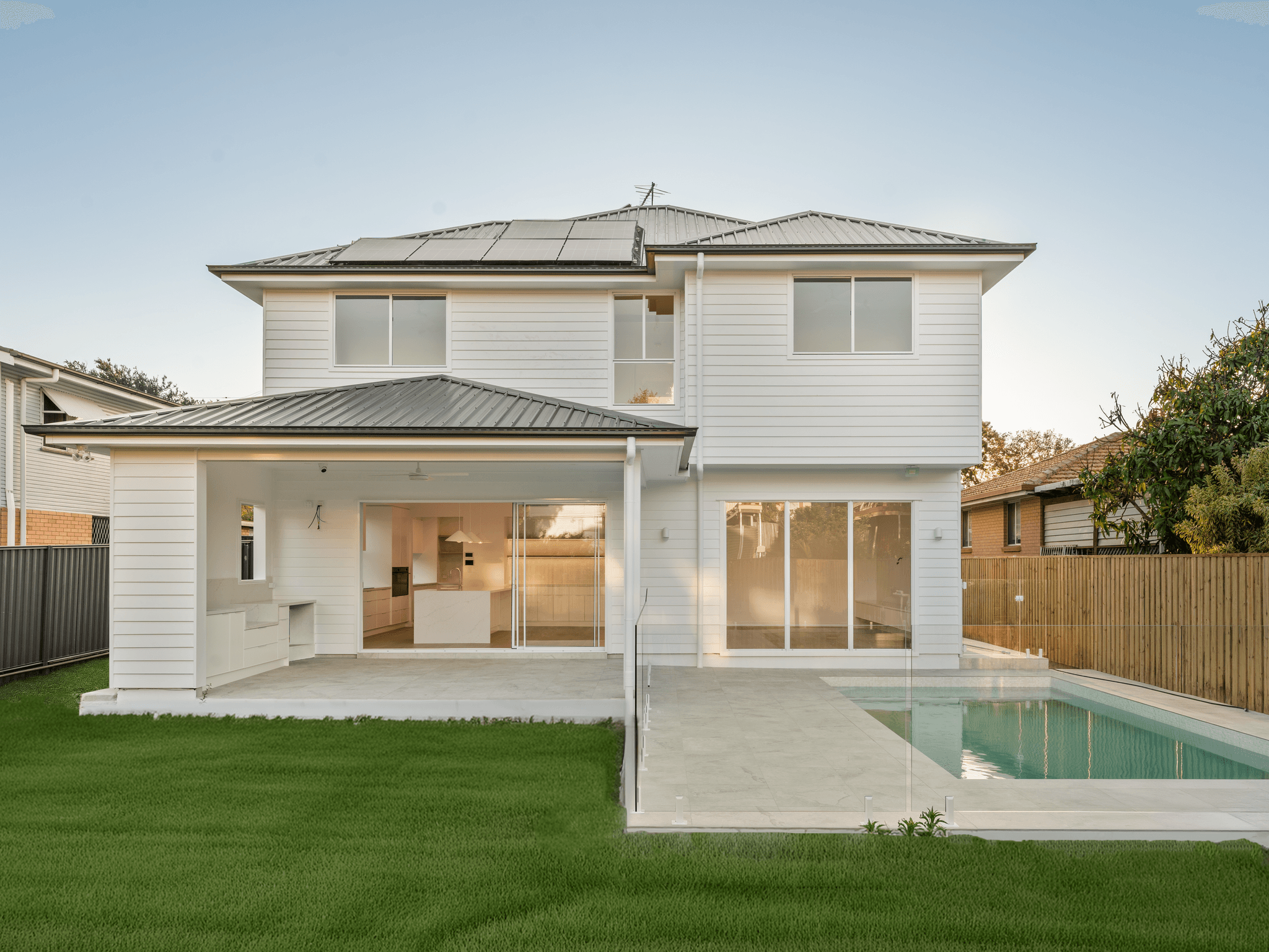
Custom Home Design4 min read
Alfresco Ideas for a Brisbane Home
Alfresco ideas that actually hold up in Brisbane's climate: what has to be right structurally, from a builder.
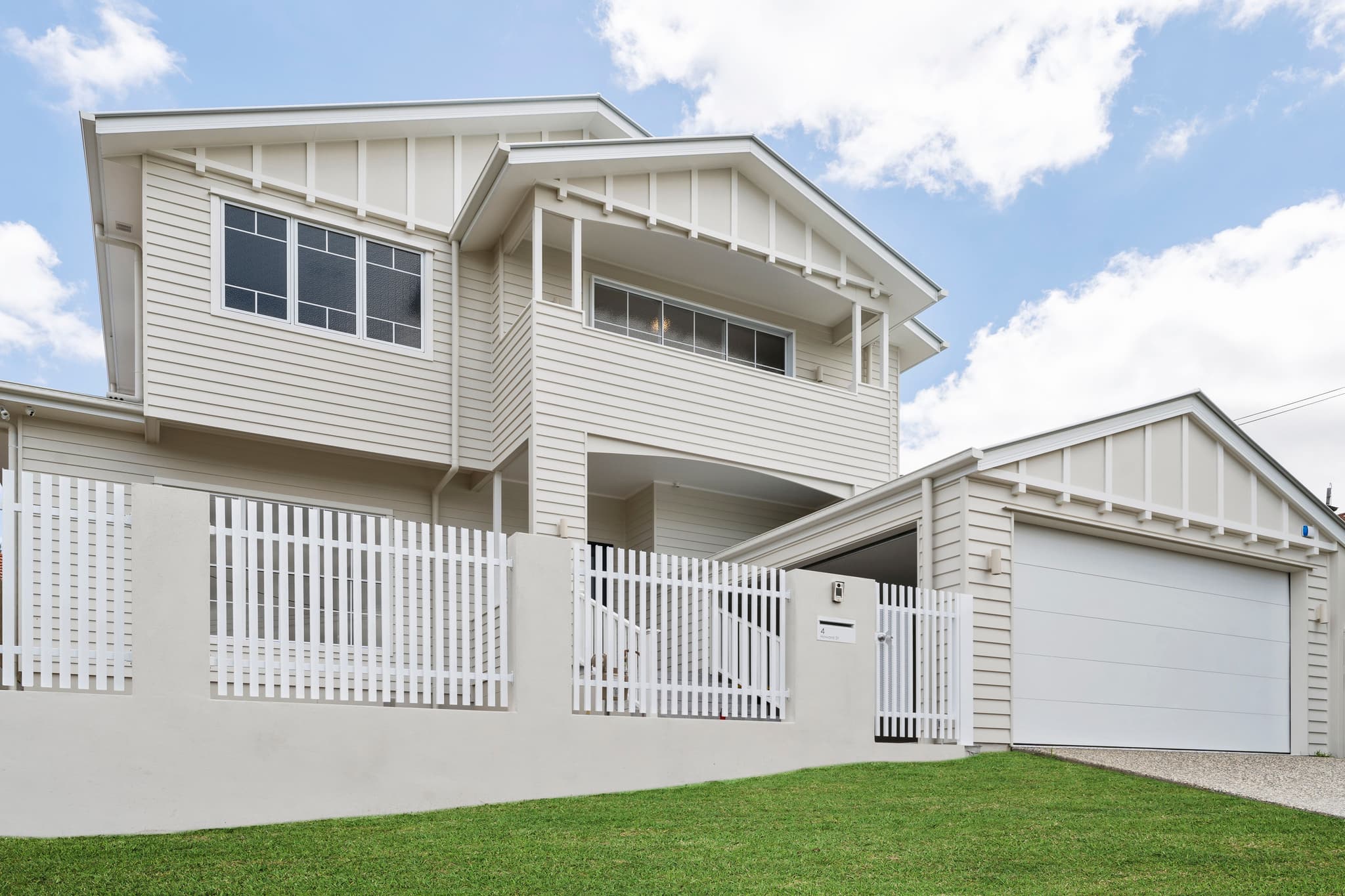
Custom Home Design6 min read
Battle-Axe Block House Designs: A Brisbane Builder's Guide
Thinking about a battle-axe block in Brisbane? What the term actually means, the real Brisbane rules for rear lots, and how to design a home that works.
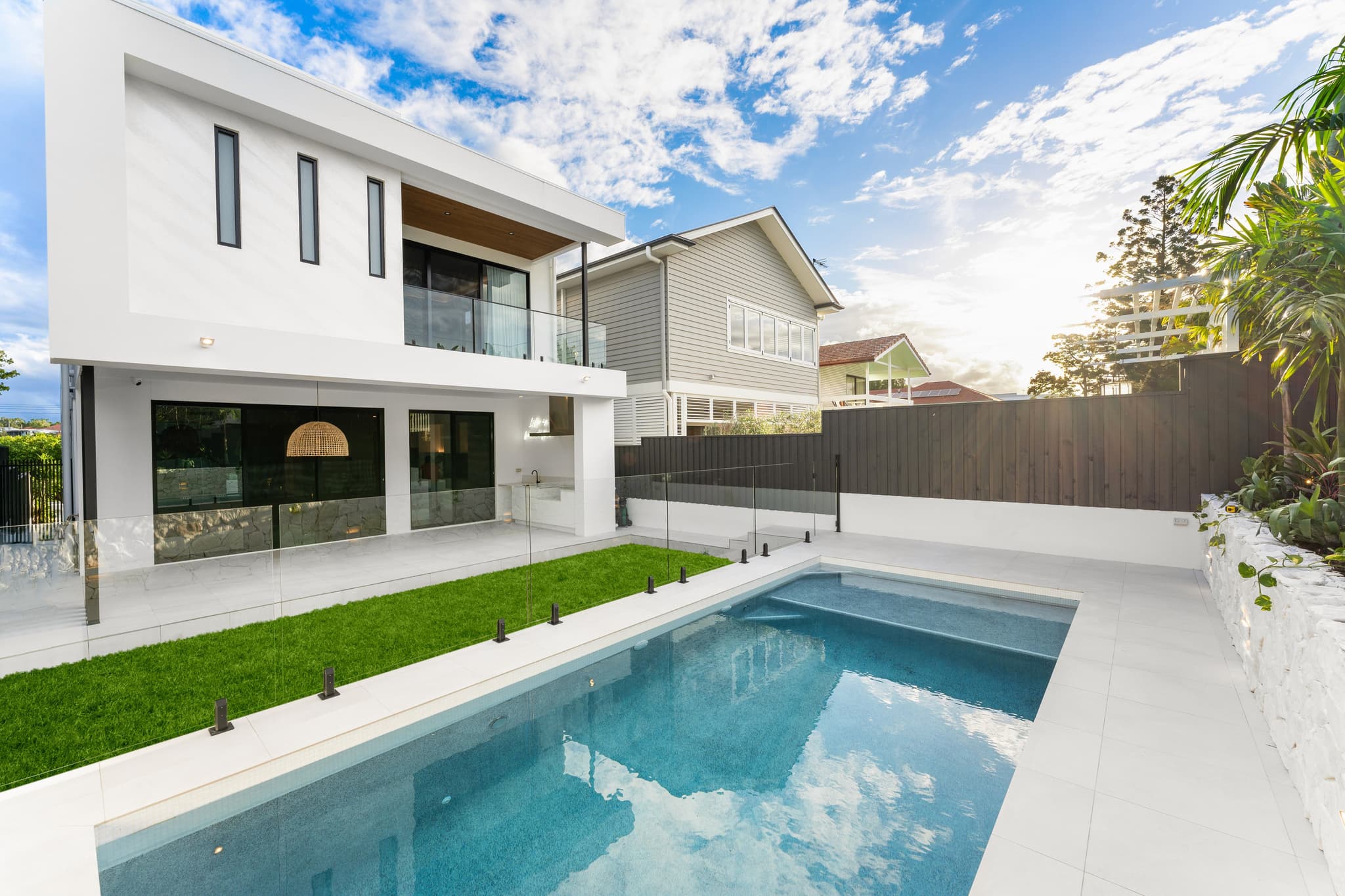
Custom Home Design6 min read
Modern Two Storey Houses for Brisbane Blocks
An informational guide to modern two storey houses on Brisbane blocks. Explore custom split-level, narrow lot, and passive design layouts.