DATE :
Feb 11, 2026
CATEGORY :
Construction
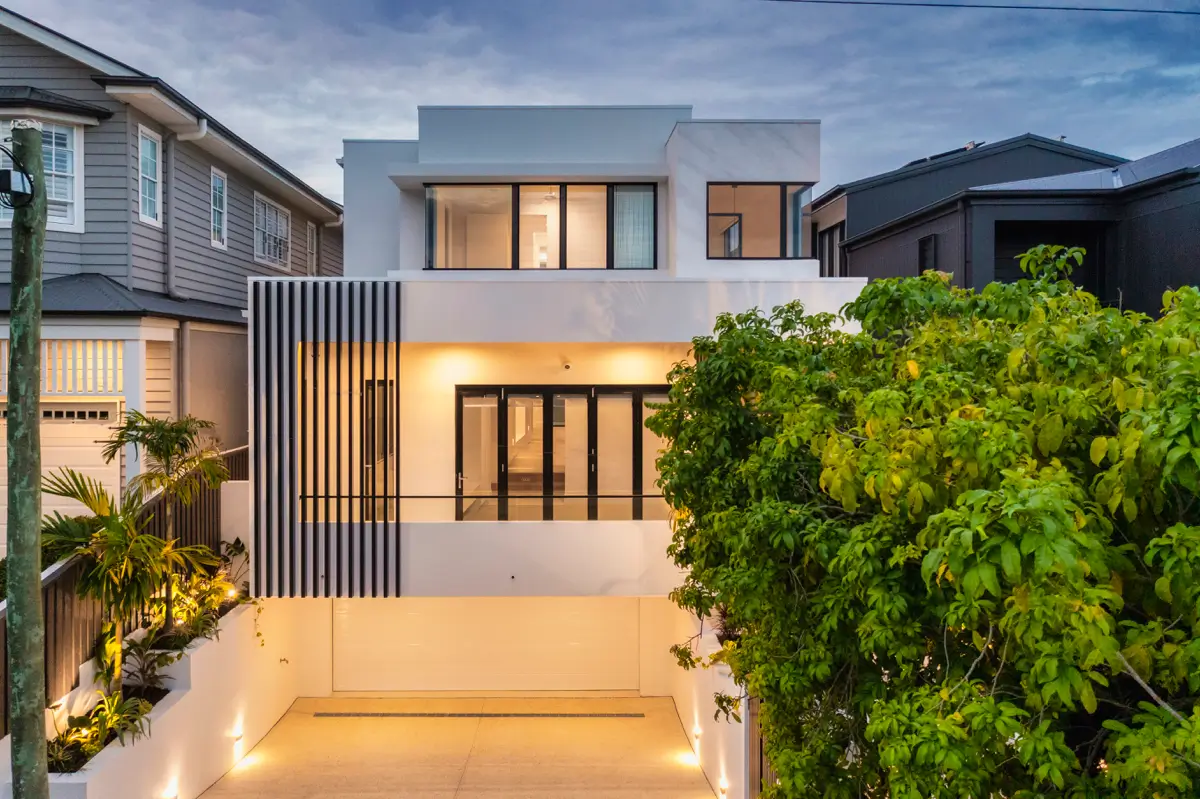
So, you’re considering a knock-down-rebuild in Brisbane? The big question on everyone's mind is always: "What’s it really going to cost?"
All up, you can expect the total project cost for a knock-down rebuild in Brisbane to fall somewhere between $520,000 and $1,300,000. This wide range reflects how much a project can vary depending on the scale, the block of land, and the level of finishes you choose. It's a significant investment, but one that pays off by creating a home perfectly suited to your lifestyle.
Understanding The True Cost Of Rebuilding In Brisbane
Making the decision to knock down and rebuild is a huge step, and getting a firm grip on the finances from the very beginning is critical. Unlike buying an existing house with a single price tag, a rebuild involves several distinct financial stages.
Your builder's construction quote covers the house itself, but the total project cost includes everything that happens before and after. Demolition, design fees, council approvals, landscaping, driveways, and fencing all sit outside the standard building contract. Understanding this upfront is the difference between a smooth project and budget stress halfway through.
Key Cost Components
For any knock-down-rebuild in Brisbane, the costs will fall into these key categories:
Demolition and Site Preparation: Safely removing the old house, clearing the site, and getting the land ready for your new foundation.
Design and Approval Fees: Costs for architects or draftspeople, engineers, soil tests, surveyors, and all council application and certification fees.
New Home Construction: All the labour, materials, and management required to build your new home from the ground up.
Finishing and External Works: Driveways, fencing, landscaping, decking, and pools. These are often outside a standard building contract essential to budget for.
By getting to know our full process, you can get a clearer picture of how we manage these stages to deliver your project smoothly.
Stage 1: Demolition and Site Preparation Costs
Before the frame of your new home goes up, the old one has to come down. This first stage is where budgets can get into trouble right from the start if you don't account for the full scope.
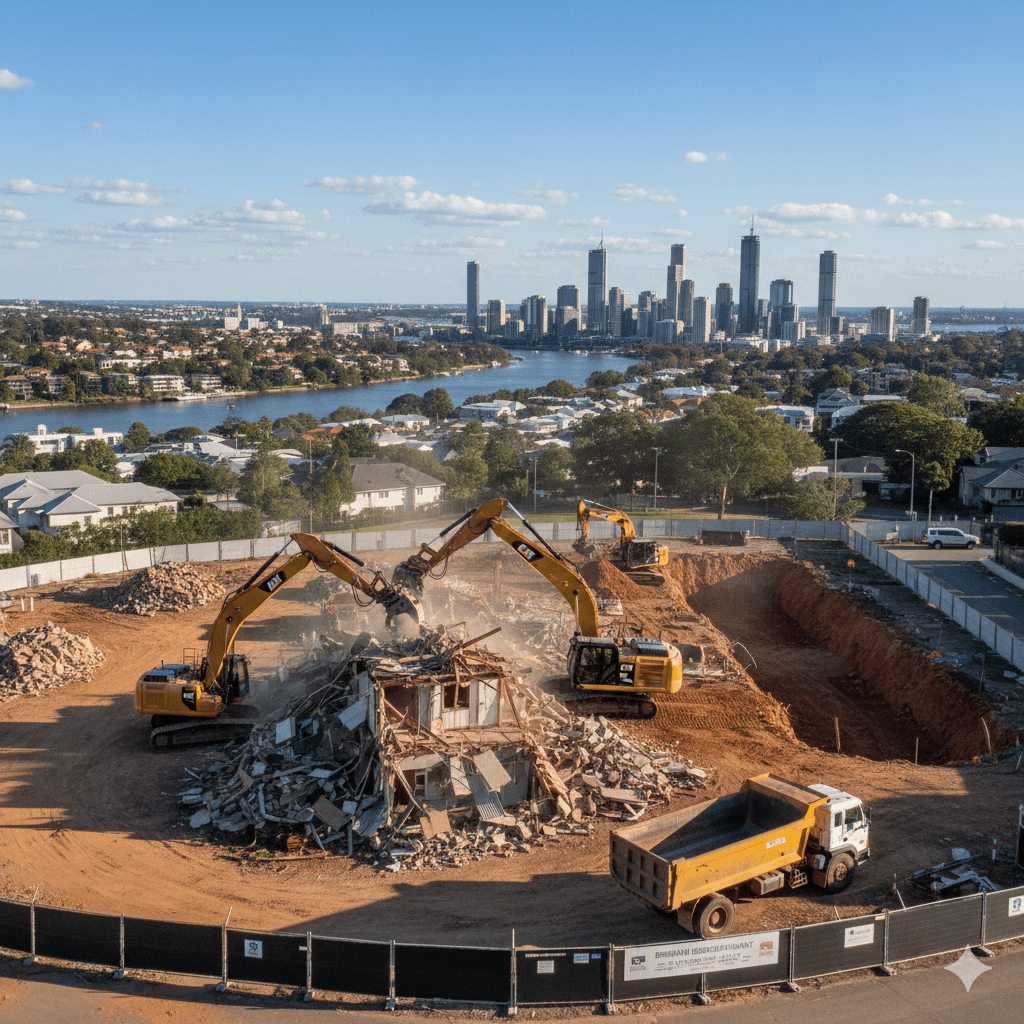
This process is more complex than just bringing in a wrecking ball. It’s a carefully planned deconstruction that demands the right permits, strict safety measures, and thorough site clearing.
What Drives Demolition Costs?
There’s no single flat fee for demolition. The final price depends on your property's unique characteristics. A small, single-storey timber house on a flat, easy-to-access block might cost around $20,000 to demolish. A sprawling double-brick home on a concrete slab on a steep block could easily exceed $35,000.
Key factors that shape your demolition quote:
Size and Storeys: A bigger footprint and multiple levels mean more material to handle and more labour hours.
Construction Materials: Brick, concrete, and steel are tougher and more expensive to demolish and transport compared to lightweight timber frames.
Site Accessibility: Tight access, narrow streets, or low-hanging power lines can make the job trickier, adding time and cost. For tricky blocks, understanding the nuances of restricted access site builds is essential.
Foundation Type: Pulling up a deep concrete slab is a much bigger job than clearing a home built on stumps.
The Asbestos Factor in Older Brisbane Homes
One of the most significant costs you might face is the removal of hazardous materials, especially asbestos. Given that asbestos was widely used in homes built before 1990, it's common in many older properties across Brisbane.
If asbestos is found in your roofing, wall sheeting, old insulation, or even vinyl flooring, it will escalate the complexity and price of the job. Professional asbestos remediation can easily add $3,000 to $15,000+ to your demolition bill.
Before signing a demolition contract, get an independent asbestos survey. This identifies any hazardous materials upfront, allowing you to get a fixed-price quote for its removal and avoid costly variations later.
Beyond Demolition: Site Preparation Essentials
Once the old house is gone, the site needs to be prepared to meet engineering and building codes. These essential site preparation jobs include:
Utility disconnections: (electricity, water, gas, telecommunications)
Soil testing by a geotechnical engineer to determine stability and engineering requirements
Land survey to map exact boundaries, contours, and easements
Clearing any leftover debris, old footings, trees, and shrubs
Earthworks to create a level building pad if needed
When you add it all up, demolition and site preparation in Brisbane typically ranges from $20,000 to over $40,000. The final figure can swing dramatically based on asbestos, site access, and the original house's size and materials.
Additional costs that can push this higher:
Large tree/stump removal: $1,000–$5,000+ per tree
Steeply sloping blocks requiring extensive earthworks: $5,000–$25,000+
Poor site access requiring smaller machinery or traffic control: $2,000–$10,000+
Concrete pool removal: $5,000–$15,000+
Extensive concrete slabs (driveways, paths, shed slabs): $3,000–$8,000+
A thorough initial assessment of your specific property is the only way to get a realistic figure for this crucial first stage.
Stage 2: Navigating Design, Planning, and Approval Fees
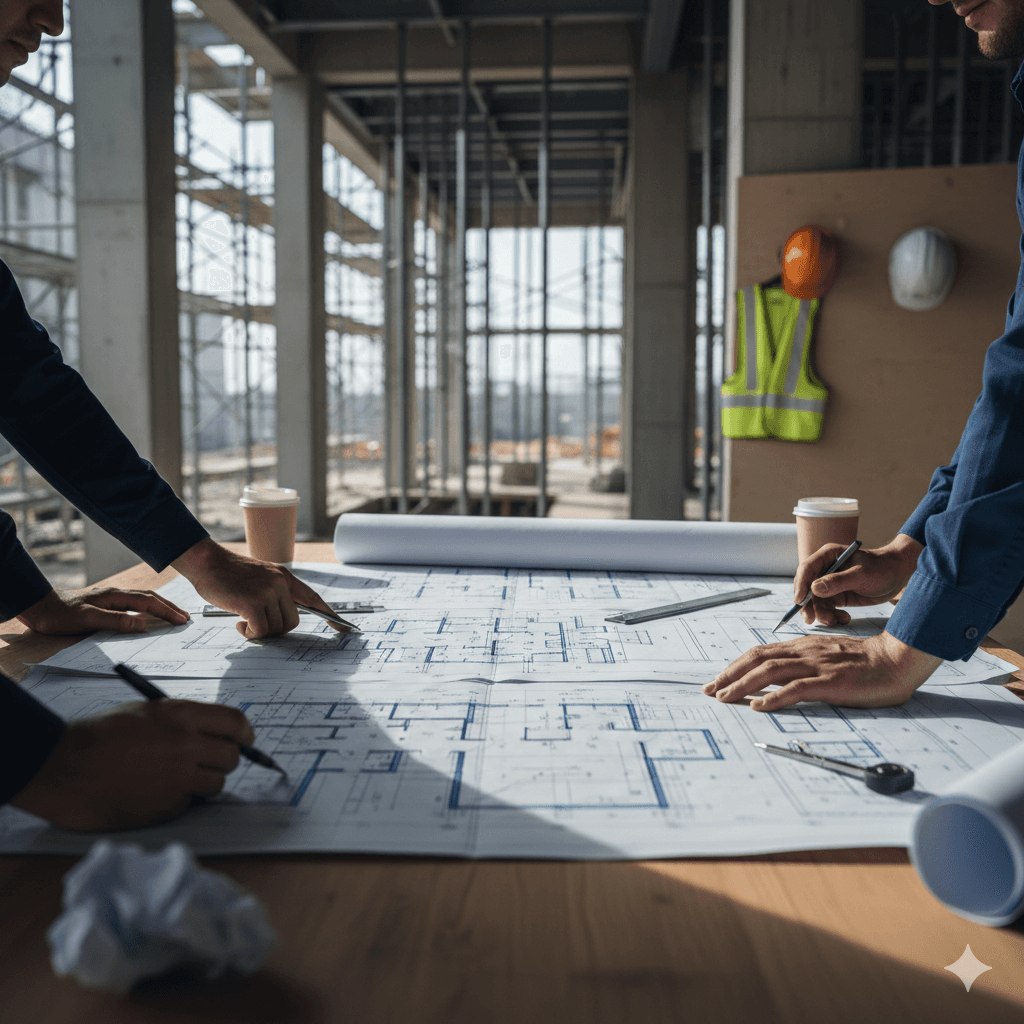
Once the old house is gone and your block is cleared, the project shifts from the physical to the planning phase. This is where your vision starts taking shape on paper, getting translated into detailed blueprints before you can get the green light to build.
These professional fees cover all the expertise and administrative hurdles you need to clear before a single slab can be poured. They're a crucial part of the total knock-down rebuild Brisbane cost, ensuring your new home is well-designed, structurally sound, and fully
Architects, Draftspeople, and Certifiers
Your first big decision here is who will draw up the plans. In Brisbane, you’ve got two paths, and they come with very different price tags and outcomes.
Architects: If you’re after a completely unique, one-of-a-kind home, an architect is your go-to. They provide a full-service, bespoke design experience, creating a home that’s perfectly tailored to your family, your block of land, and the Queensland climate. They might design specific window placements to capture breezes or create a unique facade that complies with a character overlay. Fees are usually a percentage of the final construction cost, typically between 8% and 15%.
Building Designers or Draftspeople: Got a pretty clear picture in your head already? A building designer or draftsperson is a more direct, cost-effective way to get those ideas into technically sound drawings. They typically charge an hourly rate or a fixed project fee, which works out to be less than an architect. It’s the ideal choice when you mainly need the technical know-how to get your vision ready for builders and the council.
No matter which way you go, you'll also need a private building certifier. They’re the independent expert who checks that the plans meet all the National Construction Code and local rules. They also conduct mandatory inspections during the build to make sure everything is being done by the book. Expect to pay between $2,000 to $5,000 for their services, depending on how complex your new home is.
Custom Design vs. Volume Builder Plans
The design path you take has a massive effect on everything from your creative freedom to your final budget.
Custom home design puts you in the driver's seat for every single decision. You control the floor plan, the window placements to catch the morning sun, and every finish. This is how you create something truly special. To get a feel for what's involved, it's worth exploring what a custom home design and build service looks like from start to finish.
Volume builder plans present you with a catalogue of proven home designs. You can usually make some minor tweaks, but the fundamental layout is locked in. The big advantage? The design fees are minimal because all the drafting and engineering work has been done before. It's a popular route for anyone keeping a close eye on the budget.
Brisbane City Council Approval Costs
Getting council approval is a critical step, and yes, it comes with its own set of fees. Before you can build anything in Brisbane, you need the official sign-off ensuring your new home is safe and fits within local planning rules.
Here are the main costs to prepare for:
Development Application (DA) Fees: If your design pushes the boundaries of standard planning rules, maybe because of your block size, a character overlay in your suburb, or specific zoning, you'll need to lodge a DA. The assessment fees paid to the council for this can be anywhere from $2,000 to over $10,000, depending on how complex your situation is.
Building Approval (BA) Fees: This is the final stamp that says your construction plans meet all the technical building codes. Your private certifier handles this, and the cost is usually wrapped up in their total fee.
Infrastructure Charges: For some new builds, Brisbane City Council applies a levy to help pay for essential community infrastructure like new roads, water mains, and local parks. These charges can be significant, so it's vital to factor them into your budget from day one.
Engage a town planner early if your block has overlays. Their expertise can streamline the DA process, potentially saving you months of delays and thousands in redesign fees by ensuring your initial plans are compliant.
Stage 3: Budgeting for Your New Home's Construction
With the old house gone and your new plans in hand, we’ve arrived at the main event: building your new home. This is easily the biggest slice of your budget and the stage where your choices will make the most significant difference to the final numbers.
The construction cost isn't one fixed figure. It's influenced by the home's size, the architectural complexity, and the quality of every finish, fixture, and fitting you choose.
Understanding the Tiers of Construction
When building your new Brisbane home, there are three distinct tiers of quality:
Standard or Project Home: This is your most budget-friendly route, typical of volume builders. It relies on tried-and-tested designs, standard materials, and a curated selection of finishes to keep costs down.
Mid-Range or Quality Home: This is a real sweet spot for many families. It represents a big jump in quality and personalisation, giving you access to higher-grade materials, better energy efficiency, and more design flexibility.
Premium or Custom Home: This is where you get the keys to your imagination. A premium build is a completely bespoke process involving architects, high-end materials, luxury finishes, and meticulous craftsmanship.
When comparing builders' quotes, look beyond the total price. Create a spreadsheet to compare the "standard inclusions" side-by-side. One builder's base price might seem cheaper but excludes items like air-conditioning or quality appliances that the other includes, making the slightly higher quote better value overall.
A Practical Example: A 250m² Family Home
Let's put those numbers into perspective. Say you're building a fairly standard 250m² four-bedroom, two-bathroom home. Here’s how the construction cost shifts depending on the tier you choose:
Standard Build: At $2,200/m², the build would cost roughly $550,000.
Mid-Range Build: At $3,000/m², the cost jumps to $750,000.
Premium Custom Build: At $4,000/m², the construction cost hits $1,000,000.
That's a potential $450,000 difference for a home with the exact same footprint. The gap comes down entirely to your decisions on materials, architectural complexity, and the level of finish you want.
Key Decisions That Drive Up Costs
What specific choices create that massive price gap? It boils down to a few key areas:
Structural Design
Single vs. Double-Storey: A two-storey home needs a beefier slab and structure to support the second floor, making it more expensive than a single-storey home of the same total square meterage.
Roof Complexity: A simple gable roof is far more affordable to frame and finish than an intricate design with multiple hips, valleys, and pitches.
Open-Plan Living: Those huge, airy open-plan spaces often require heavy structural steel beams to carry the load, adding a significant cost compared to standard timber framing.
Exterior and Interior Finishes
This is where budgets can really get away from you. The "wow" factor often comes at a price.
Exterior Cladding: Using a lightweight option like fibre cement sheeting is cost-effective. If you upgrade to a full brick veneer, you could easily add $30,000 - $60,000 to the total cost.
The Kitchen: A standard laminate kitchen from a project builder might come in at $20,000. But a custom-designed kitchen with 2-pac cabinetry, stone benchtops, and high-end European appliances can soar to $70,000 or more.
Bathrooms: Basic ceramic tiles and standard fixtures will keep costs down. But once you opt for floor-to-ceiling Italian porcelain, frameless glass shower screens, and designer tapware, the cost per bathroom shoots up.
Getting a clear understanding of these variables is the key to building a realistic budget. By knowing where to invest your money and where you can save, you can take control of the construction cost and create a home that perfectly fits your family and your finances.
Budgeting for Hidden Costs and Essential Contingencies
Getting that detailed builder's quote in your hands feels like a massive step forward, and it is. But this number isn't the final figure for your total project cost. The true knock down rebuild Brisbane cost always includes more than just the construction contract itself. Successfully navigating your budget comes down to planning for the items that fall outside the builder's main scope.
What Your Building Contract Likely Excludes
Your building contract covers the core structure, from the slab and frame right up to the roof, along with the internal walls and standard plumbing and electrical fit-outs. Everything else needed to turn the house and land into a complete, liveable home is typically on you.
Here’s a practical checklist of things you’ll almost certainly need to budget for separately:
Landscaping and turfing
Driveways and paths
Fencing and gates
Window coverings (blinds, curtains, or shutters)
Retaining walls (essential if your block has any slope)
Mailbox and clothesline
To put it in perspective, a new concrete driveway in Brisbane can easily set you back $5,000 to $10,000. Fencing for an average suburban block could be another $8,000 to $15,000. These aren't minor costs, and they add up quickly.
The Importance of a Contingency Fund
No matter how meticulous the planning, every building project has the potential for surprises. A contingency fund is your project's financial safety net, there to absorb those unexpected hits without derailing the build or forcing you to compromise on quality.
A contingency fund of 10-15% of your total project cost is an absolute necessity. For a project budgeted at $800,000, this means setting aside an additional $80,000 to $120,000.
This buffer is there for three critical reasons:
Covering Unforeseen Site Issues: You might hit unexpected rock during excavation or run into complex stormwater issues that need an expensive engineering fix.
Absorbing Price Rises: The construction industry is volatile. Sudden spikes in material costs or labour shortages can blow out a finely tuned budget.
Allowing for Upgrades: It gives you the freedom to make a spontaneous decision, like upgrading to stone benchtops or adding more downlights, without the financial headache.
Beyond accounting for the known exclusions and the unknown surprises, it's also wise to research ways to reduce overall construction costs from the outset. By planning for absolutely everything, you’re budgeting for the real, all-inclusive cost of your new home.
The Financial Logic Behind Rebuilding in Brisbane
So, why are so many Brisbane homeowners choosing to knock down their old house and start fresh? It's not just about the thrill of a brand-new home. More often than not, the decision is rooted in sound financial logic and a clear vision for their long-term lifestyle.
When you rebuild, you’re creating a modern, energy-efficient home that’s designed for how your family lives today. That means no more worrying about outdated wiring, hidden asbestos, or plumbing that's on its last legs. Instead, you get the complete peace of mind that comes with a home built to today's stringent safety standards, all backed by a comprehensive builder's warranty.
Got Questions About Knock Down Rebuilds? We’ve Got Answers.
Embarking on a knock down rebuild journey always brings up a lot of questions. To help you get a clearer picture, we’ve put together answers to some of the most common queries we hear from homeowners across Brisbane.
How Long Does a Knock Down Rebuild Take in Brisbane?
Realistically, you should plan for the entire process to take somewhere between 12 to 18 months. That's from our very first chat about your ideas right through to the moment we hand you the keys to your new home.
This timeline breaks down into a few key stages:
Design and planning: 3–6 months
Council approvals: 2–4 months
Demolition and site prep: 1–2 months
Construction: 6–10 months
Of course, things like unexpected weather or tricky council feedback can sometimes extend these timelines a bit.
Is It Cheaper to Renovate or Rebuild?
This is the classic question, and the answer isn't always what you'd expect. The problem with large-scale renovations is the nasty surprises you can uncover once you start opening up walls. Think hidden termite damage, old and unsafe wiring, or asbestos that needs professional removal, these are the kinds of issues that can send a renovation budget spiralling out of control.
A knock down rebuild completely removes those unknowns. You get a fresh start with a home that meets all current building codes and energy standards, total freedom over the design, and the peace of mind that comes with a comprehensive builder's warranty.
If you're considering a knock-down rebuild in Brisbane, the team at Flascon Construction Group can help you understand what's possible on your block. From design considerations to budget clarity and construction timelines. Start your journey with a free, no obligation property assessment today.