
Small Lot Homes in Brisbane: The Small Lot Code Explained
Published Updated 6 min read
On this page
- Small Lot Homes in Brisbane: What the Small Lot Code Means for Your Build
- What does the Small Lot Code actually control?
- What counts as a small lot in Brisbane?
- Do you need council approval to build on a small lot?
- How does the building envelope shape the design?
- What Floor Plans Work Best on a Small Block?
- How do you make a small lot feel bigger?
- Why talk to a builder before you buy the block?
- Can you build more than one dwelling on a small lot?
- Frequently Asked Questions
- Talk to us before you design
Small Lot Homes in Brisbane: What the Small Lot Code Means for Your Build
A small lot in Brisbane is generally a block under 450 square metres, and a house on one is assessed against the Dwelling house (small lot) code in Brisbane City Plan 2014. That code sets limits on building height, boundary setbacks and site cover. If your design meets its acceptable outcomes, and any overlays on your site, it is generally accepted development. If it doesn't, you need a development application. Good small lot design starts by understanding the building envelope the code gives you, then designing the home to use every part of it.
What does the Small Lot Code actually control?
| What the code covers | What it means for your design |
|---|---|
| Building height | Houses are generally limited to 9.5 metres, and building higher needs Council approval, so height shapes your roof form and ceiling heights |
| Boundary setbacks | Setbacks vary with the site, the neighbouring development and the height of your building, so there is no single figure that applies to every lot |
| Site cover | Limits how much of the block the buildings can occupy, which is why small lot homes tend to go up rather than out |
| Built to boundary walls | The code sets where a wall can sit on the boundary, which can add real internal width |
Source: Brisbane City Council, Building a new house and Building near the boundary. Check your own lot against the Dwelling house (small lot) code on City Plan online.
Your actual numbers depend on your lot, so we confirm them against your site before any design work starts, not after.
What counts as a small lot in Brisbane?
Council defines a small lot as a block under 450 square metres. A rear lot is treated as small if it is under 600 square metres. For siting, the small lot code prevails over the Queensland Development Code.
Many narrow blocks are also small lots. A block 10 metres wide and 40 metres deep is 400 square metres, for example. If your frontage is the main challenge, our guide to narrow block house designs for 10m and 7m frontages goes into the layout detail.
Do you need council approval to build on a small lot?
Not always. A house on a small lot is likely to be accepted development if it complies with every acceptable outcome of the small lot code and any relevant overlay and neighbourhood plan codes. In that case you don't need anything in writing from council to start, although you still need a building approval from a private building certifier.
You will need a development application if the design doesn't comply. Two things catch people out:
- Character overlays. If your block is in the traditional building character overlay, a code assessable application may be required, and the design must also meet that overlay code.
- Designing first, checking later. A plan that looks right on paper can fall outside the envelope by a few hundred millimetres, which is the difference between a certifier approval and a development application.
How does the building envelope shape the design?
The envelope is the three-dimensional space the code lets you build in. The best small lot homes are designed from the envelope inward, not from a floor plan outward.
- A tight setback becomes a feature. A setback you can't build in can become a light-filled courtyard or a planted screen.
- A height limit drives the roof. A raked or skillion ceiling can add volume inside the same height.
- Site cover pushes the design upward. A two-storey layout often returns more usable space than a single level stretched to the limit.
What Floor Plans Work Best on a Small Block?
| Layout | How it works | Best for |
|---|---|---|
| Rear-living two-storey | Garage and secondary spaces at the front, open-plan living at the rear, bedrooms upstairs | Compact urban lots with a usable rear yard |
| Central courtyard | An open-air courtyard splits the home into front and rear zones and pulls light into the middle | Long, narrow blocks where the core would otherwise be dark |
| Split-level | Short flights of stairs step the floor plates down the slope | Sloping blocks, where it limits excavation and retaining |
For sloping sites in particular, see our guide to building on a sloping block.
How do you make a small lot feel bigger?
Three moves do most of the work: volume, light and connection to the outdoors.
- Volume. Raise ceiling heights on the main living level and add a void over living or the stair so the eye travels up.
- Light. Skylights over a stair or island, and high-level clerestory windows, bring in daylight without giving up privacy.
- Connection. Level thresholds from the living area to the alfresco make the outdoor space read as part of the room.
Why talk to a builder before you buy the block?
A site assessment before you commit tells you what the code lets you build, what the slope and access will cost you in design terms, and whether your preferred floor plan fits the envelope. Buying first and designing second is how people end up redesigning to fit.
On a small lot, access matters as much as design. Tight sites limit where materials can be stored and how machinery gets in, so the build sequence needs to be planned around the site.
Can you build more than one dwelling on a small lot?
Sometimes, depending on zoning and the lot. Multi-dwelling projects on compact sites need careful construction management, including acoustic separation between dwellings, tight delivery logistics and fire separation compliance. You can see how we handle this on the Selbourne Townhouses, and our guide to townhouse plans for narrow lots covers the planning side.
If your small lot is on a corner, the setback rules change. See our guide to corner block house designs.
Frequently Asked Questions
What is a small lot in Brisbane? A small lot is a block under 450 square metres. A rear lot under 600 square metres is also treated as a small lot under Brisbane City Plan.
Do I need council approval for a house on a small lot? Not if the design complies with all the acceptable outcomes of the Dwelling house (small lot) code and any overlays on your site. You still need a building approval from a private building certifier. If the design doesn't comply, or a character overlay applies, you may need a development application.
How high can I build on a small lot in Brisbane? Council generally treats dwelling houses over 9.5 metres high as code assessable, so most small lot designs are shaped to stay under that height. Check your own lot against the code and any overlay.
Can you build right up to the boundary on a small lot? In some cases, yes. The small lot code sets out when a wall can be built to the boundary, and these walls need fire-rated construction and engineering.
Is it worth using a builder who specialises in small lots? It helps, because most of the constraints show up before construction starts. A builder who has worked within the code can tell you early whether a design will comply and how it will be built on your site.
Talk to us before you design
If you are considering a small lot, we can assess your site and tell you what is possible before you spend money on drawings.
Keep reading
More Brisbane building guides
Building Guides8 min read
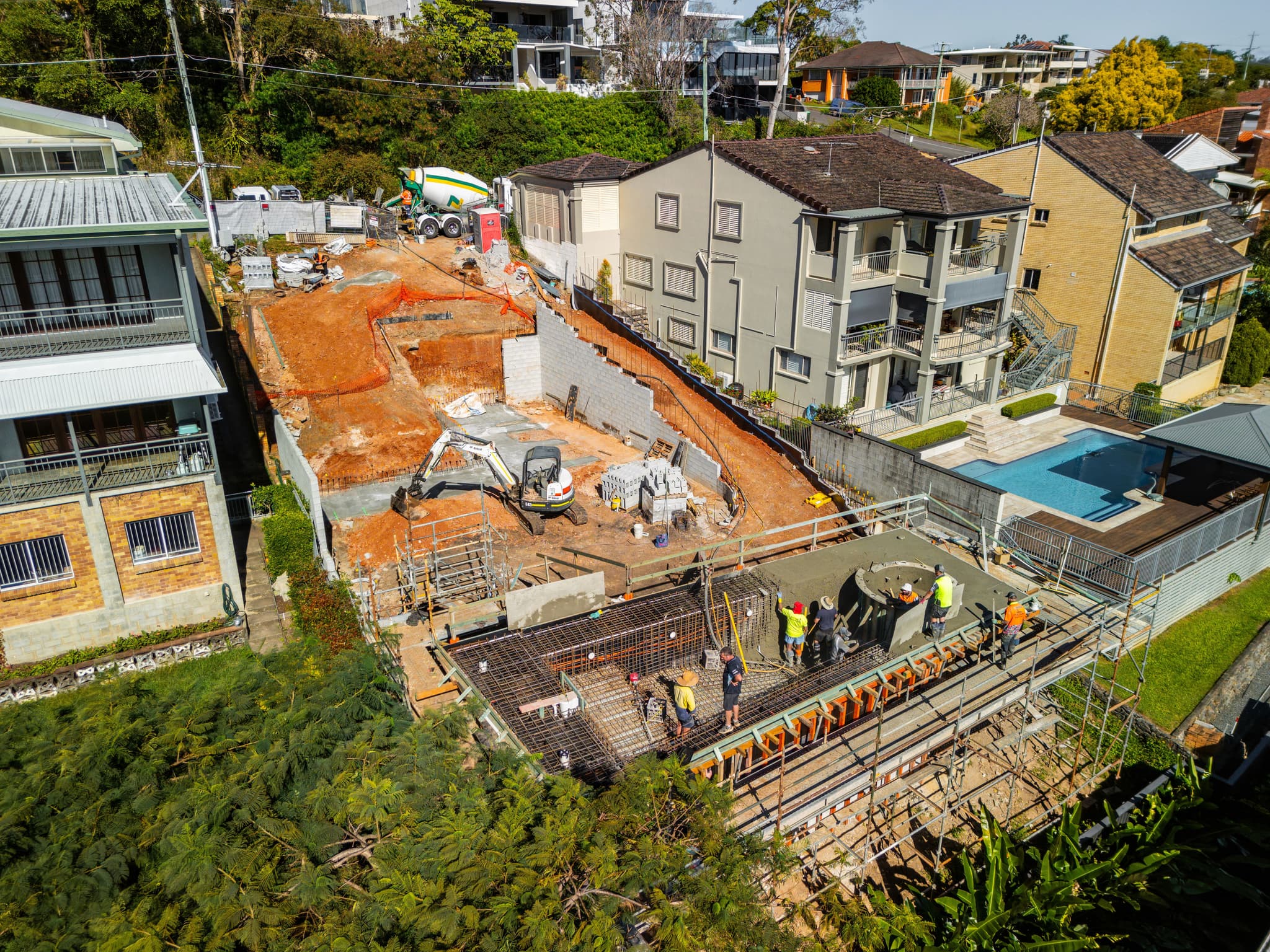
Building on a Sloping Block in Brisbane
Building on a sloping block in Brisbane: cut and fill vs split level, drainage, driveway gradients, council approvals and the geotechnical report.
Building Guides5 min read
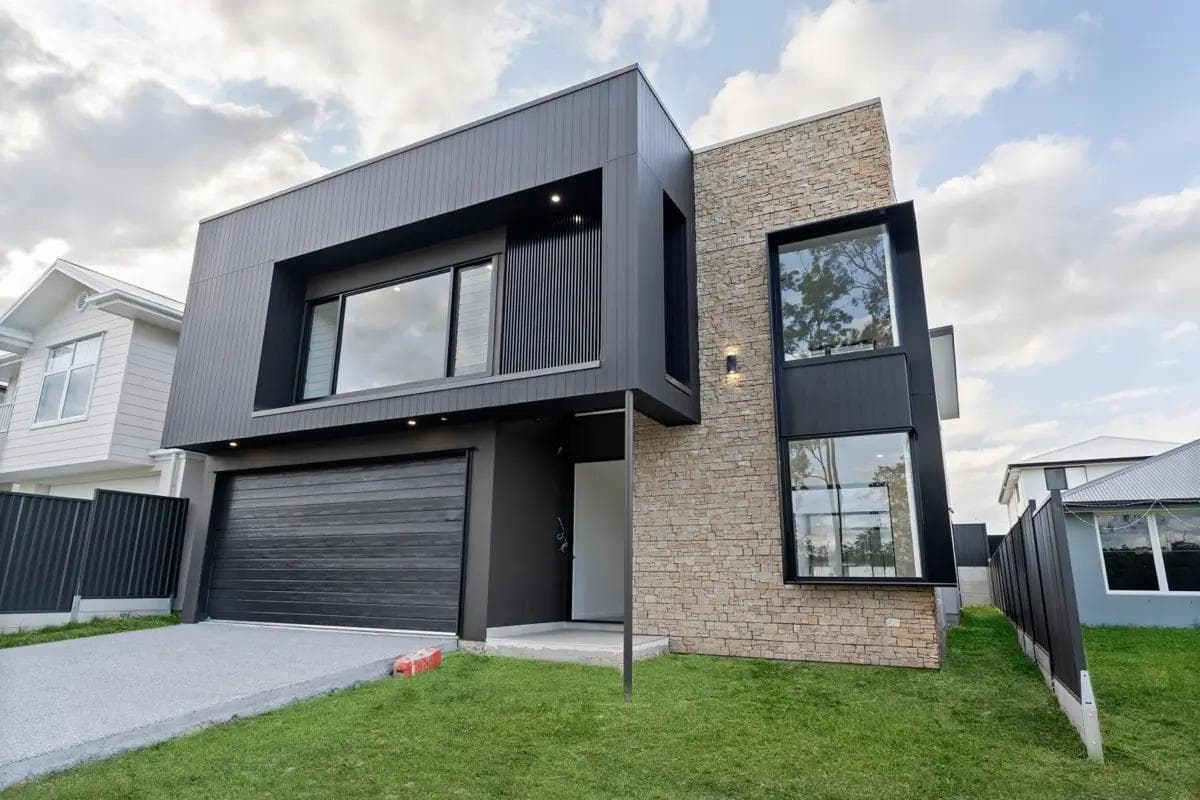
The Real Cost of a Knock Down Rebuild in Brisbane
A knock-down rebuild in Brisbane typically costs $520,000 to $1.3 million+. The full breakdown: demolition, design, construction, approvals and timeline.
Custom Home Design6 min read
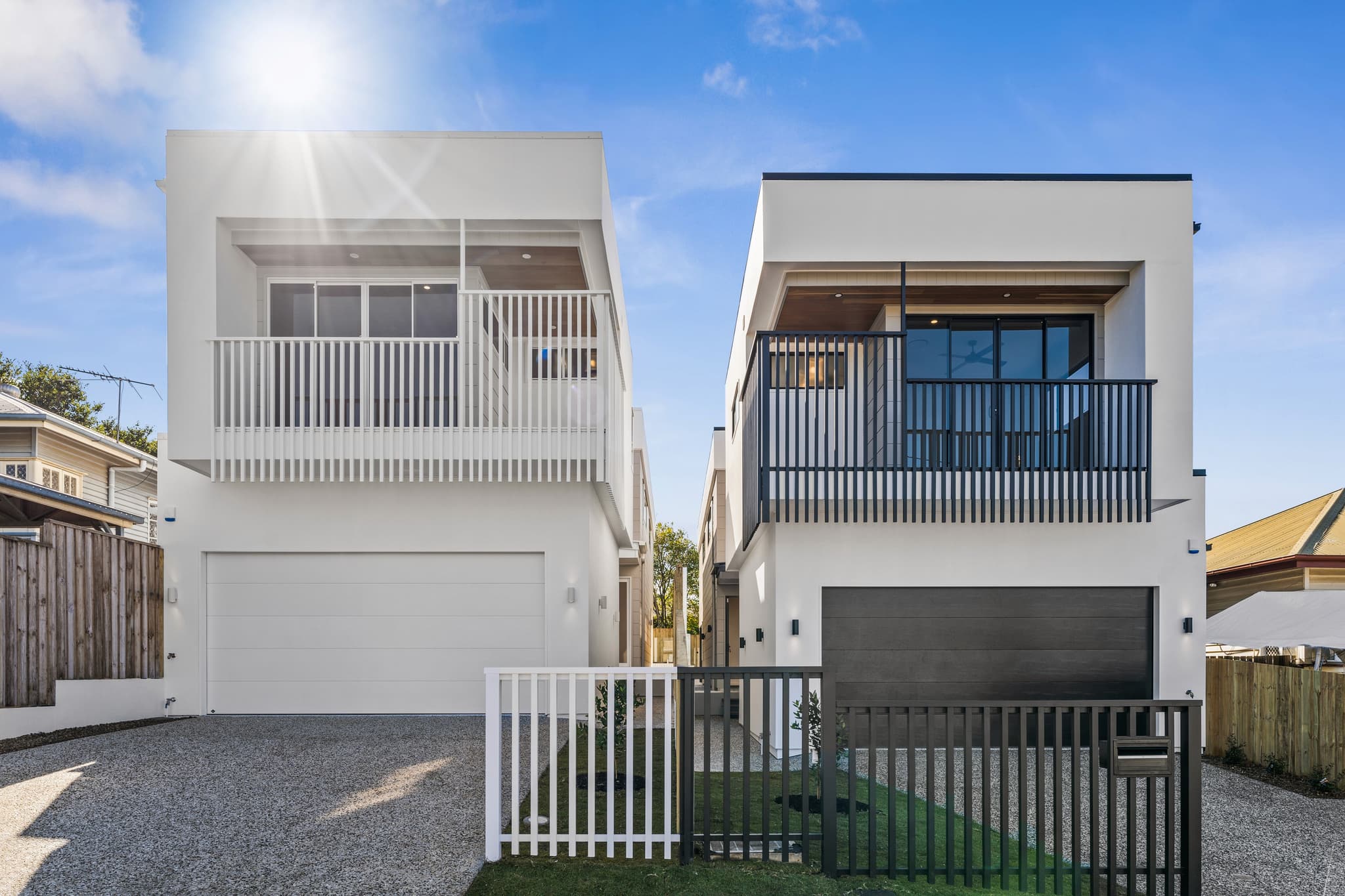
Narrow Block House Designs Brisbane: 10m and 7m Frontages
Narrow block house designs in Brisbane: how stair placement, boundary walls and light wells stop a 10m or 7m frontage feeling like a tunnel.
Quick answers
How narrow can a block be and still fit a family home?
A highly functional custom home can be built on a block as narrow as 10 metres. Success relies on a multi-storey design that makes the most of the block's depth and vertical space, with strategic window placement and structural light wells keeping the home feeling open rather than cramped.
Is building on a small lot more expensive?
The per-square-metre rate can sometimes be higher on a small lot, driven by tighter site access for trades, complex engineering for boundary walls and the custom joinery needed to maximise space. But because the overall footprint is smaller, the total project cost is often highly competitive compared with building a sprawling home on a larger block.
What rules apply to small lot builds in Brisbane?
Brisbane City Council's Small Lot Code governs compact sites. Site coverage is often limited to 50% of the lot, building height is typically capped at 9.5 metres, side and rear setbacks are generally 1.5 metres, and privacy screening is required for windows or decks overlooking neighbours, constraints good designs turn into features.