
What Is a Building Certifier and Why Do You Need One?
Published Updated 4 min read
On this page
Before the first stage of construction can begin on a custom home or significant renovation, you need a crucial professional on your team: a building certifier.
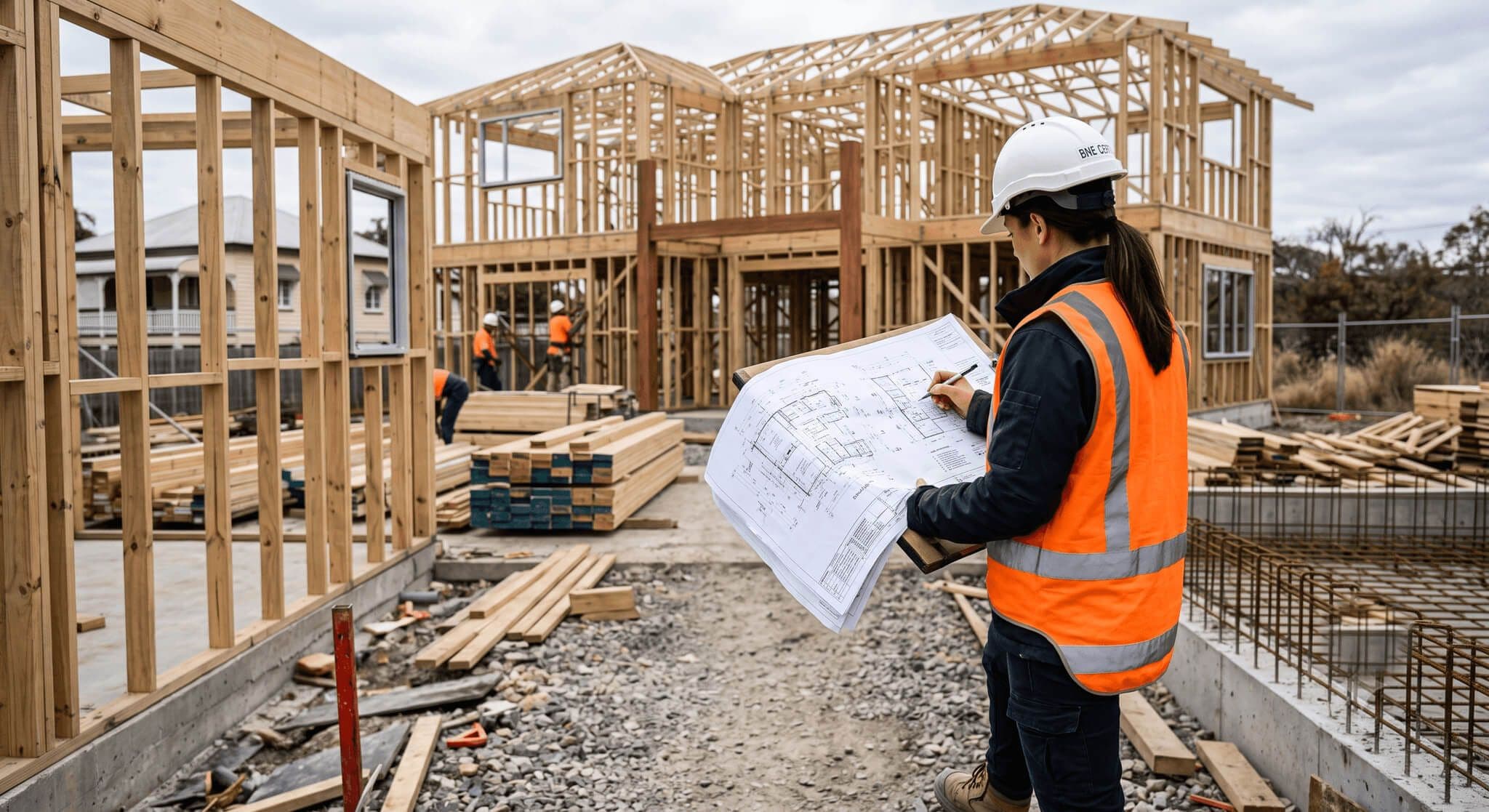
A building certifier is a licensed, independent professional responsible for ensuring your construction project is safe, structurally sound, and legally compliant. Their role is to assess your plans, conduct mandatory site inspections, and officially approve the building work according to local and national codes. To understand the scale of compliance work and its wider impact across the country, you can explore the latest Australian building industry statistics.
What Does a Building Certifier Actually Do in Queensland?
In Queensland, a building certifier is a legally empowered official licensed by the Queensland Building and Construction Commission. While your builder manages the construction, the certifier acts as an impartial referee.
Their allegiance is strictly to the building regulations, not to the builder's timeline or the homeowner's design preferences. They are legally bound to assess your project against the National Construction Code (NCC), the Queensland Development Code (QDC), and local council planning schemes.
| Responsibility | What it means for your project |
|---|---|
| Issue Building Approval | Before work starts, they review all plans and engineering to confirm legal compliance, giving the green light to build |
| Conduct mandatory inspections | Visits at critical milestones to verify the physical work matches the approved plans |
| Provide the final occupancy certificate | Once completed, they issue the legal document (Form 21) declaring the home safe and ready to inhabit |
What's the Difference Between a Building Certifier and a Building Inspector?
One of the most common misunderstandings during a custom build is the difference between a building certifier and a building inspector. While they sound similar, their roles are completely distinct:
- Building certifier (legal compliance). A certifier's job is to ensure the home is structurally safe and meets government legislation. They check that the foundations are engineered correctly, the frame is tied down for wind ratings, and the stairs meet the legal height requirements. They do not check the quality of the paint finish or whether the tiles are perfectly level.Building inspector (quality and workmanship). An inspector is often hired privately by the homeowner to check the cosmetic quality and finish of the build. They look for contractual defects, uneven plastering, chipped cabinetry, poor paintwork, usually during the Practical Completion Inspection at the end of the build.
How Do Building Approvals and Inspections Actually Work?
The certification process unfolds in two distinct phases: the desk audit for your Building Approval, followed by on-site inspections.
The Building Approval. Before any excavation begins, the certifier conducts a thorough review of your plans, proactively identifying compliance issues so they can be resolved on paper before they become costly on-site errors.
Mandatory inspection milestones. Once construction starts, the certifier must physically inspect the property before critical work is permanently covered up. In a standard Brisbane custom home build, these mandatory stages include:
- Footings and slab: confirming steel reinforcement size, spacing, and plumbing placement before the concrete is poured.
- Frame: verifying the structural skeleton, including load-bearing beams and cyclone tie-down straps.
- Final: a comprehensive safety check to issue the Form 21 Final Inspection Certificate.
While both private and council pathways lead to the same official certification, a private certifier's focused approach often results in faster turnarounds for these stages. You can see how these mandatory milestones fit into the bigger picture by exploring our complete custom home building process.
Should You Use a Private Certifier or a Council Certifier?
In Queensland, you can engage either a private certifier or one employed by your local city council. Both hold the exact same legal authority, but the path you choose impacts your project's timeline.
For custom home builds, most builders prefer to work with private certifiers, since they run their own businesses and offer a level of flexibility and responsiveness that's crucial for keeping a construction schedule moving. A council certifier operates within a larger government framework, which can sometimes mean longer queues for inspection bookings, potentially causing delays on site.
Frequently Asked Questions
Does my builder choose the certifier, or do I? The property owner always has the right to choose and engage their own building certifier. However, in practice, a reputable custom builder will usually facilitate this process for you, since builders have established relationships with efficient private certifiers who understand their workflow. The builder will generally recommend a certifier and manage the paperwork, but the certifier ultimately acts independently in the public interest.
Can I change my certifier mid-project? Technically yes, but it's highly advised against. Changing certifiers in Queensland involves a formal disengagement process with the original certifier and the local council before a new professional can take over, which almost guarantees significant administrative delays for your build. It's always better to have the right team from day one.
What's the difference between a Building Approval and a Development Approval? A Building Approval (BA) is issued by your certifier and confirms your plans meet the National Construction Code and structural requirements. A Development Approval (DA) is a separate council process dealing with land use and planning matters, such as zoning or overlays, and is generally required before a Building Approval can be sought.
Understanding the legalities of construction can be overwhelming. At Flascon Construction Group, we manage the approval and certification process for our clients to ensure a seamless build. Contact our team today to discuss your upcoming custom home project, or explore our FAQ page for more detailed answers.
Keep reading
More Brisbane building guides
Building Guides7 min read
The Knockdown Rebuild Process in Brisbane: A Step-by-Step Guide
How a knockdown rebuild works in Brisbane, step by step: feasibility, demolition approval, asbestos, services, soil testing, building approval and construction.

Building Guides6 min read
Building Contracts in Queensland: Fixed Price, Cost Plus and What the QBCC Requires
Fixed price and cost plus building contracts explained for Queensland home builds, plus the deposit, payment and paperwork rules the QBCC sets.
Building Guides4 min read
QBCC Home Warranty Insurance: What It Actually Covers
QBCC home warranty insurance explained: what it covers, how long it lasts, who pays for it, and what it means for your custom home build in Queensland.