
Passive Home Design: A Builder's Guide for Brisbane & SEQ
Published Updated 7 min read
On this page
- What Is Passive Home Design?
- Why Does Passive Design Make Sense in Brisbane?
- How Do You Size Shading Correctly for Brisbane's Climate?
- How Do You Design for Natural Ventilation?
- What Insulation Does a Passive Home in Brisbane Actually Need?
- How Does Thermal Mass Actually Work in a Brisbane Home?
- What Materials Actually Improve Passive Performance?
- What Are the Real-World Benefits of Passive Design?
- How Do You Apply Passive Design to Challenging Brisbane Lots?
- Frequently Asked Questions
Passive home design is a practical, structural approach to building that works directly with the Brisbane climate rather than fighting against it. By utilising the sun's energy and natural airflow, this method of design reduces reliance on artificial heating and cooling, resulting in a home that is comfortable year-round and significantly more efficient to run.
Core principles of passive home design in Brisbane:
- Orientation: facing main living areas north to capture winter sun.
- Strategic shading: sizing eaves to block harsh western afternoon heat.
- Thermal mass: using polished concrete slabs to absorb and release temperature.
- Cross-ventilation: positioning louvres to funnel prevailing northeast breezes.
- Insulation: wrapping the home's structure to create an unbroken thermal barrier.
What Is Passive Home Design?
A passive solar home is designed to respond directly to the local climate. Instead of relying solely on mechanical heating and cooling, it utilises natural sunlight, strategic shading, and thermal mass to maintain a consistent indoor temperature. In Brisbane, this means designing the home to capture the low winter sun for warmth, while using appropriately sized eaves to block the intense summer heat, reducing your baseline energy demand from the ground up.
Why Does Passive Design Make Sense in Brisbane?
Queensland is a national leader in solar energy adoption, and passive solar design complements this perfectly. By reducing the home's baseline energy demand through smart orientation and insulation, your rooftop solar system becomes far more effective, a well-designed passive home requires a smaller, more affordable solar PV system to cover its energy needs, often allowing more clean energy to be exported back to the grid. You can view the latest renewable energy statistics for Queensland via the Clean Energy Council.
Mastering Site Orientation
In Brisbane, orientation is the most crucial decision for long-term comfort. The objective is to maximise northern light while buffering the harsh western sun. Ensuring your main living areas and alfresco face north is a fundamental step for capturing warmth from the low-angled sun during mild winters, while utility spaces like garages and laundries sit on the western or southern sides as thermal buffers against afternoon heat.
How Do You Size Shading Correctly for Brisbane's Climate?
Once orientation is established, shading is the primary defence against summer heat, and the goal is precision, not guesswork.
- Calculated eaves. As a rule of thumb from the Australian Government's YourHome guide to shading, eave width should be roughly 45% of the height from the bottom of the windowsill to the bottom of the eaves. This ensures north-facing glass is fully shaded around the summer solstice and receives full solar access around the winter solstice. Brisbane sits right at the latitude (27.5°S) where this ratio starts increasing further north, so sites north of Brisbane may need slightly deeper eaves again.
- Western sun protection. Because the western sun sits lower in the sky, standard eaves are less effective here. Vertical fins, operable external shutters, or strategic landscaping do the job standard eaves can't.
How Do You Design for Natural Ventilation?
Brisbane benefits from reliable afternoon breezes, and harnessing this airflow for cross-ventilation is a key strategy for flushing out accumulated heat.
- Cross-ventilation: positioning openings on opposite or adjacent sides of a room creates a natural air current.
- Window selection: casement or louvre windows are highly effective at capturing and directing breezes.
- Internal airflow: a 'whole-of-house' pathway through hallways and open-plan spaces prevents stagnant zones.
Controlling airflow also means preventing unwanted draughts, proper air sealing ensures your ventilation and insulation strategies perform as engineered.
What Insulation Does a Passive Home in Brisbane Actually Need?
Insulation acts as your home's thermal barrier, and specifying the correct R-value is essential for stabilising internal temperatures.
- Ceilings and roofs. The majority of heat gain occurs through the roof, so high R-value insulation is required to shield the home from direct overhead sun. Light-coloured roofing materials, such as light-coloured metal sheeting, reflect a significant amount of solar radiation, reducing the thermal load on the ceiling cavity.
- Walls. Western elevations bear the brunt of afternoon sun and need a solid buffer against radiant heat. High-density acoustic batts provide thermal and noise benefits within the frame, and pairing them with a continuous reflective wall wrap on the exterior keeps the thermal envelope completely unbroken.
How Does Thermal Mass Actually Work in a Brisbane Home?
Thermal mass refers to dense materials, like concrete or brick, that absorb, store, and release heat. The classic example is a polished concrete slab, which acts like a thermal battery for your home.
On a cool but sunny winter day, as sunlight streams through north-facing windows, the concrete floor soaks up that warmth, then slowly releases it back into the room as the evening cools. In summer, the principle reverses, a shaded slab absorbs excess heat from inside the home, keeping the indoor temperature cooler and more stable.
For thermal mass to work in Brisbane, three rules are key:
- It must be inside the insulated shell of your home.
- It must be exposed to winter sun.
- It must be shaded from summer sun.
What Materials Actually Improve Passive Performance?
The materials you select directly impact how well your home regulates temperature.
- High-performance glazing: double glazing with a Low-Emissivity (Low-E) coating reflects solar heat outward in summer and retains internal warmth in winter, standard single-pane glass offers minimal thermal resistance by comparison.
- Advanced insulation: high-density batts or rigid foam boards on the exterior frame wrap the home in a continuous insulating blanket, preventing heat transfer through the structural frame itself.
- Reverse brick veneer: placing the heavy brickwork on the inside of the insulated wall cavity, with lightweight cladding on the exterior, brings the temperature-regulating thermal mass inside the home where it's most effective.
- Polished concrete floors: an exposed, north-facing slab absorbs sunlight during the day and gently radiates warmth as the evening cools; a shaded slab does the reverse in summer.
What Are the Real-World Benefits of Passive Design?
A home that works with the climate needs less artificial heating and cooling, resulting in significantly lower running costs. The Nationwide House Energy Rating Scheme (NatHERS) scores a home’s thermal performance out of 10 stars, and while a standard new build must meet minimum baseline requirements, a well-designed passive solar home can achieve much higher ratings, directly correlating to reduced energy consumption.
Beyond efficiency, the primary benefit is consistent thermal comfort, fewer dramatic temperature fluctuations, a healthier living environment, and as energy efficiency becomes increasingly prioritised in the property market, a more resilient, future-proofed home.
How Do You Apply Passive Design to Challenging Brisbane Lots?
Passive design principles are highly adaptable to challenging terrain or constrained footprints:
- Sloping blocks: instead of expensive cut-and-fill excavation, split-level designs step down the slope, creating a natural stack effect for ventilation while capturing elevated breezes and views. See our guide to building on a sloping block for the full structural picture.
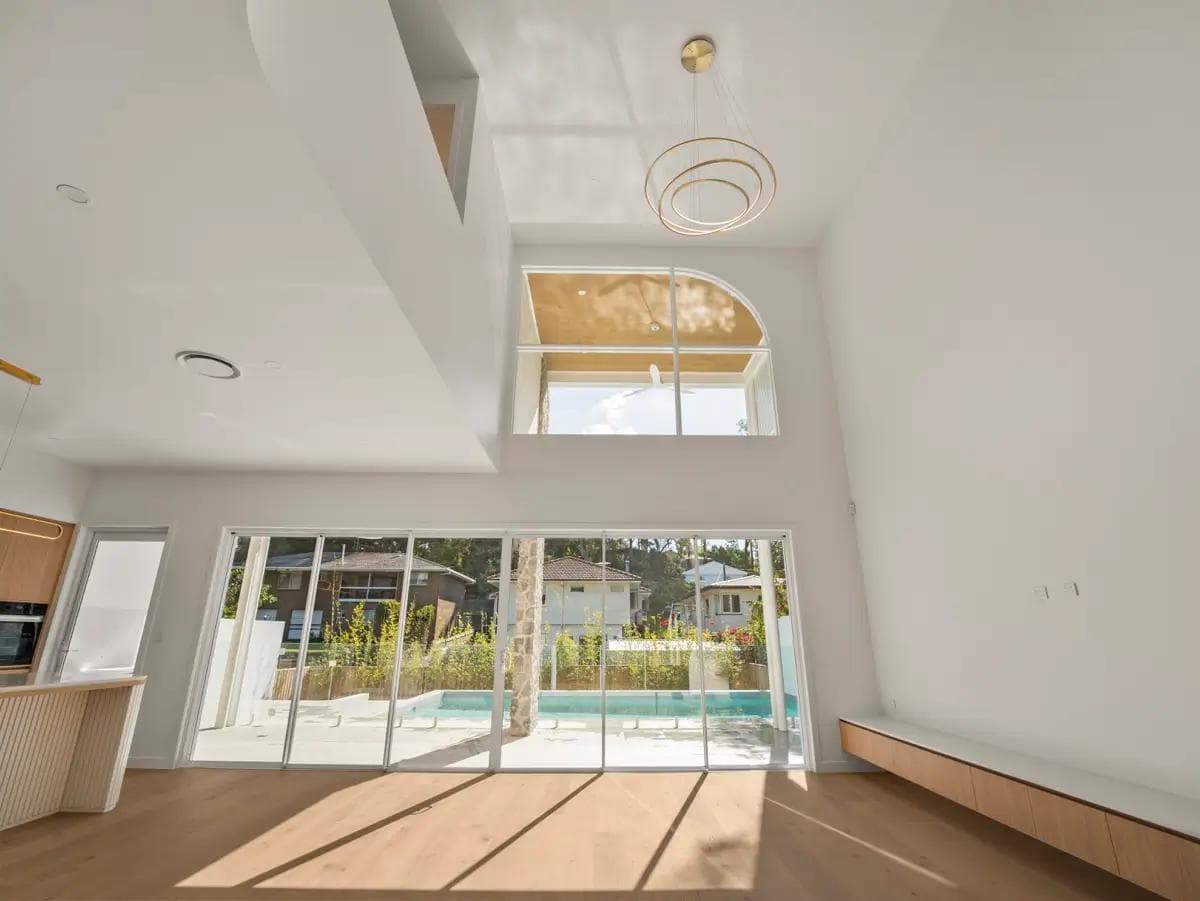
- Narrow lots: internal courtyards create a new "north face" for inner-city blocks where building wide isn't an option, bringing light and cross-ventilation into the core of the home. Clerestory windows and double-height voids pull sunlight down into ground-floor living areas.
- Knockdown rebuilds: replacing an older home on a poorly oriented block is an opportunity to correct historical design flaws, for example, a west-facing backyard can be managed with a deeply insulated alfresco roof buffering the western wall, while shifting main living spaces to capture northern light.
Frequently Asked Questions
Does passive home design cost more to build? The fundamental principles, optimal orientation and smart floor plan layouts, cost nothing extra to implement but deliver immense value. Specific high-performance materials require a higher initial investment, but they significantly reduce the need for large air conditioning systems and lower ongoing energy bills.
Can I still have large windows and an open-plan design? Absolutely. Passive design encourages light-filled, open spaces. The key is strategic placement: generous glazing on the north face to capture winter sun, and appropriately sized, shaded windows on the western face to prevent summer overheating.
Is passive design the same as having solar panels? They're distinct but complementary. Passive design is a fabric-first approach that reduces your home's baseline energy demand; solar panels generate energy. Combining an efficient passive home with a solar PV system results in exceptional overall energy performance.
Ready to explore how these principles can be applied to your new custom home? Whether you're building a modern contemporary residence or a classic Hamptons retreat, smart passive design principles integrate into any style. Explore some of our latest designs and upcoming builds on our projects page. The team at Flascon Construction Group offers honest advice and design expertise to create a home that's comfortable, efficient, and perfectly suited to your lifestyle. Start the conversation with a free site feasibility check.
Keep reading
More Brisbane building guides
Custom Home Design4 min read
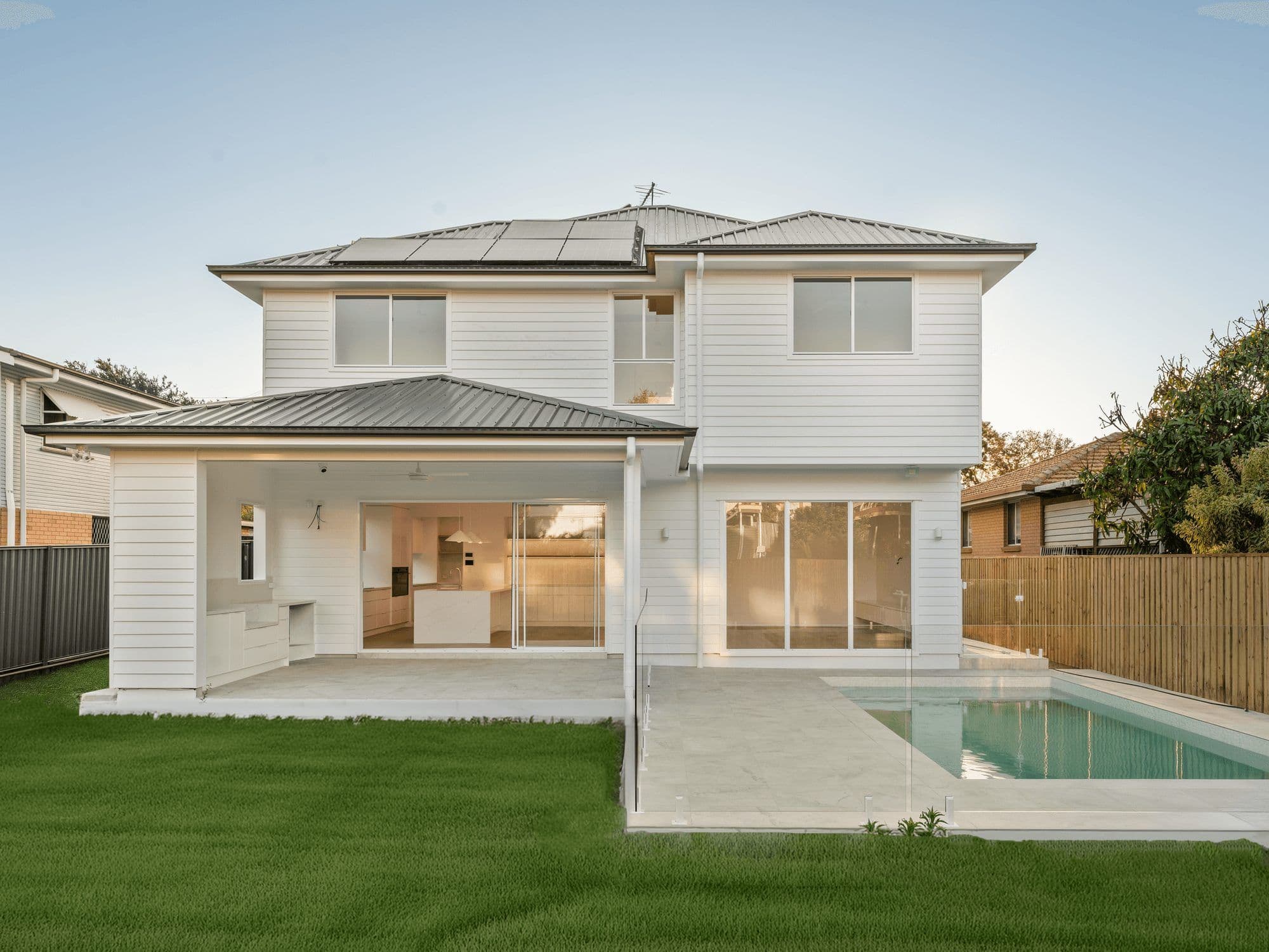
Alfresco Ideas for a Brisbane Home
Alfresco ideas that actually hold up in Brisbane's climate: what has to be right structurally, from a builder.
Custom Home Design6 min read
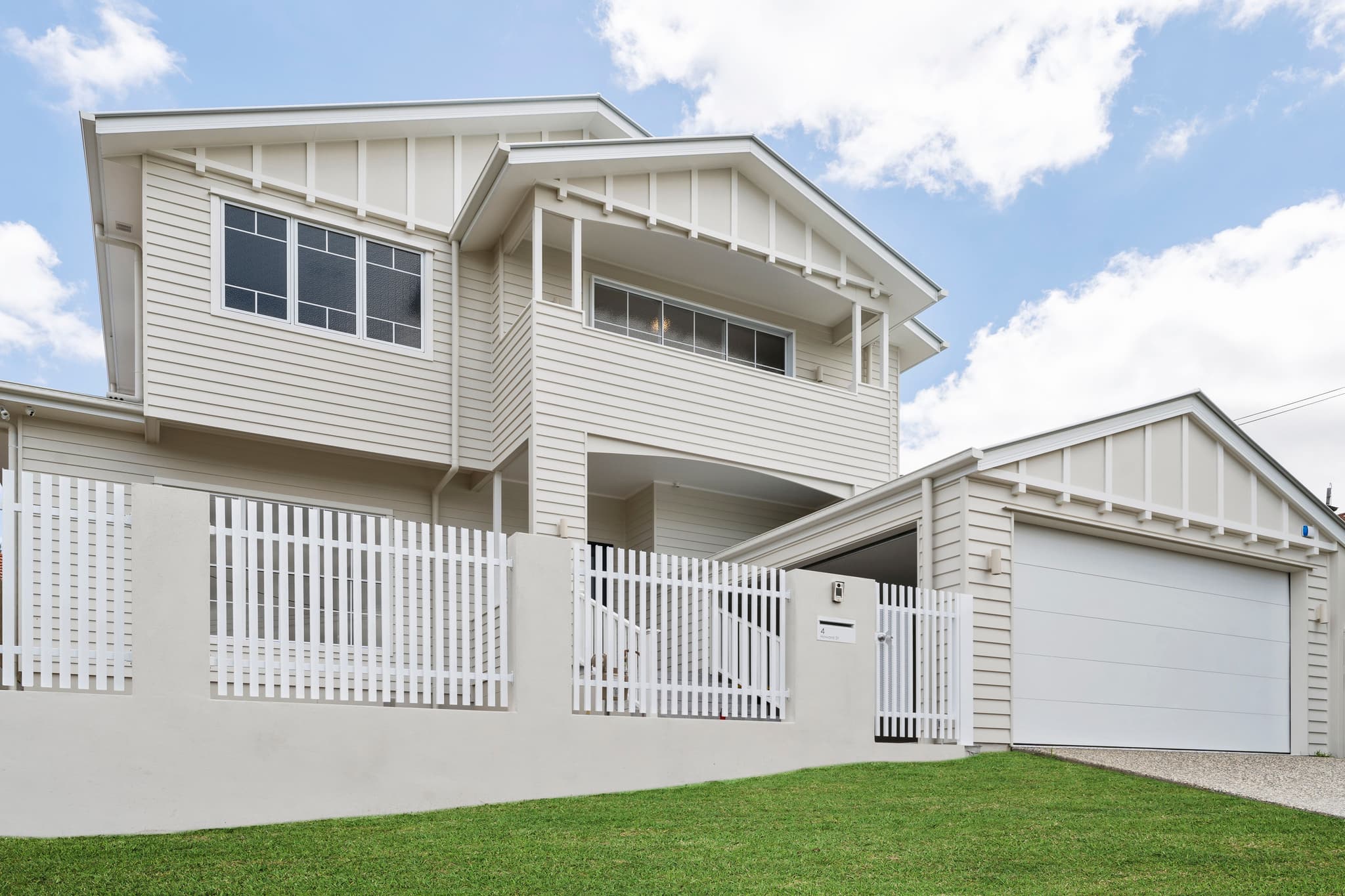
Battle-Axe Block House Designs: A Brisbane Builder's Guide
Thinking about a battle-axe block in Brisbane? What the term actually means, the real Brisbane rules for rear lots, and how to design a home that works.
Custom Home Design6 min read
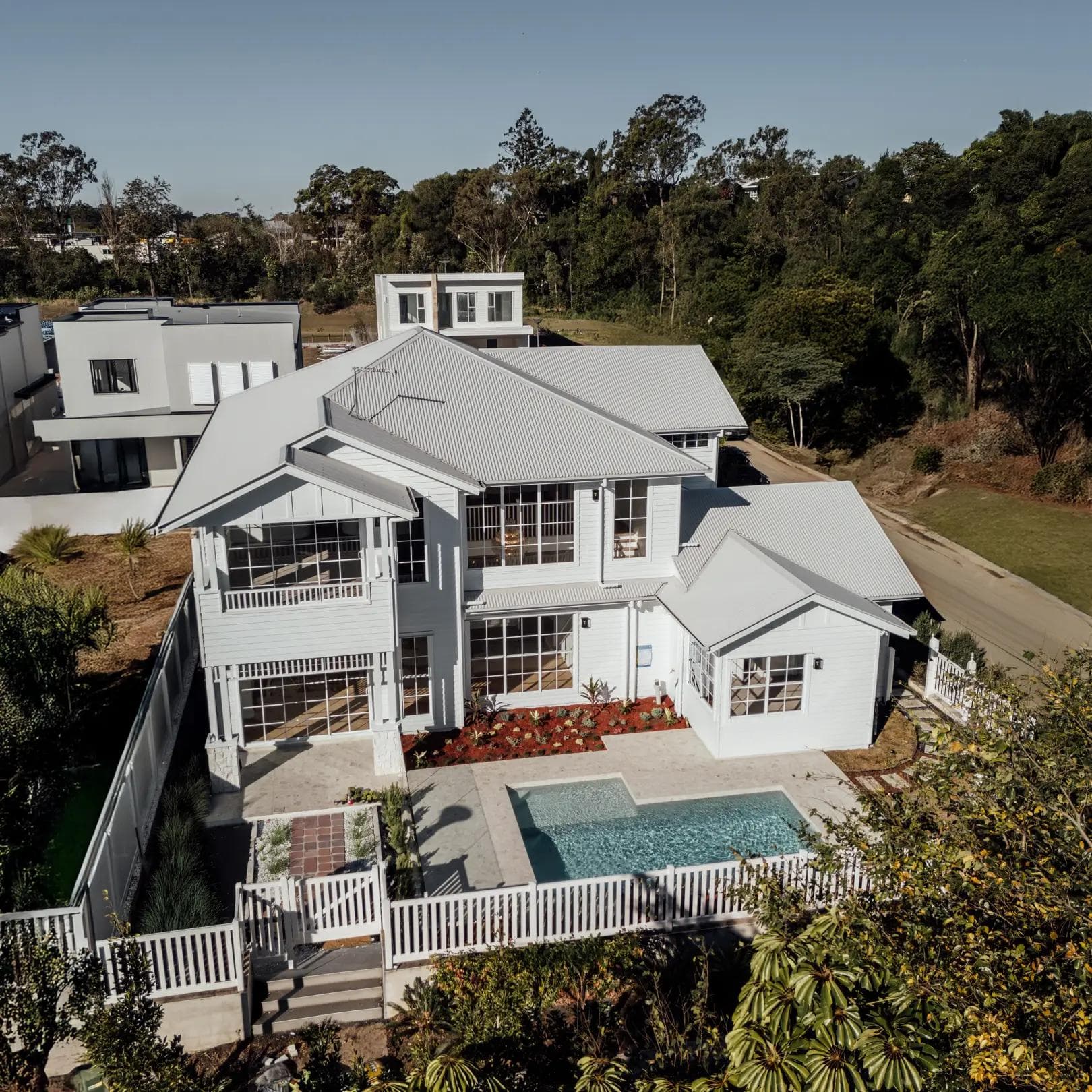
Renovate or Rebuild? How to Decide for Your Brisbane Home
Torn between renovating and rebuilding? See how your home's condition, orientation, and council overlays should actually decide it.