
Battle-Axe Block House Designs: A Brisbane Builder's Guide
Published Updated 6 min read
On this page
If you've been searching for land in Brisbane's established suburbs, you've probably come across a block described as "battle-axe." It's not a flaw, and it's not rare, it's one of the most common ways land gets subdivided in older, tightly built suburbs where a straightforward street-front block simply isn't available anymore.
What a battle-axe block actually involves:
- No direct street frontage, the block sits behind another property.
- Access via a driveway "handle" running down the side of the front lot.
- Real advantages, privacy and often a lower purchase price, alongside real design considerations.
What Is a Battle-Axe Block?
A battle-axe block is a parcel of land positioned behind a street-front property, reached by a narrow driveway strip running down one side of the front lot. Viewed from above, the shape resembles an axe, a rectangular "blade" at the rear and a thin "handle" connecting it to the street, which is where the name comes from.
Brisbane City Plan doesn't actually use the term "battle-axe", its formal language is rear allotment or rear lot. Both terms describe exactly the same thing. "Battle-axe" is the term almost everyone actually searches and uses in conversation, so that's what we've used throughout this guide, but don't be thrown if you see "rear allotment" on a council document, it's the same block.
What Are the Advantages of a Battle-Axe Block?
- Privacy. Shielded from the street by the front property, a rear lot home typically enjoys a quieter, more secluded setting than a standard street-front block, no passing traffic, no direct sightlines from the footpath.
- Often more affordable. Because a rear lot lacks direct street frontage and street appeal, it frequently sells at a discount compared to an equivalent front lot in the same area, sometimes the only realistic way to secure land in a suburb that's otherwise out of reach.
- Unlocking underused land. Many battle-axe blocks exist precisely because a large, established block had more backyard than one household needed. For the seller, that's turned dead space into a second, usable block, and for the buyer, it's an opportunity to build in a location established subdivision would otherwise close off.
What Are the Challenges of Building on a Battle-Axe Block?
- Construction access. Every material, every piece of equipment, and every trade vehicle needs to travel down the handle to reach the build site. A narrow access strip changes how a build is sequenced and staged compared to a standard street-front block, this is exactly the kind of restricted-access logistics Flascon manages regularly on narrow and tight-access sites more broadly.
- Service extension. Water, power, sewer, and stormwater all need to run the length of the handle to reach the rear lot. Depending on how far back the block sits and what's already in the ground, this can be a genuinely significant line item, one worth pricing early, not discovering partway through.
- Shared driveway arrangements. Where the handle is shared with the front lot rather than exclusively owned, easement and maintenance responsibilities need to be clearly documented from the outset, who maintains the surface, whether a gate can be installed, what happens if the pavement fails. Getting this in writing at purchase avoids a genuinely common source of dispute later.
- No street presence. A battle-axe block's biggest design challenge is also its most interesting one: there's no traditional street facade to design for at all. The entire design language has to work without a conventional front elevation.
What Are Brisbane's Planning Rules for Rear Lots?
Brisbane's City Plan sets specific, different minimum lot sizes for front and rear allotments. As a general benchmark, a standard front lot needs a minimum of 450m², while a rear lot needs a minimum of 600m², excluding the area of the access handle itself. That higher bar exists specifically to ensure a home tucked behind another property still has genuine internal area and amenity, not just a driveway and a cramped block.
Beyond minimum size, council also assesses the width and construction standard of the access handle itself, alongside standard requirements like emergency vehicle access and services capacity. These specifics vary by site and zone, so confirming the exact figures for your particular block against Brisbane's City Plan early is genuinely worth doing before you get attached to a design.
How Do You Design a Home for a Battle-Axe Block?
Without a street facade to design around, the entire design brief shifts. Every principle below is one we apply regularly on Brisbane's narrow and restricted-access sites, the same underlying skill set a battle-axe block calls for.
- Orientation becomes the priority, not street presentation. With no passing street to address, a battle-axe design is free to orient purely around sun, breeze, and privacy, rather than compromising the floor plan to present well from the road. This is the same principle behind narrow lot design more broadly, orientation and internal light matter more than a facade nobody but the owner will regularly see.
- The entry sequence needs real thought. Arriving via a side driveway rather than a street frontage means the entry experience is designed from scratch, not assumed. A considered approach, landscaping along the handle, a clearly defined arrival point, a genuine sense of transition from driveway to home, prevents the entry from feeling like an afterthought.
- Privacy works both ways. A battle-axe block often shares a boundary, and sometimes a driveway, with the front lot. Window placement and boundary treatment need to protect privacy for both properties, not just the rear home, the same careful boundary design used on tight corner and narrow blocks applies directly here.
- Natural light needs deliberate design. Set back from the street and often flanked by boundary walls or the neighbouring property, a rear lot home benefits from the same light-well and void strategies used on deep, narrow sites, bringing daylight into the core of the plan rather than relying on a conventional street-facing aspect.
Frequently Asked Questions
Is a battle-axe block cheaper to build on than a standard block? The land itself is often cheaper to buy, but construction costs can be higher due to the extended service runs and access logistics required to reach a block with no direct street frontage. Whether it works out cheaper overall depends heavily on the specific site.
Do I need council approval to build on an existing battle-axe block? Yes, the same building approval process applies as any other residential site, though if you're creating a new rear lot through subdivision rather than building on an existing one, that's a separate reconfiguration approval on top of the building approval itself.
Can a battle-axe block still get good natural light without a street-facing aspect? Yes. Since the design isn't constrained by needing to present to a street, orientation can be chosen purely for sun and breeze, often resulting in better light outcomes than a standard block where the facade has to face the road regardless of orientation.
What's the difference between a battle-axe block and a rear strata title? A battle-axe block's access handle is typically part of the property itself. A rear strata arrangement instead creates shared, jointly-owned common property for the driveway, a different legal structure with different ongoing obligations, worth clarifying with a solicitor or town planner before purchase.
How Does a Battle-Axe Block Compare to Other Challenging Sites?
| Site type | Defining feature | Main design focus |
|---|---|---|
| Battle-axe / rear lot | No street frontage, accessed via a driveway handle | Orientation and privacy, since there's no facade to design for |
| Corner block | Two street frontages | Managing setbacks and facade design on both sides |
| Narrow lot | Limited width, direct street frontage | Vertical volume and light wells to avoid a tunnel-like feel |
Considering a Battle-Axe Block in Brisbane?
A block without street frontage isn't a compromise, it's a different design brief, and one that rewards a builder who treats orientation, privacy, and access as the starting point rather than an afterthought. If you're weighing up a battle-axe block, or you're not sure whether a specific site works, complete a free site feasibility check and we'll help you understand exactly what your block allows. If you're still comparing builders for a non-standard site, our guide on choosing the right builder for a difficult block covers what to ask before you commit.
Keep reading
More Brisbane building guides
Custom Home Design4 min read
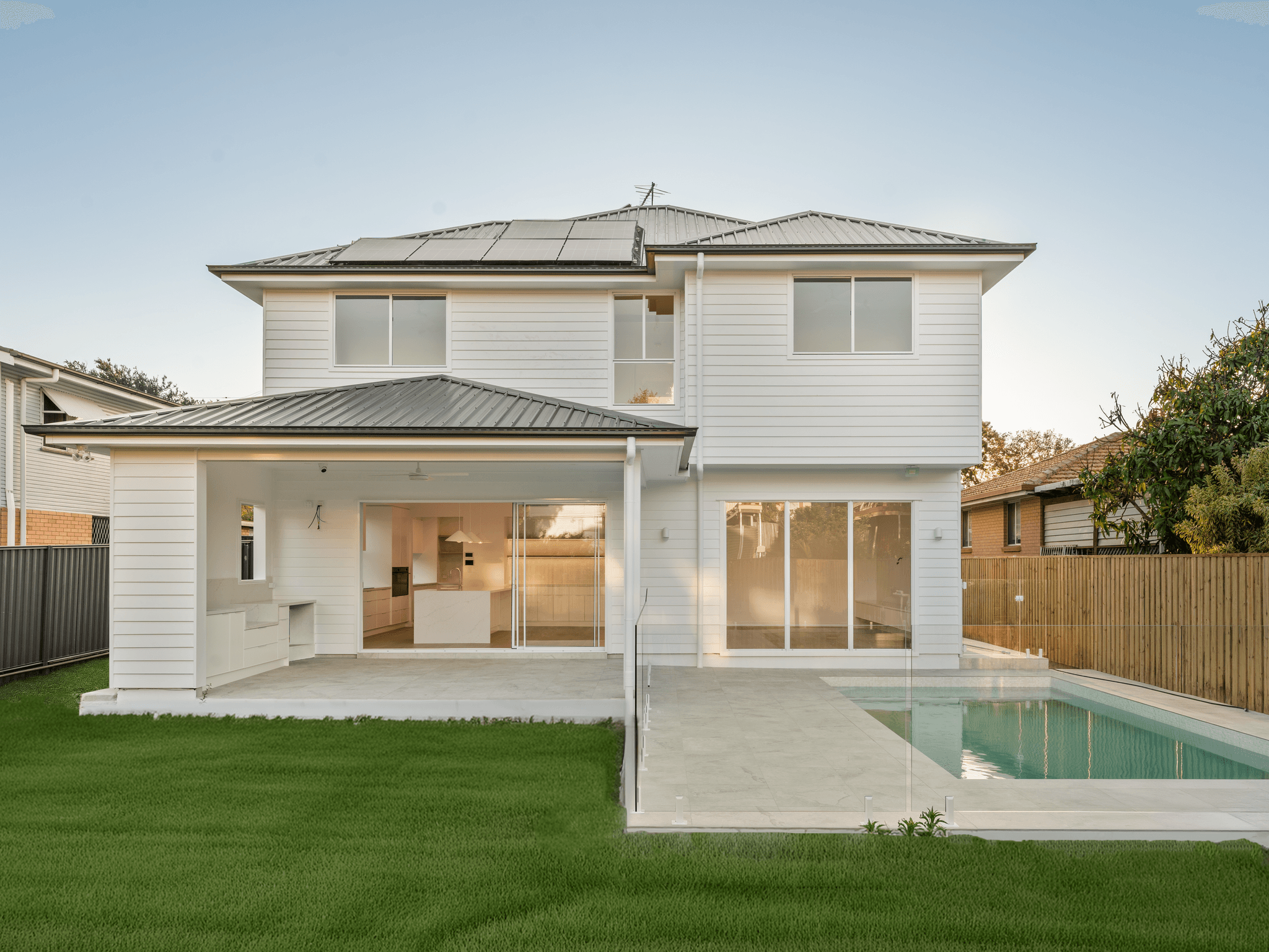
Alfresco Ideas for a Brisbane Home
Alfresco ideas that actually hold up in Brisbane's climate: what has to be right structurally, from a builder.
Custom Home Design6 min read
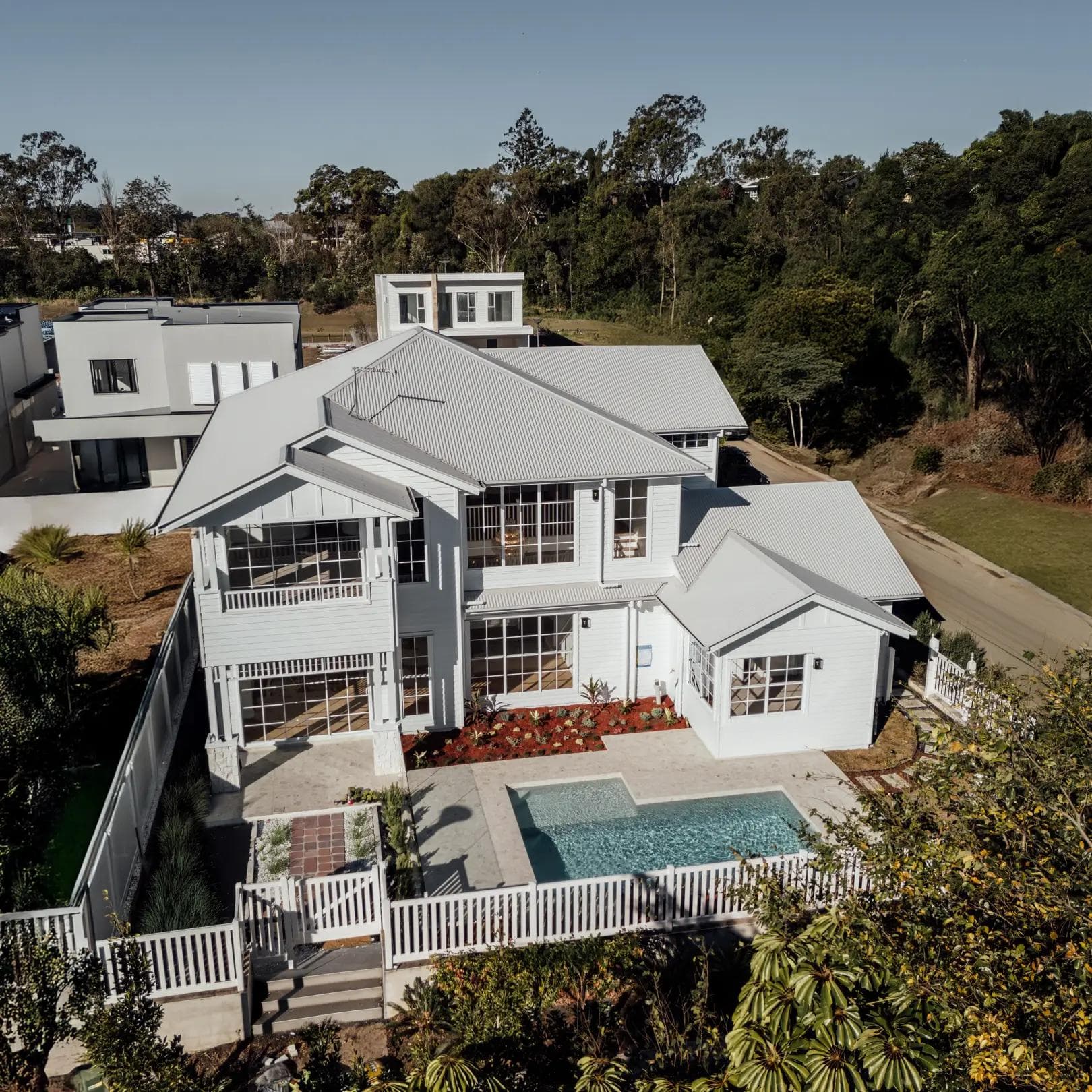
Renovate or Rebuild? How to Decide for Your Brisbane Home
Torn between renovating and rebuilding? See how your home's condition, orientation, and council overlays should actually decide it.
Custom Home Design6 min read
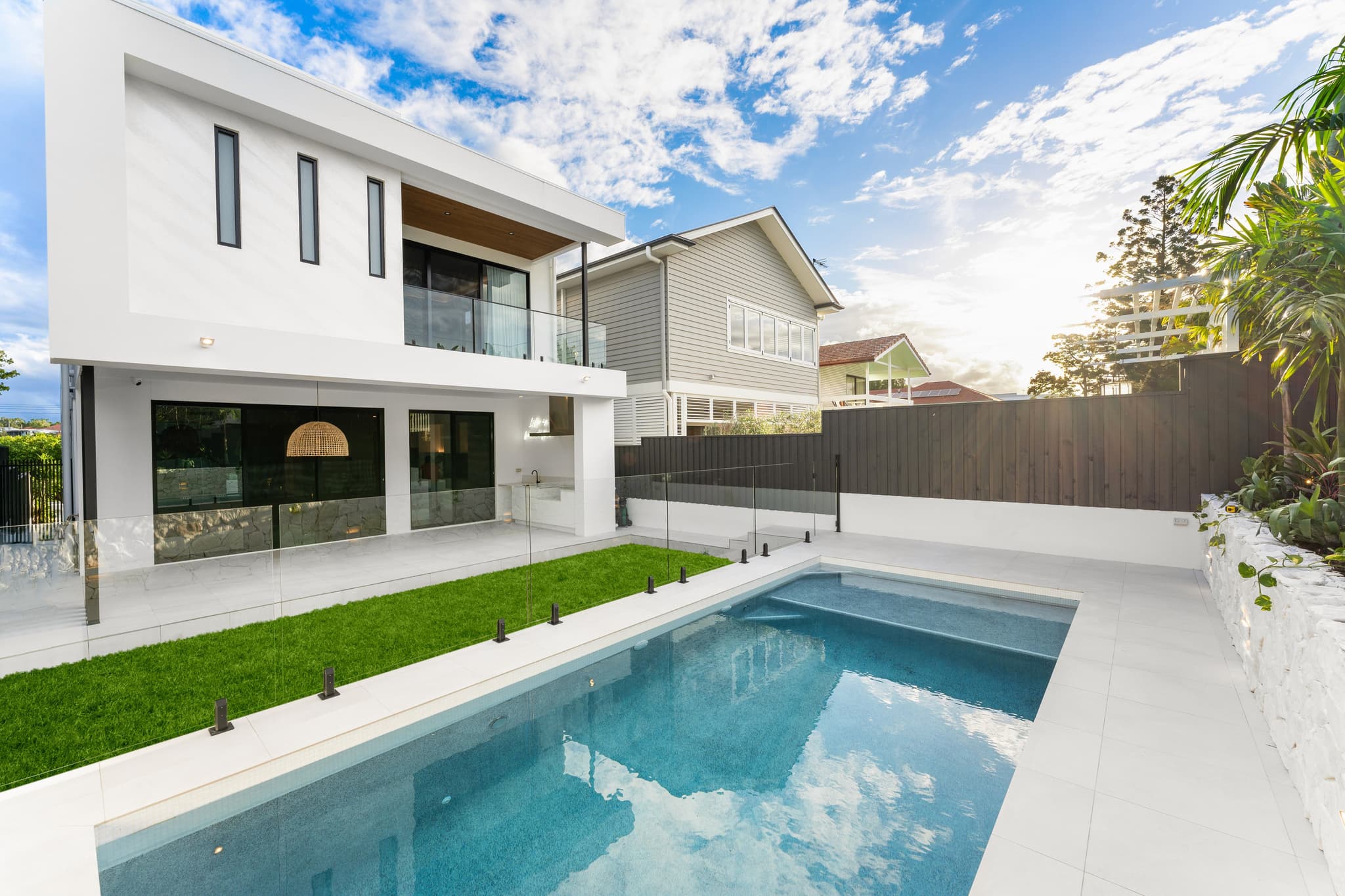
Modern Two Storey Houses for Brisbane Blocks
An informational guide to modern two storey houses on Brisbane blocks. Explore custom split-level, narrow lot, and passive design layouts.