
Building a Custom Home and Pool at the Same Time in Brisbane
Published Updated 5 min read
On this page
- What Are the Advantages of Building Your Home and Pool Together?
- Concrete vs Fibreglass: Which Pool Type Should You Choose?
- How Do Sloping Blocks, Narrow Lots and Knockdown Rebuilds Each Need a Different Approach?
- What Approvals and Engineering Does a Brisbane Pool Need?
- What Does a Coordinated Construction Timeline Look Like?
- Frequently Asked Questions
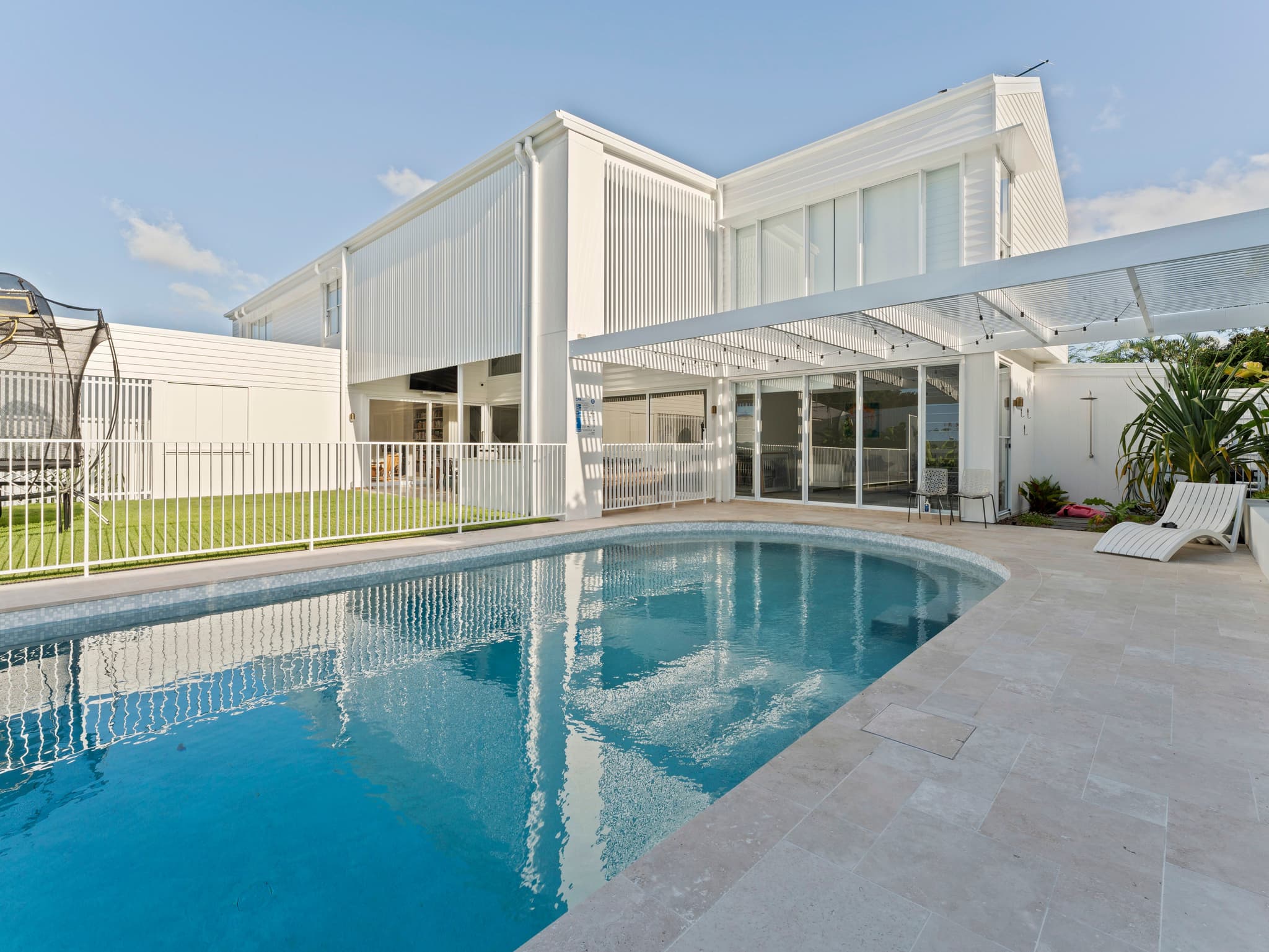
Many Brisbane homeowners start with the same vision: wide stacker doors opening to a covered alfresco, clear sightlines to the water, and a pool that feels like a natural extension of the house. While it's entirely possible to add a pool to a property years after the house is built, planning and building both at the same time means the entire site is managed as one project, with no future disruption to your living arrangements and no machinery navigating around a completed home.
This is particularly true on Brisbane's sloping sites, narrow lots, and knockdown rebuild blocks, where the pool and the house genuinely affect each other's engineering, not just their appearance.
What Are the Advantages of Building Your Home and Pool Together?
When the pool is part of the initial design phase, the entire house layout benefits. Key structural and design elements can be resolved early, allowing the entire project team to work toward a single, cohesive outcome.
- Coordinated floor levels: internal floor levels, alfresco decking, and pool coping are designed simultaneously to ensure smooth, considered transitions.
- Optimised sightlines: large windows can be specifically positioned to frame the water, ensuring clear lines of sight from the kitchen or main living areas.
- Streamlined site access: excavating the pool before the house frame is erected avoids the complexities of manoeuvring heavy machinery onto a site once the main dwelling is complete.
- Integrated services: underground plumbing, electrical conduits, and drainage for the pool are run concurrently with the main house services, without needing to alter established pathways later.
If the pool interacts with the site's levels, retaining walls, drainage, or overall access, including it in the first round of design provides the clearest path forward.
Concrete vs Fibreglass: Which Pool Type Should You Choose?
The first major pool decision is structural. For most custom builds in Brisbane, this comes down to concrete versus fibreglass, both excellent options, with the right choice depending entirely on the site and the design brief.
| Concrete | Fibreglass | |
|---|---|---|
| Best suited to | Sites needing a specific shape, or a pool that aligns tightly with retaining walls or a boundary | Sites with clear, easy access where standard pre-formed dimensions suit the block |
| Design flexibility | High, built to any shape or integration point | Limited to available shell shapes and sizes |
| Installation | Slower, built on site | Faster, pre-formed shell installed as a unit |
Concrete offers high structural flexibility and is the natural choice when the pool needs to sit against integrated retaining walls, run flush along a boundary, or fit a specific shape. See our blog on house plans with a pool for how custom shapes relate directly to the adjacent living zones. Fibreglass is a highly efficient option when site access is clear and the pre-formed shell dimensions suit the block's proportions, offering a streamlined installation process.
How Do Sloping Blocks, Narrow Lots and Knockdown Rebuilds Each Need a Different Approach?
Different block types benefit from specific structural approaches.
Sloping blocks. A sloping site provides an opportunity to work with the natural fall of the land. Split-level homes, raised pool walls, and integrated terraces can turn a level change into a distinct feature. Useful approaches include out-of-ground pool walls to minimise excavation, and designing the pool shell to complement the site's primary retaining strategy. If you're assessing a difficult parcel, our guide to building on a sloping block covers the kind of thinking required before detailed documentation starts.
Narrow lots. On narrower blocks, the design focuses on preserving movement, natural light, and functional outdoor space. Long, slim lap pools running parallel to a boundary, or compact plunge pools that prioritise a visual connection over lap swimming, perform exceptionally well. Our guide to small lot house designs covers the broader site strategy this fits into.
Knockdown rebuilds. A knockdown rebuild provides the advantage of positioning the new home and pool together from a blank slate. This requires organised coordination regarding demolition sequencing and spoil removal, ensuring the excavation footprints for both the house and the pool are managed efficiently.
What Approvals and Engineering Does a Brisbane Pool Need?
A compliant pool build in Brisbane requires specific documentation and clear sequencing. Managing this concurrently with the house build streamlines the paperwork process.
For concrete pools, Structural Engineering Plans and a Form 15 - Design Certificate are required, available through the Queensland Government's official building forms directory. These documents specify concrete thickness, steel reinforcement, and foundation design based on the property’s specific soil conditions. Compliance with these specifications is a prerequisite for the QBCC's mandatory pool-building requirements, and site-specific engineering accounts for Brisbane's varied soil types to ensure the structure performs as intended over time.
Pool fencing regulations are incorporated during the initial sketches too, gate swings, non-climbable zones, and movement pathways are all factored into the design early rather than retrofitted. Understanding the certification process early is also beneficial, our guide on what a building certifier does and why you need one explains how their involvement supports the project timeline.
What Does a Coordinated Construction Timeline Look Like?
When house and pool construction overlap under a coordinated management plan, the sequence of works is highly efficient.
- Combined earthworks. Excavating the pool shell during the primary house cut means site soil is managed and removed in one cohesive phase.
- Underground services. With the pool shell in the ground, drainage, heating conduits, and filtration plumbing are laid before the house slab is poured or the scaffolding is erected.
- Concurrent finishes. As the house moves toward practical completion, the pool fencing, coping, and surrounding landscaping are finalised, aiming for a seamless handover where the entire property is ready for immediate use.
Frequently Asked Questions
Can I build the house first and add the pool later? Yes, absolutely. Many homeowners successfully add pools to existing properties. If you plan to stage the build this way, it's highly recommended to design for the future pool now, reserving the location, aligning floor levels, and maintaining clear site access for future machinery makes the eventual installation much smoother.
Is a smaller pool a good option for a narrow lot? A compact pool leaves room for seating and movement and can provide a better balance for the outdoor area than a large pool that extends right to the boundary lines.
What is the standard approach for a sloping site? The most efficient approach is typically to step the house and pool down the natural gradient, which minimises the need for extensive excavation and large retaining walls.
How early should the structural engineer be involved? Involving the engineer early in the concept stage allows them to provide valuable input on retaining walls, floor levels, and the pool's structural position, ensuring the design is optimised before final documentation.
If you are planning a new custom home in Brisbane, Flascon Construction Group coordinates the design, engineering, and construction sequence to ensure your house and pool are built efficiently, resulting in a completely finished, move-in-ready home.
Keep reading
More Brisbane building guides
Building Guides7 min read
The Knockdown Rebuild Process in Brisbane: A Step-by-Step Guide
How a knockdown rebuild works in Brisbane, step by step: feasibility, demolition approval, asbestos, services, soil testing, building approval and construction.

Building Guides6 min read
Building Contracts in Queensland: Fixed Price, Cost Plus and What the QBCC Requires
Fixed price and cost plus building contracts explained for Queensland home builds, plus the deposit, payment and paperwork rules the QBCC sets.
Building Guides4 min read
QBCC Home Warranty Insurance: What It Actually Covers
QBCC home warranty insurance explained: what it covers, how long it lasts, who pays for it, and what it means for your custom home build in Queensland.