
Building a Hamptons Home in Southeast Queensland
Published Updated 6 min read
On this page
You’ve probably saved a folder full of white weatherboards, shaker kitchens, and broad front verandahs. Now comes the reality check: taking that vision and building it on a Southeast Queensland block. You must factor in slope, neighbours, strict council regulations, brutal summer heat, and budget. A well-built Hamptons home in Brisbane isn't a carbon copy of an American coastal house. It relies on smart planning, durable materials, and Queensland-specific design to actually perform in the local climate.
Common Planning Constraints
Translating a mood board into a buildable brief takes work. A narrow frontage, a sharp fall across the block, or heavy western sun will dictate how the design adapts to your site. Before reviewing facade options or interior finishes, the floor plan logic must be sorted.
These practical questions apply to almost every Hamptons brief in SEQ:
- Facade versus function: Does the layout work if the decorative exterior trim is stripped back?
- Block constraints: Can classic proportions fit a narrow or sloping site without cramping internal rooms?
- Material realism: Will the finishes survive Brisbane's humidity and UV exposure?
- Level of detail: Is the brief classic, coastal, or a pared-back modern interpretation?
Start with orientation, layout, and site response. Layer the decorative details only after the home functions properly on paper.
Defining the Australian Hamptons Style
The style gained traction from the late 1990s to early 2000s and became a staple in Australian residential construction. By the 2010s, it had settled into an enduring role rather than a short-lived trend, as noted by Domain’s coverage of Hamptons design in Australia. This longevity stems from a design language that aligns with the Australian preference for relaxed living, natural light, and strong indoor-outdoor connections.
The Local Translation
Originating from coastal homes in the north-eastern United States, the Australian iteration maintains the symmetry, weatherboards, gables, and refined detailing, but incorporates a lighter feel and open-plan layout. It has street presence without relying on bulk.
Briefs typically fall into three categories:
- Classic Hamptons: Formal symmetry, heavy mouldings, and traditional porches. Suited to wider blocks and prestige rebuilds.
- Coastal Hamptons: Softer palettes, relaxed detailing, and lighter finishes. Suited to beachside suburbs and open plan family living.
- Modern Hamptons: Cleaner lines, simpler trims, and strong contrast. Adaptable to narrow urban blocks.
These are structural choices, not just styling. They dictate the build framework, window proportions, and carpentry requirements. For interiors, a concise set of essential Hamptons decor tips helps separate the structural non-negotiables from surface-level styling.
Signature Elements of Hamptons Construction
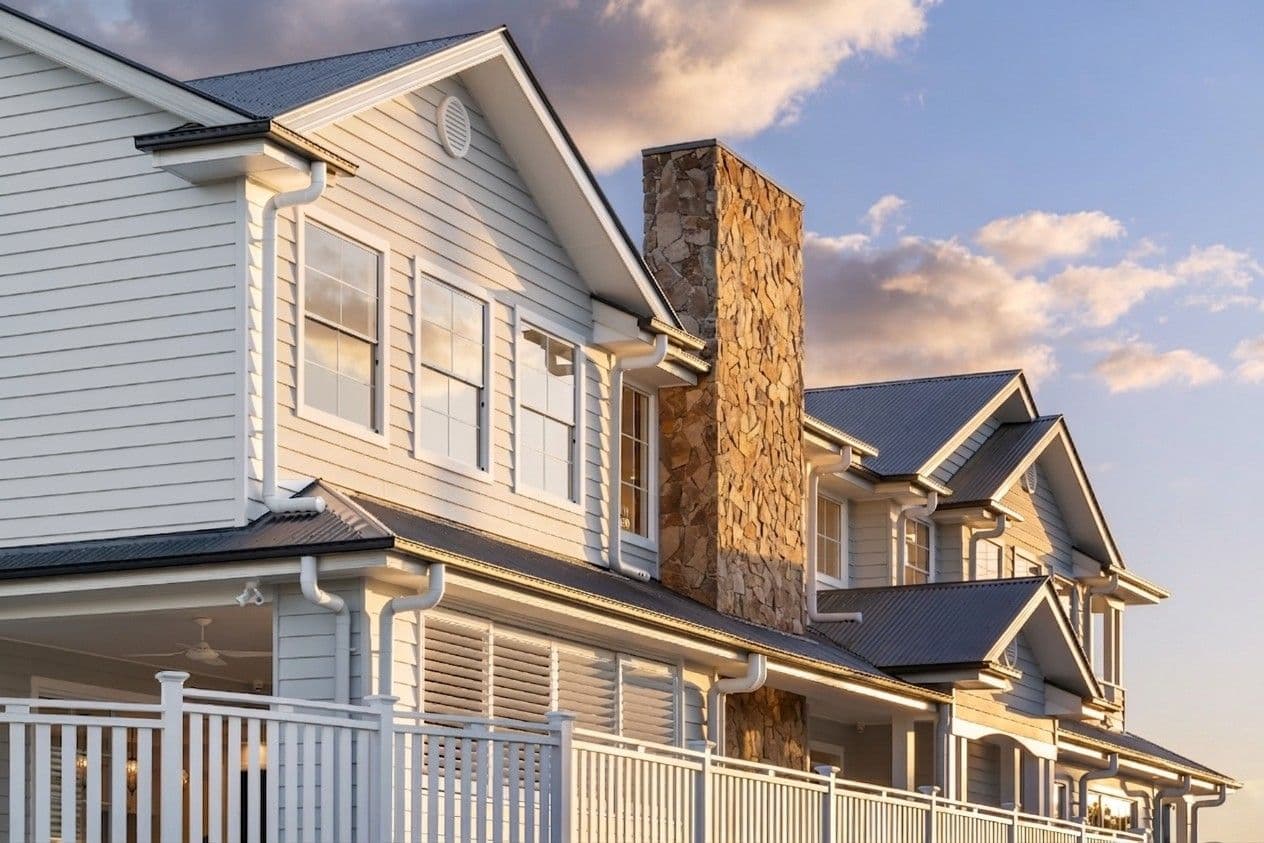
The style is only authentic when major structural elements work in unison. Bolting a weatherboard facade onto a generic house frame looks thin. The core elements of the Australian interpretation include muted weatherboards, dormer windows, multi-paned French doors, centred porches, and open-plan layouts.
Exterior Non-Negotiables
- Roof shape: Gables provide the iconic silhouette and depth.
- Cladding profile: Horizontal weatherboards establish the visual rhythm.
- Window composition: Multi-paned windows and consistent head heights bring order and symmetry.
- Entry treatment: A centred door or framed porch creates a definitive sense of arrival.
- Verandah presence: Deep, covered outdoor spaces are essential for Queensland living.
Interior Structural Details
- Wall panelling: Adds shadow, scale, and texture to flat walls.
- Shaker cabinetry: Classic kitchen joinery without overcomplicating the space.
- Natural materials: Timber floors and stone-look surfaces prevent a white interior from feeling sterile.
- Generous openings: Layered natural light makes the home feel expansive.
- Consistent trims: Skirtings and cornices tie the rooms together.
Adapting to the Queensland Climate and Regulations
A home must handle Brisbane’s humidity, strong sun, and summer storms. In SEQ, climate-smart material substitutions are necessary for long-term durability. In subtropical areas like Brisbane, fibre cement weatherboards like James Hardie Linea are commonly used instead of traditional timber because they withstand coastal and humid conditions.
Maintenance vs. Aesthetics
Traditional timber requires significant upkeep in Queensland due to sun exposure, moisture, and structural movement. Fibre cement weatherboards provide the required horizontal shadow lines and character, utilising a product engineered for the region.
Roofing and Ventilation
A Queensland roof must shed heavy rain, handle local wind loads, and facilitate airflow. Steeper gables support ventilation in humid weather. The roof build-up, insulation, ventilation pathways, and fixing methods must operate as a single system. For broader context on responding to local conditions, review this guide to Brisbane home design and climate-smart living.
How Regulations Shape the Build
Regulations influence the final appearance of the home:
- Bushfire considerations: Restricts product selection based on fire performance ratings.
- Wind exposure: Dictates roof shape, fixing methods, and external detailing.
- Setbacks and site cover: Determines if a full-width front verandah is permissible.
- Energy compliance: Affects window sizing, shading, and orientation.
These adaptations must be integrated seamlessly so they look deliberate rather than compromised.
Building on Challenging Brisbane Sites
While lifestyle magazines often focus heavily on the aesthetics, such as Home Beautiful’s discussion of Australian versus US Hamptons homes, the practical question for Brisbane owners is how to preserve the character of the style on a sloping, narrow, or restricted site without the result feeling forced.
Sloping Blocks
On a sloping site, the cross-section matters as much as the elevation. It determines whether the home steps naturally with the land or requires expensive retaining walls and awkward floor transitions. Split-level planning creates separation between zones without making the home feel disjointed. Our practical guide to sloping block home designs shows how site response changes the planning logic long before colours and trims are chosen.
Narrow Lots
Tight frontages reduce the available space for facade articulation. Forcing too many features onto a narrow elevation creates visual clutter. Restraint is required:
- Choose one dominant gable instead of competing rooflines.
- Use a simpler entry treatment rather than an oversized estate-style portico.
- Keep window groupings consistent for an ordered elevation.
- Create internal width with long sightlines, voids, and strategic glazing.
Small Urban Sites
Inner-suburban blocks require efficient use of space and strict privacy controls.
| Site challenge | Practical move | Rationale |
|---|---|---|
| Limited frontage | Simplify the facade hierarchy | Prevents visual clutter |
| Neighbouring overlook | Use screened openings and layered landscaping | Protects privacy without sacrificing light |
| Restricted backyard depth | Integrate alfresco with main living zone | Makes the rear feel larger |
| Awkward fall across site | Step floor levels selectively | Reduces excessive cut and fill |
A builder navigating these sites must balance contours, setbacks, and buildability simultaneously. Flascon Construction Group operates across custom homes, knockdown rebuilds, and constrained sites, managing the block as a primary construction variable.
Cost and Timeline Realities in SEQ
Establishing a budget for a Hamptons build requires looking beyond base square-metre rates. Site conditions, engineering demands, joinery detail, and finish levels all move the final figure significantly. A Hamptons home with a simple elevation on a flat site differs vastly in price from a highly detailed build on a steep block with retaining walls. The style itself doesn't make a project expensive; the level of detail and site response dictates the cost.
Primary Cost Drivers
- Site works: Slope, access constraints, excavation, and retaining.
- Roof complexity: Multiple gables, junctions, and dormers add labour and coordination time.
- Cladding and trim detail: Extensive external articulation increases on-site carpentry.
- Joinery specification: Detailed cabinetry in kitchens, bathrooms, and mudrooms.
- Window and door selection: Configuration impacts both aesthetics and thermal performance.
Long-Term Performance
Hamptons-style homes in Australia often use gabled roofs with pitches between 30 and 45 degrees to aid ventilation. In Brisbane, this steeper roof form supports stack-effect ventilation and can reduce reliance on air-conditioning by 25 to 30% for 35 degree pitch homes. When pairing these high-performance structural choices with internal aesthetics, this guide to Hamptons elements offers a good breakdown of the necessary design components. The roof choice shapes both the building structure and ongoing running costs.
Typical Project Pathway
- Brief and site review: Confirm budget, site constraints, orientation, and style direction.
- Concept and pricing alignment: Test plans before committing to facade details.
- Approvals and documentation: Resolve engineering and compliance for accurate costing.
- Construction and handover: Manage material lead times and site decisions to prevent delays.
To understand the specific variables and site factors that drive your project's budget, this guide to house build costs in Brisbane outlines the key components you need to consider.
If you’re planning a Hamptons home, knockdown-rebuild, duplex, or custom build in Brisbane or SEQ, Flascon Construction Group can assess the site, test the build logic, and outline the construction implications before you commit. Start with an objective look at your block and what the style requires to perform in Queensland conditions.
Keep reading
More Brisbane building guides
Custom Home Design4 min read
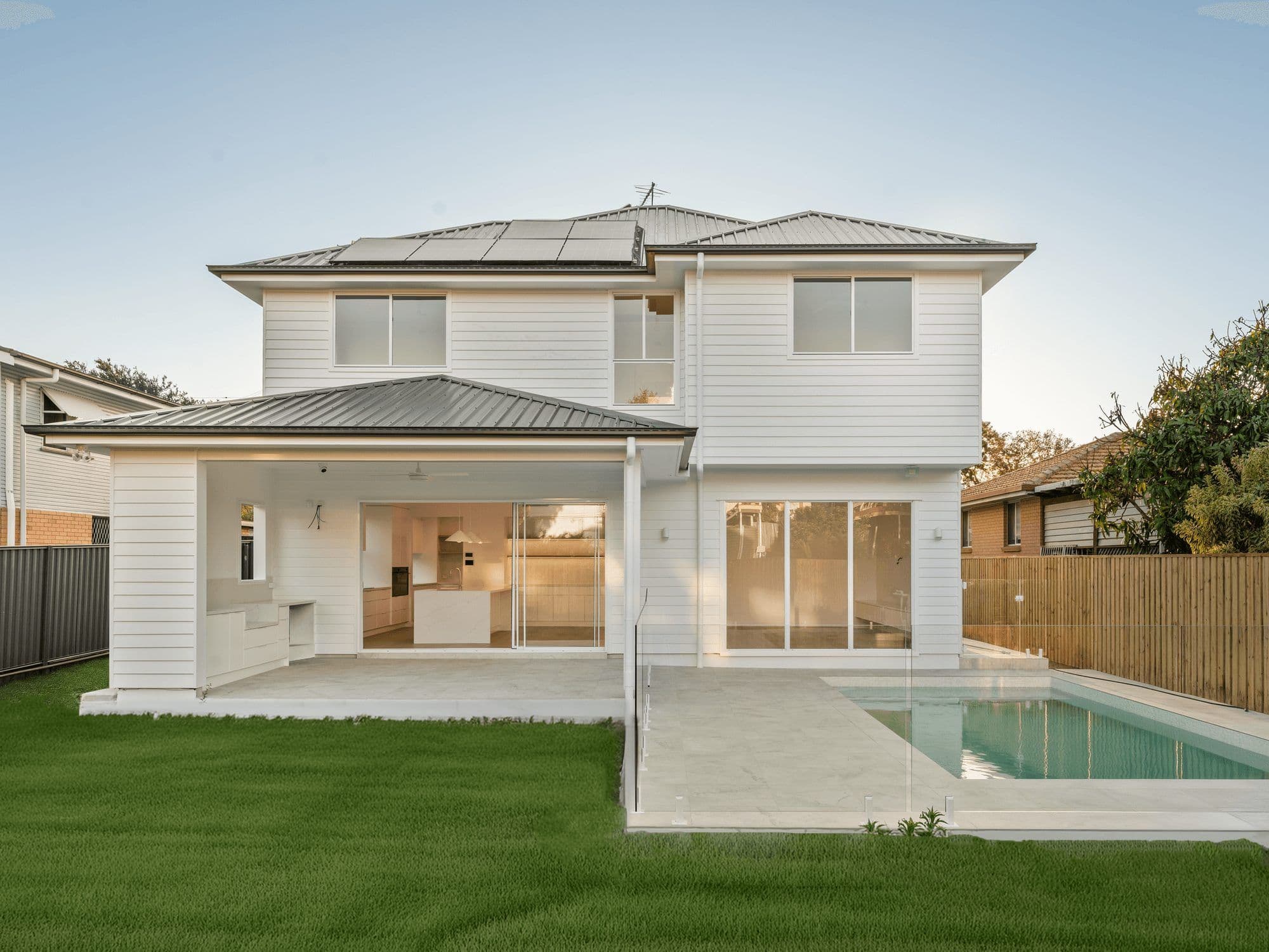
Alfresco Ideas for a Brisbane Home
Alfresco ideas that actually hold up in Brisbane's climate: what has to be right structurally, from a builder.
Custom Home Design6 min read
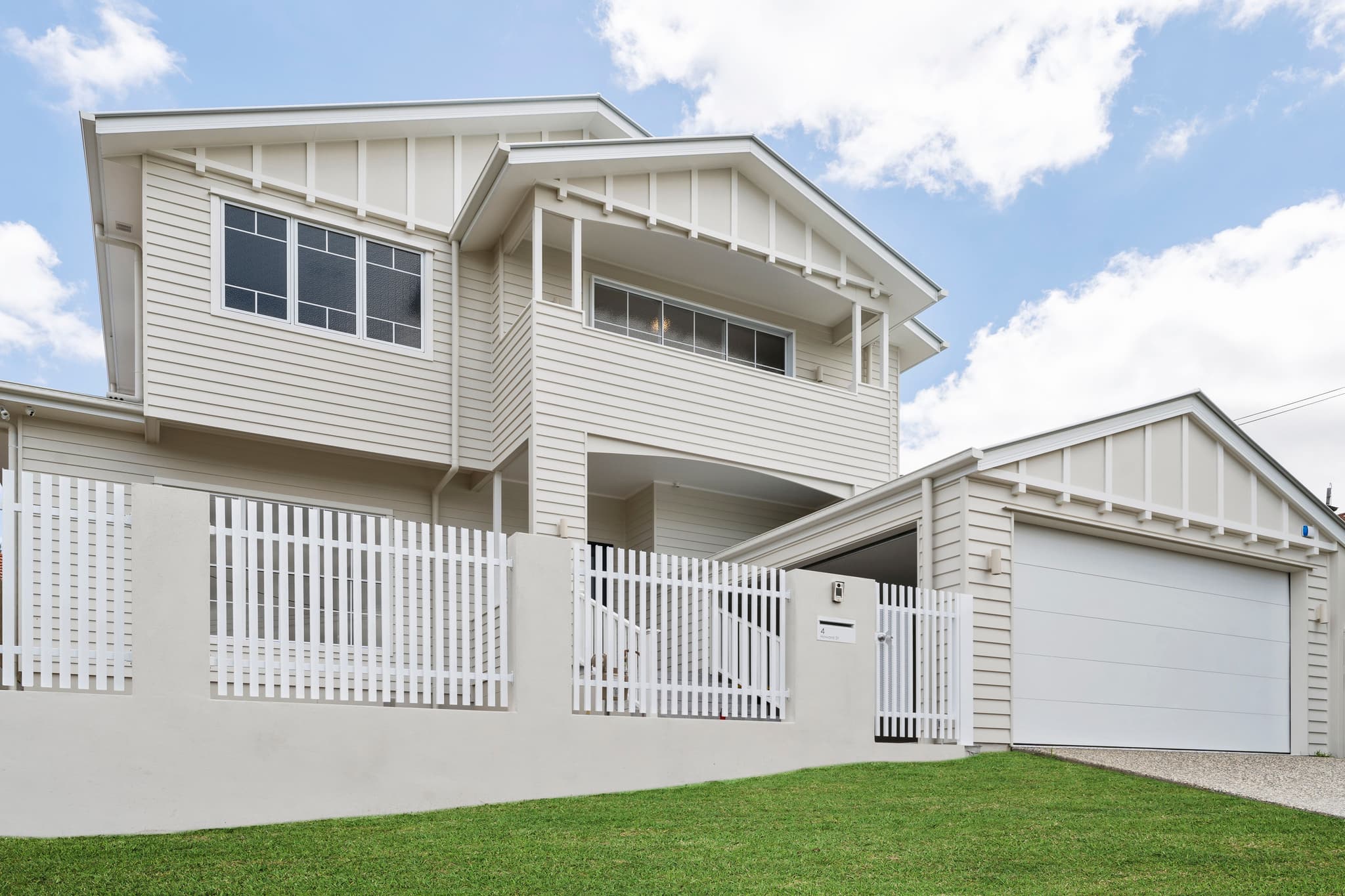
Battle-Axe Block House Designs: A Brisbane Builder's Guide
Thinking about a battle-axe block in Brisbane? What the term actually means, the real Brisbane rules for rear lots, and how to design a home that works.
Custom Home Design6 min read
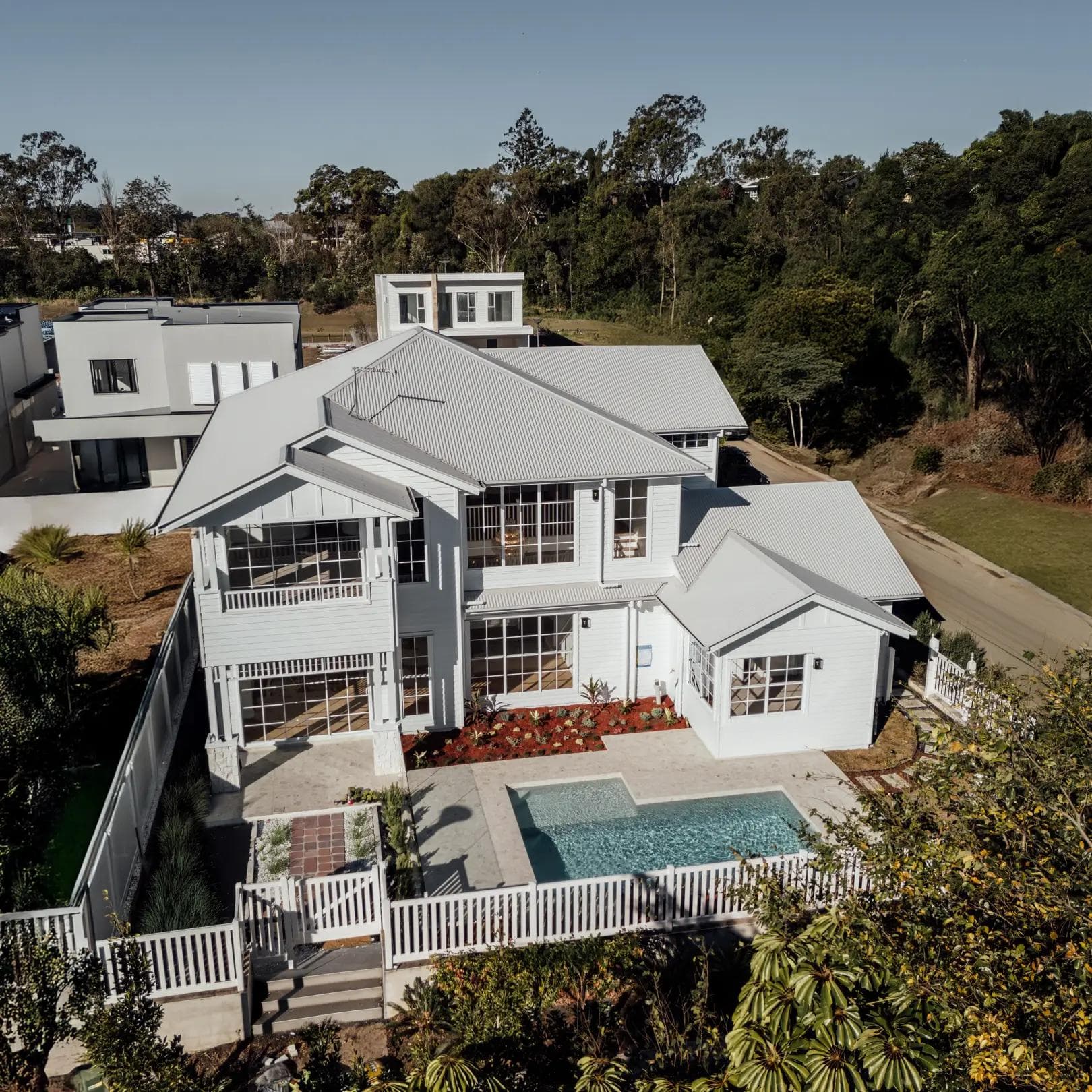
Renovate or Rebuild? How to Decide for Your Brisbane Home
Torn between renovating and rebuilding? See how your home's condition, orientation, and council overlays should actually decide it.