
Cost to Build a House Brisbane: 2026 Guide
Published Updated 7 min read
On this page
Understanding the true cost to build a house in Brisbane requires looking beyond basic averages. While per-square-metre rates are often discussed in the early stages of planning, the final price of your building contract is ultimately dictated by the complexity of your design, the specific topography of your land, and the quality of finishes you select. It also depends on which pricing model you're working with in the first place, a custom build and a volume build aren't priced, or built, the same way.
Custom vs Volume Builder: Which Pricing Model Suits You?
The most significant difference between the two paths lies in how the quote is structured, and it shapes everything that follows in this guide.
| Volume Builder | Custom Builder | |
|---|---|---|
| Pricing structure | Base price, with inclusions and site costs added on top | Complete turn-key figure, priced as one number |
| Floor plans | A limited range of pre-designed plans | Fully bespoke, designed around your specific block |
| Best suited to | Standard, easy blocks with few site complications | Sloping, narrow, or otherwise complex sites |
| Where the cost goes | Economies of scale from repeating the same builds | Design, engineering, and site-specific problem solving |
The Volume Builder Model (Base Pricing). Volume builders benefit from economies of scale, building a limited range of pre-designed floor plans repeatedly across many sites. The advertised base price covers a standard specification on a standard, easy block, and it's a genuinely cost-effective path when your land and your needs match what's on offer.
The Custom Builder Model (Turn-Key). At Flascon Construction Group, we specialise in this model. A custom quote reflects a fully bespoke design process, built to your specific block rather than a generic pad, and priced as a complete, turn-key figure rather than a base price with inclusions added on top. This model earns its cost through total transparency, and through engineering for whatever your particular site throws at it, slope, narrow frontage, difficult access, none of which a standard volume floor plan is built to handle.

Neither model is universally "better," the right one depends on your block and how much it needs a design built specifically for it, versus how well a standard plan would already suit it.
What Does It Really Cost to Build a House in Brisbane?
The Brisbane construction market is dynamic. Ongoing demand for skilled trades and premium materials means building prices are consistently fluctuating.
When investing in a bespoke custom home, the cost reflects a deeply personal design process, superior finish quality, and expert project management. A custom build provides the freedom of an original floor plan tailored to your lifestyle and, crucially, delivers the engineered solutions required for Brisbane's unique terrain, such as steep slopes, difficult access, or narrow frontages.
The final investment required for a custom home comes down to three primary factors: the level of customisation, the quality and rarity of selected materials, and the structural complexity of the build itself.
To dig deeper into how these costs are structured for complex sites, it's worth reading our guide on the real cost of a knock down rebuild in Brisbane.
What Are the Key Cost Drivers for a Brisbane Build?
To fully understand the cost to build a house in Brisbane, it helps to examine how a premium build is structured from the ground up.
Site Works and Foundations: The Unseen Costs
This is where it all begins, and for Brisbane projects, it is a critical phase. On a perfectly flat, stable block of land, site preparation is a relatively smooth process. However, Brisbane is famous for its hills. If your block has a steep slope, tricky soil, or underlying rock, site work requirements will increase. These are fundamental steps required to make your home safe and structurally sound for decades to come. You can learn more about our expertise in building on a sloping block.
Frame and Lock-Up Stage
With the slab down, the skeleton of your home starts to take shape. This stage involves erecting the wall frames and roof trusses and getting the house to lock-up, the point where all windows, external doors, and roofing are installed, making it secure and weatherproof. Finalising your design before construction commences is the most effective way to manage costs during this phase. Two main variables influence this stage: size and design complexity (a large, two-storey home, or features like cantilevered sections, soaring voids, or curved walls, naturally requires more materials, labour, and specialised engineering), and materials (timber framing is the Brisbane standard, but your choice of cladding and roofing will directly affect the investment).
Exterior Finishes
Once the house is locked up, its personality emerges through the exterior finishes, this is where street appeal is created and where personal taste dictates the budget. Cladding and render range from cost-efficient brick veneer to premium natural stone feature walls. Windows and doors can move significantly if you upgrade from standard aluminium framing to high-performance double glazing. Garage doors follow the same pattern, custom timber or insulated sectional doors cost more than a standard single tilt door.
Interior Fit-Out and Finishes
This is the most exciting part for many homeowners, but it's also where careful selection is required to stay on track. The most significant variables are typically found in the wet areas and high-traffic spaces: kitchens, bathrooms, and flooring.
Knowing these key drivers gives you the power to have clear, confident discussions during the design phase, allowing you to decide where to invest for maximum impact.
What Costs Are Easy to Forget When Building in Brisbane?
It's a common pitfall to assume the construction contract covers the entire financial picture. The true cost to build a house in Brisbane includes other crucial expenses that sit outside the main build price. Factoring these in early prevents budget shock down the line.
Professional and council fees. Long before construction begins, a team of professionals is required to get your project designed, engineered, and approved: architect or designer fees, engineering fees, surveying and soil testing, and council and certification fees.
Site and connection costs. Connecting utilities to your property line is a variable expense. This can be relatively straightforward in a new estate but may require significant new infrastructure in an established suburb.
The finishing touches that make it a home. A builder's job is complete at handover, but the property often needs final layers to turn it into a finished, liveable home: landscaping, driveways and paths, fencing and gates, window coverings, and solar power systems. If a pool is part of that picture, our guide to building a custom home and pool at the same time explains why planning it concurrently, rather than adding it later, is usually the more efficient path. Mapping these out from the start builds a realistic picture of your total investment. We cover this planning process in our guide to the 10 critical stages of building a custom house in Brisbane.
Partnering with Flascon for Your Brisbane Build
Building a home is one of the biggest financial and emotional commitments you will make. Figuring out the cost to build a house in Brisbane is a complex mix of market dynamics, the unique character of your land, and the vision you have for your home. Ultimately, a successful build comes down to choosing the right partner.
With over 30 years of combined experience, the Flascon team brings a deep understanding of navigating the specific challenges of Brisbane's terrain, from steep, sloping blocks to tight inner-city lots. Choosing a building partner is about finding a team with the technical skill to foresee site-specific challenges and the experience to execute a high-standard finish that delivers enduring value.
Frequently Asked Questions About Building in Brisbane
How long does it take to build a custom home in Brisbane? The timeline is heavily shaped by design complexity, council approvals, and site conditions. Generally, you should allow several months for the design and approvals phase before construction commences, followed by the active build phase, which varies based on the scale of the home.
What is the difference between a fixed-price and a cost-plus contract? A fixed-price contract locks in the total cost of your project before construction begins, providing budget certainty and protecting against unexpected material or labour price increases. A cost-plus contract, as defined by the QBCC, bills you for the actual cost of labour and materials as they occur, plus a builder's margin. Cost-plus offers flexibility for ongoing design changes, but it places the financial risk of market inflation on the homeowner, and the QBCC notes that Queensland Home Warranty Scheme protection for non-completion doesn't apply to cost-plus contracts.
Is a custom home more expensive than a volume-built home? Often, yes, on a base-price comparison, since a custom quote is a complete turn-key figure rather than a base price with inclusions added afterward. The comparison isn't quite like-for-like though, a custom build is priced to handle your specific block and design, while a volume build's advertised price assumes a standard, easy site.
How can I save money when building a house in Brisbane? The most significant savings come from strategic planning during the design phase: simplify your design, be strategic with finishes, and engage your builder early, bringing an experienced builder into the conversation during the initial design stage helps align your vision with practical budget realities.
Ready to get answers for your specific project? Get your free site feasibility check and start planning your Brisbane build with confidence.
Keep reading
More Brisbane building guides
Custom Home Design4 min read
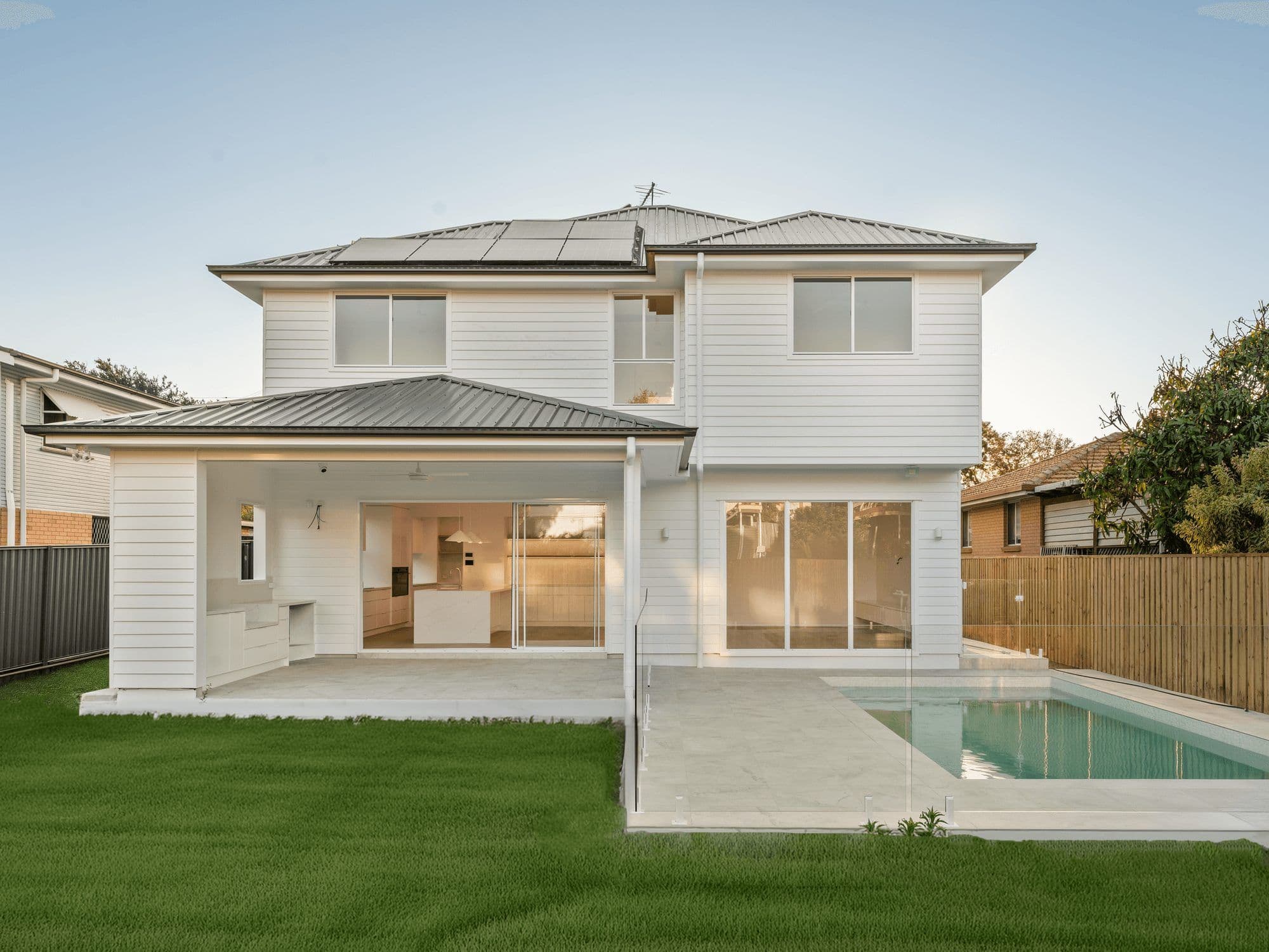
Alfresco Ideas for a Brisbane Home
Alfresco ideas that actually hold up in Brisbane's climate: what has to be right structurally, from a builder.
Custom Home Design6 min read
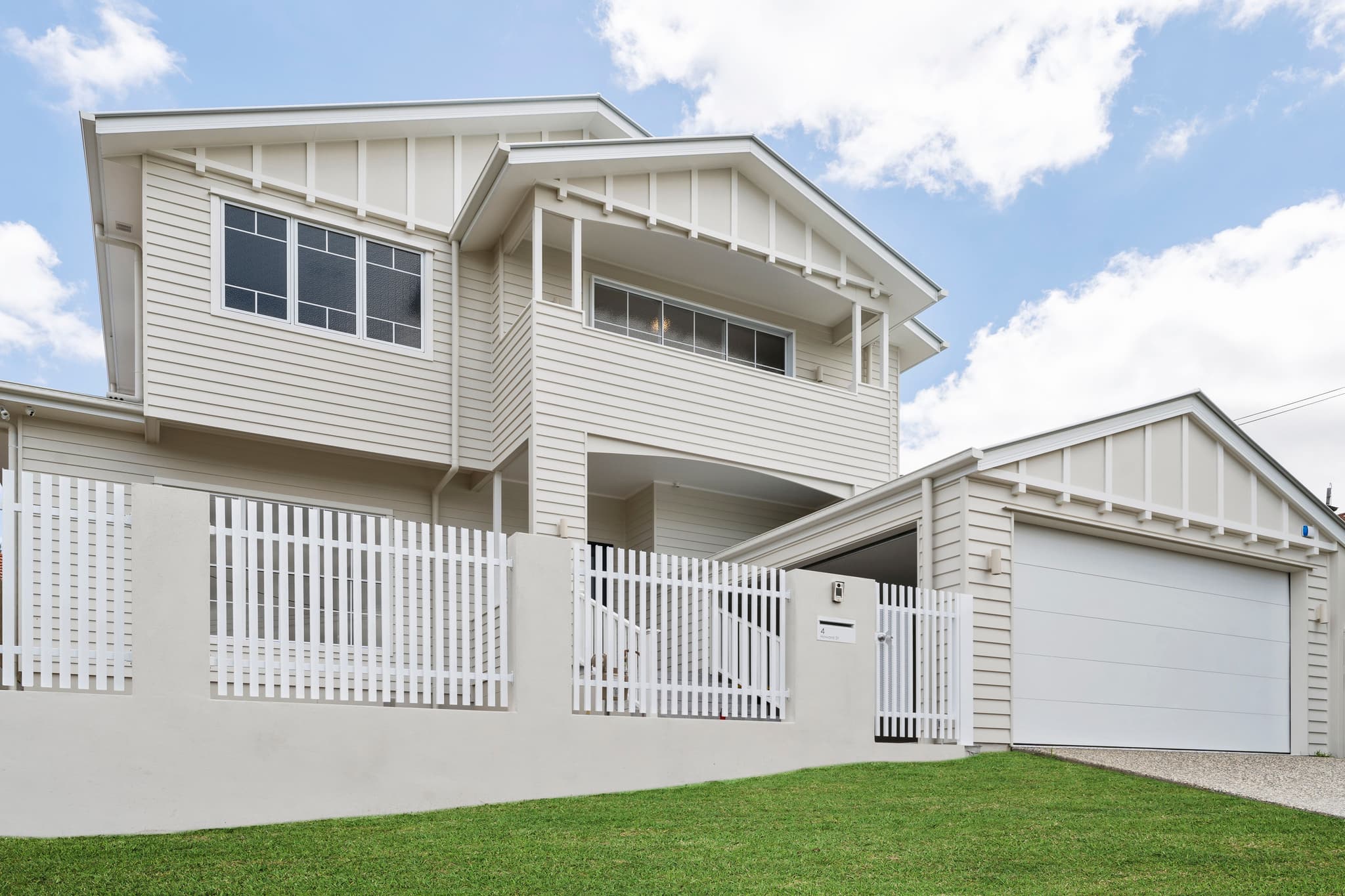
Battle-Axe Block House Designs: A Brisbane Builder's Guide
Thinking about a battle-axe block in Brisbane? What the term actually means, the real Brisbane rules for rear lots, and how to design a home that works.
Custom Home Design6 min read
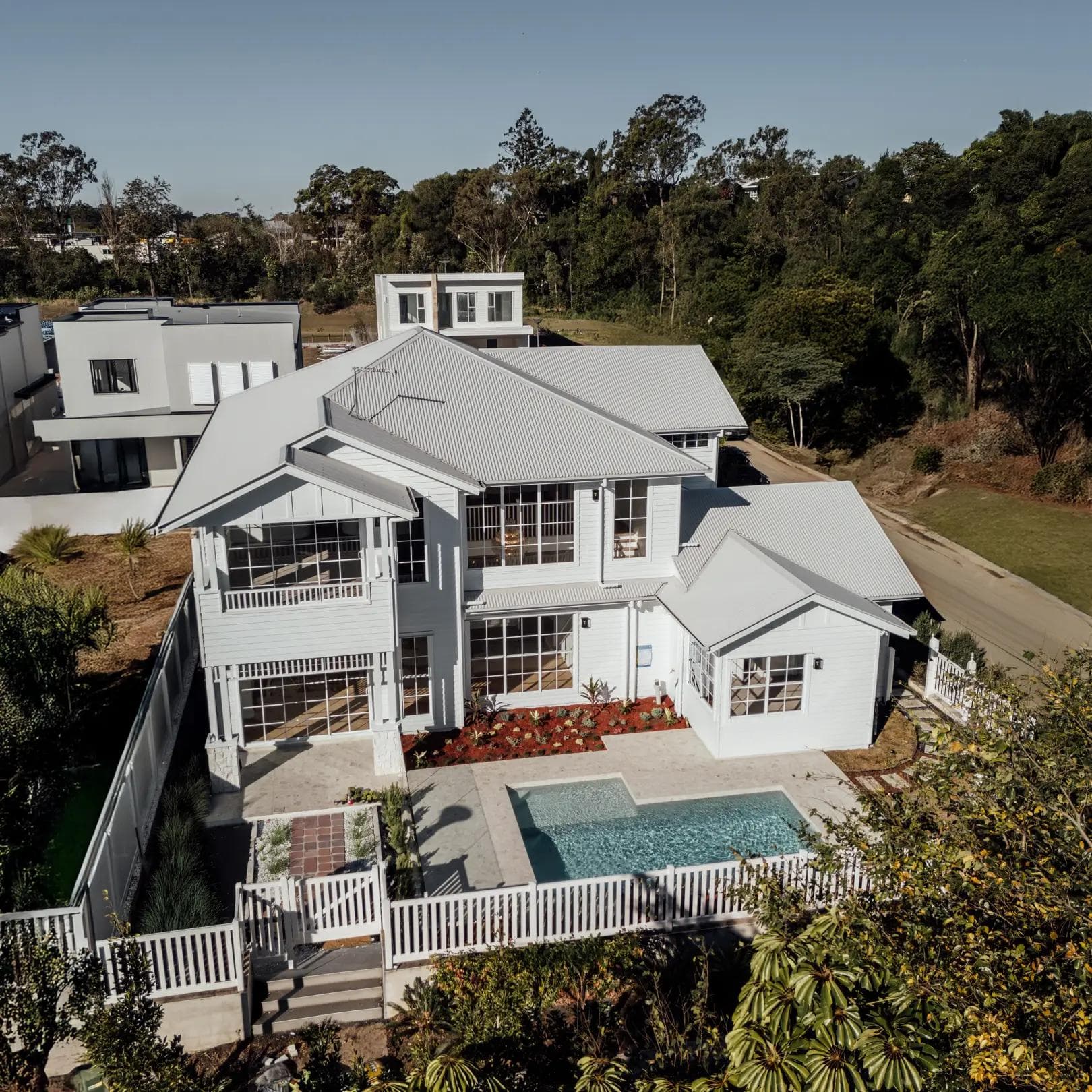
Renovate or Rebuild? How to Decide for Your Brisbane Home
Torn between renovating and rebuilding? See how your home's condition, orientation, and council overlays should actually decide it.